
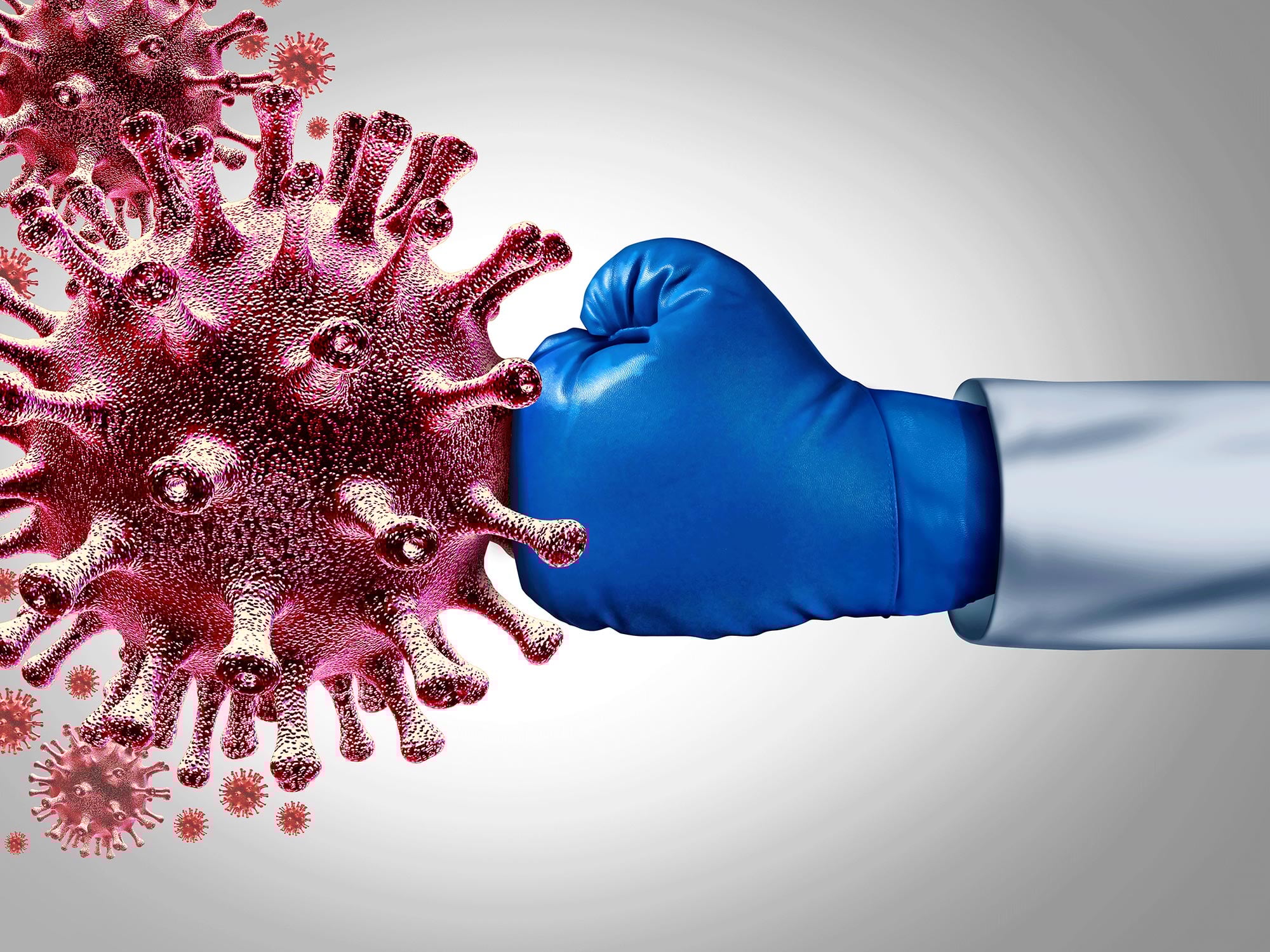
Viruses like the one that causes COVID-19 constantly mutate, rendering many antibody treatments ineffective. A Stanford-led research team has found a way to counter this challenge by pairing two antibodies — one that anchors to a stable part of the virus and another that blocks infection.
This innovative approach has successfully neutralized all tested SARS-CoV-2 variants and could pave the way for longer-lasting treatments. If further developed, it may even work against other coronaviruses, influenza, and HIV.
The Challenge of an Ever-Mutating Virus
The virus that causes COVID-19 has continuously mutated, making it harder for existing antibody treatments to remain effective. Many treatments developed during the pandemic no longer work against newer variants. However, a team of researchers from Stanford University may have discovered a way to create longer-lasting therapies that can keep up with the virus’s evolution.
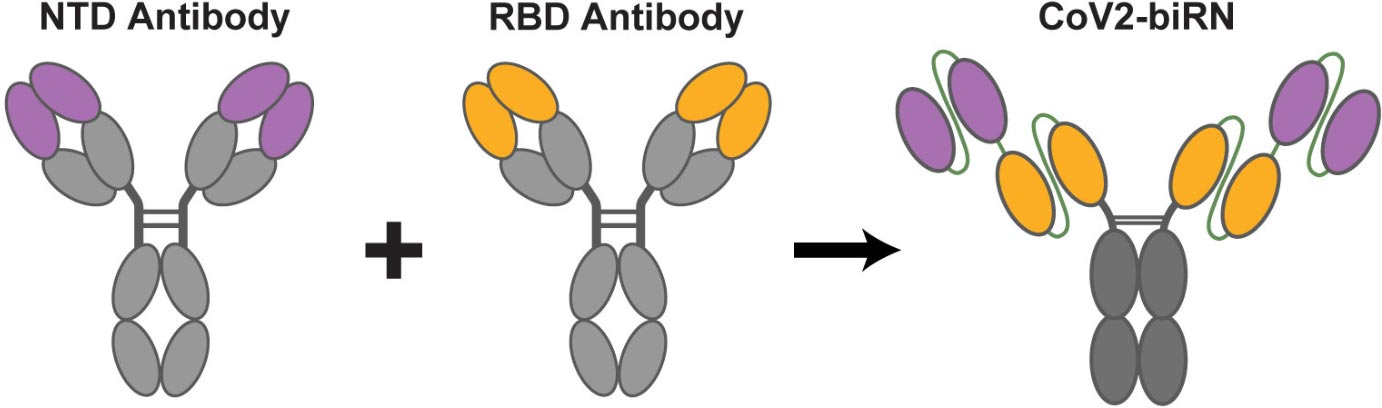
The team developed a method using two antibodies: one that acts as an anchor by attaching to a stable part of the virus, and another that blocks its ability to infect cells. In laboratory tests, this antibody pairing successfully neutralized the original SARS-CoV-2 virus and all its variants, including omicron. Their findings were published today (March 5) in Science Translational Medicine.
“In the face of an ever-changing virus, we engineered a new generation of therapeutics that have the ability to be resistant to viral evolution, which could be useful many years down the road for the treatment of people infected with SARS-CoV-2,” said Christopher O. Barnes, the study’s senior author, an assistant professor of biology in the Stanford School of Humanities and Sciences and a scholar at Stanford’s Sarafan CheM-H.
An Overlooked Option
The team led by Barnes and first author Adonis Rubio, a doctoral candidate in the Stanford School of Medicine, conducted this investigation using donated antibodies from patients who had recovered from COVID-19. Analyzing how these antibodies interacted with the virus, they found one that attaches to a region of the virus that does not mutate often.
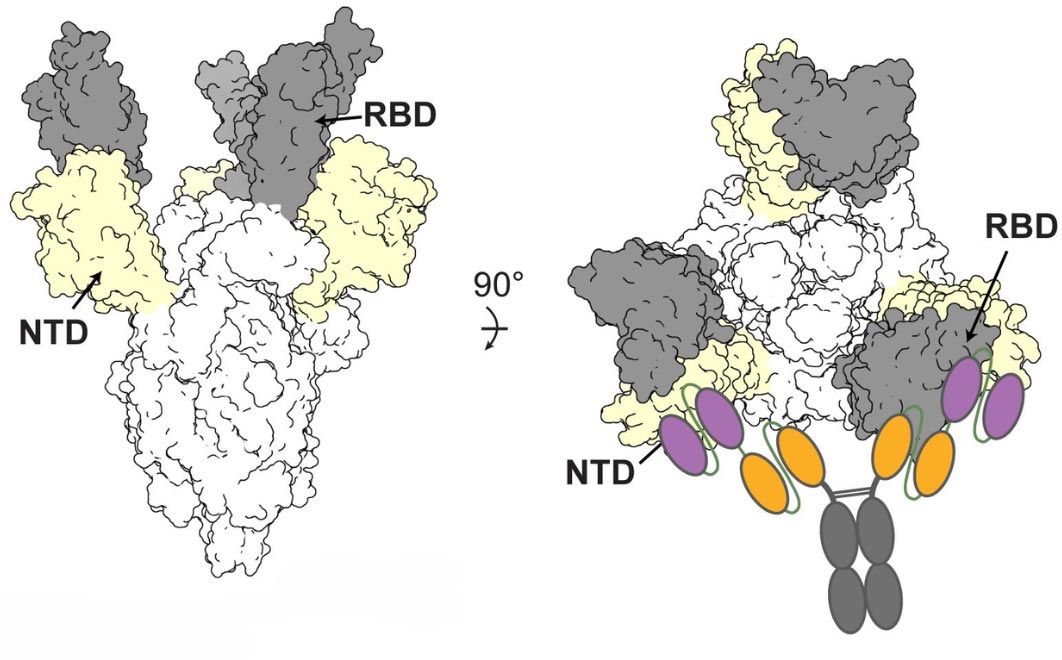
This area, within the Spike N-terminal domain, or NTD, had been overlooked because it was not directly useful for treatment. However, when a specific antibody attaches to this area, it remains stuck to the virus. This is useful when designing new therapies that enable another type of antibody to get a foothold and attach to the receptor-binding domain, or RBD, of the virus, essentially blocking the virus from binding to receptors in human cells.
Designing a More Resilient Defense
The researchers designed a series of these dual or “bispecific” antibodies, called CoV2-biRN, and in laboratory tests they showed high neutralization of all the variants of SARS-CoV-2 known to cause illness in humans. The antibodies also significantly reduced the viral load in the lungs of mice exposed to one version of the omicron variant.
The Path Forward: Beyond COVID-19
More research, including clinical trials, would have to be done before this discovery could be used as a treatment in human patients, but the approach is promising – and not just for the virus that causes COVID-19.
Next, the researchers will work to design bispecific antibodies that would be effective against all coronaviruses, the virus family including the ones that cause the common cold, MERS, and COVID-19. This approach could potentially also be effective against influenza and HIV, the authors said.
“Viruses constantly evolve to maintain the ability to infect the population,” Barnes said. “To counter this, the antibodies we develop must continuously evolve as well to remain effective.”
Reference: “Bispecific antibodies targeting the N-terminal and receptor binding domains potently neutralize SARS-CoV-2 variants of concern” by Adonis A. Rubio, Viren A. Baharani, Bernadeta Dadonaite, Megan Parada, Morgan E. Abernathy, Zijun Wang, Yu E. Lee, Michael R. Eso, Jennie Phung, Israel Ramos, Teresia Chen, Gina El Nesr, Jesse D. Bloom, Paul D. Bieniasz, Michel C. Nussenzweig and Christopher O. Barnes, 5 March 2025, Science Translational Medicine.
DOI: 10.1126/scitranslmed.adq5720
Additional Stanford authors include biology undergraduate Megan Parada; biology staff scientist Morgan Abernathy; life science researcher Yu E. Lee; biology lab technician Michael Eso; biophysics doctoral student Gina El Nesr; and former lab technicians Israel Ramos, Teresia Chen, and Jennie Phung. Barnes is also affiliated with the Chan Zuckerberg Biohub.
Rubio, BS ’21, is also affiliated with the Department of Biology in the School of Humanities and Sciences.
This work also includes co-authors from Rockefeller University, Fred Hutchinson Cancer Center in Seattle, and the Howard Hughes Medical Institute.
This research received support from the Chan Zuckerberg Biohub, Howard Hughes Medical Institute, National Institutes of Health, National Science Foundation, Pew Biomedical Scholars Program, and Rita Allen Foundation.
Rockefeller University has filed a provisional patent application in connection with monoclonal antibodies described in this work on which co-authors Zijun Wang and Michel C. Nussenzweig of Rockefeller University are inventors (U.S. patent 17/575,246). Co-authors Jesse D. Bloom of Fred Hutchinson Cancer Center consults for Invivyd, Apriori Bio, the Vaccine Company, GSK, and Moderna. Bernadeta Dadonaite, also of Fred Hutchinson Cancer Center, consults for Moderna. Bloom and Dadonaite are inventors of Fred Hutchinson Cancer Center-licensed patents related to viral deep mutational scanning.
Never miss a breakthrough: Join the SciTechDaily newsletter.
Follow us on Google and Google News.