
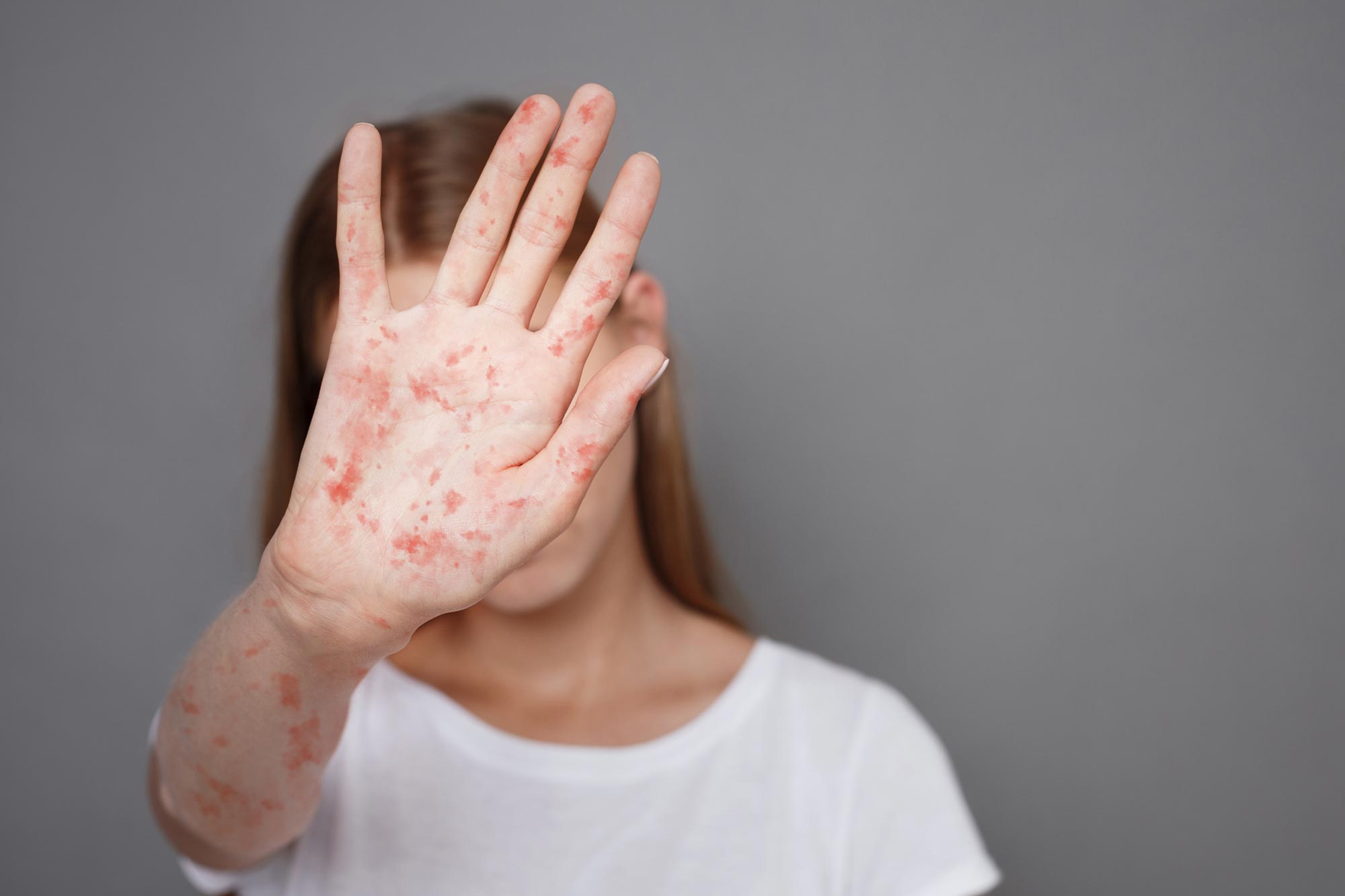
An experimental oral antiviral blocked canine distemper transmission in ferrets, suggesting a potential way to help contain measles outbreaks if it works in people.
Measles has reemerged in the United States, causing thousands of cases across multiple states, hundreds of hospitalizations, and three confirmed deaths since 2025. Large outbreaks in Canada and Mexico, also involving multiple deaths, have challenged North America’s measles elimination status.
Vaccinating people around identified cases, a strategy known as ring vaccination, helps contain outbreaks, but researchers are exploring an additional way to interrupt transmission. Could an antiviral taken by mouth stop the virus from spreading when given shortly before or after exposure?
A study from Georgia State University tested that possibility in ferrets using canine distemper virus, which causes a measles-like illness in the animals. The experimental drug, called GHP-88310, prevented transmission through both direct contact and shared air, suggesting it could eventually complement vaccination if the findings hold up in people.

“Silencing measles outbreaks quickly is essential to reestablish control over the virus,” said senior author Richard Plemper, a Regents’ Professor and director of Georgia State’s Center for Translational Antiviral Research (CTAR). “This study follows our recent development of the drug candidate GHP-88310. It demonstrates that the drug is suitable to augment traditional ring vaccination against measles.”
Blocking spread through contact and air
For the study, published in Nature Microbiology, the researchers created a system that paired infected and uninfected ferrets under controlled environmental conditions. Some pairs could make direct physical contact, while others shared airspace.
“We designed the study to recapitulate viral spread between people with direct contact, for instance in a household, and between more distant social contacts, for example in classrooms or other indoor settings that bring people into proximity without direct interaction,” said Plemper.
GHP-88310 targets viral polymerase, an enzyme viruses use to copy their genetic material. It is a broad-spectrum inhibitor, meaning it acts against a range of viruses. Its development was previously described in Science Advances.
Giving the drug shortly before or after exposure prevented transmission through both routes tested in the ferrets. This preventive use is known as prophylaxis.

“We were very excited to see that GHP-88310 given by mouth completely prevented airborne transmission in our ferret model of measles,” said first author Carolin Lieber, a senior postdoctoral fellow in the Plemper lab. “This finding is unprecedented for a viral polymerase inhibitor and demonstrates the extraordinary antiviral potency of this drug.”
A shorter contagious period for ferrets
Treating animals that were already infected also reduced their symptoms and shortened the period during which they could pass the virus to others.
“In addition to this prophylactic benefit, GHP-88310 used therapeutically shortened the duration of disease in our model. If equally applicable to human hosts, it may shorten the severe social and economic burden of prolonged quarantine of patients and further aid outbreak management,” said Plemper.
The researchers are now preparing GHP-88310 for formal clinical testing.
Reference: “Antiviral GHP-88310 blocks contact-mediated and airborne transmission in a ferret model of measles-like disease” by Carolin M. Lieber, Josef D. Wolf, Claire E. Ruckel, Lauren A. Harrison and Richard K. Plemper, 24 July 2026, Nature Microbiology.
DOI: 10.1038/s41564-026-02419-y
The study was funded by the National Institute of Allergy and Infectious Diseases (NIAID) of the National Institutes of Health (NIH).
Never miss a breakthrough: Join the SciTechDaily newsletter.
Follow us on Google and Google News.
2 Comments
If the USA were sane and people accepted that vaccines work and were not microchips, then there would be less of a problem with measles.
Measles rash almost never presents on the palm. The first image in the article is either AI slop or a photo of an unrelated rash or creative use of cosmetics. This is most unfortunate, as when science in general, but especially measles, is concerned, honesty and transparency are of utmost importance.