
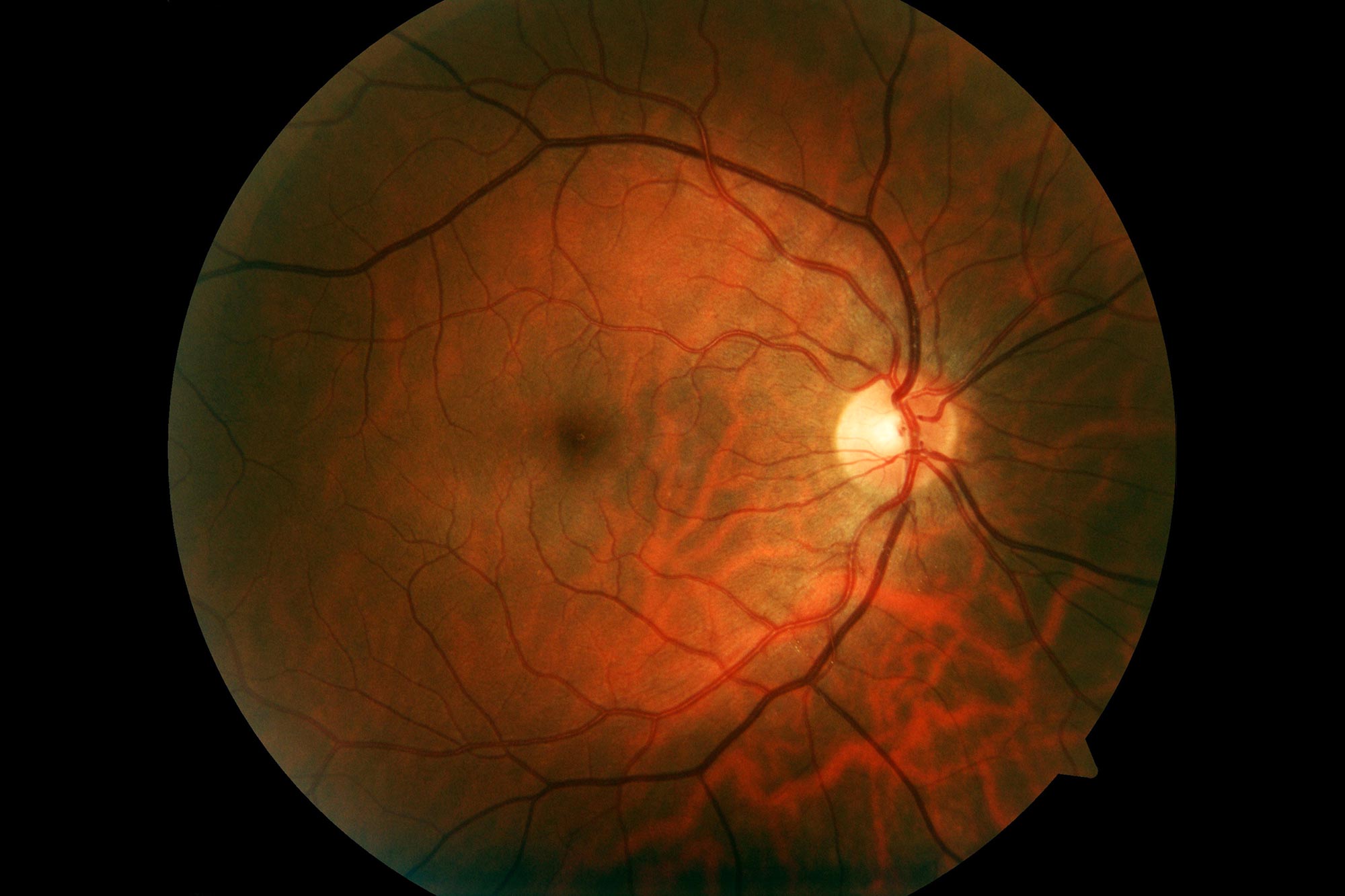
Gut bacteria linked to inherited eye diseases may be treatable with antimicrobials, a groundbreaking study suggests, offering new hope for preventing blindness.
Sight loss in certain inherited eye diseases may be caused by gut bacteria, and is potentially treatable by antimicrobials, finds a new study in mice co-led by a UCL and Moorfields researcher.
The international study observed that in eyes with sight loss caused by a particular genetic mutation, known to cause eye diseases that lead to blindness, gut bacteria were found within the damaged areas of the eye.
Genetic Mutation and Bacterial Invasion
The authors of the new paper, published in the journal Cell and jointly led by researchers in China, say their findings suggest that the genetic mutation may relax the body’s defenses, thus allowing harmful bacteria to reach the eye and cause blindness.
The gut contains trillions of bacteria, many of which are key to healthy digestion. However, they can also be potentially harmful.
The researchers were investigating the impact of the Crumbs homolog 1 (CBR1) gene, which is known to be expressed in the retina (the thin layer of cells at the back of the eye) and is crucial to building the blood-retina barrier to regulate what flows in and out of the eye.
The CRB1 gene is associated with inherited eye disease, most commonly forms of Leber congenital amaurosis (LCA) and retinitis pigmentosa (RP); the gene is the cause of 10% of LCA cases and 7% of RP cases worldwide.
Breakthrough Findings and Future Implications
Using mouse models, the research team discovered the CRB1 gene is key to controlling the integrity of the lower gastrointestinal tract, the first ever such observation. There, it combats pathogens and harmful bacteria by regulating what passes between the contents of the gut and the rest of the body.
The team found that when the gene has a particular mutation, dampening its expression (reducing its effect), these barriers in both the retina and the gut can be breached, enabling bacteria in the gut to move through the body and into the eye, leading to lesions in the retina that cause sight loss.
Crucially, treating these bacteria with antimicrobials, such as antibiotics, was able to prevent sight loss in the mice even though it did not rebuild the affected cell barriers in the eye.
Inherited eye diseases are the UK’s leading cause of blindness in working-age people. Onset of disease may vary from very early childhood to adulthood, but deterioration is irreversible and has lifelong implications. To date, the development of treatments has largely focused on gene therapies.
The findings of this study suggest that simply using antimicrobials might help prevent deterioration in CRB1-associated inherited eye diseases. Future work will investigate whether this applies in humans.
Transforming Treatment for Eye Diseases
Co-lead author Professor Richard Lee (UCL Institute of Ophthalmology and Moorfields Eye Hospital NHS Foundation Trust) said: “We found an unexpected link between the gut and the eye, which might be the cause of blindness in some patients.
“Our findings could have huge implications for transforming treatment for CRB1-associated eye diseases. We hope to continue this research in clinical studies to confirm if this mechanism is indeed the cause of blindness in people, and whether treatments targeting bacteria could prevent blindness.
“Additionally, as we have revealed an entirely novel mechanism linking retinal degeneration to the gut, our findings may have implications for a broader spectrum of eye conditions, which we hope to continue to explore with further studies.”
Reference: “CRB1-associated retinal degeneration is dependent on bacterial translocation from the gut” by Shanzhen Peng, Jing Jing Li, Wanying Song, Ye Li, Lei Zeng, Qiaoxing Liang, Xiaofeng Wen, Haitao Shang, Keli Liu, Peiyao Peng, Wei Xue, Bin Zou, Liu Yang, Juanran Liang, Zhihui Zhang, Shixin Guo, Tingting Chen, Wenxuan Li, Ming Jin, Xiang-Bin Xing, Pengxia Wan, Chunqiao Liu, Haotian Lin, Hong Wei, Richard W.J. Lee, Feng Zhang and Lai Wei, 26 February 2024, Cell.
DOI: 10.1016/j.cell.2024.01.040
The study was an international collaboration led by researchers from Zhongshan Ophthalmic Center, Sun Yat-sen University, China, working with UCL Institute of Ophthalmology and Moorfields Eye Hospital NHS Foundation Trust.
Never miss a breakthrough: Join the SciTechDaily newsletter.
Follow us on Google and Google News.