
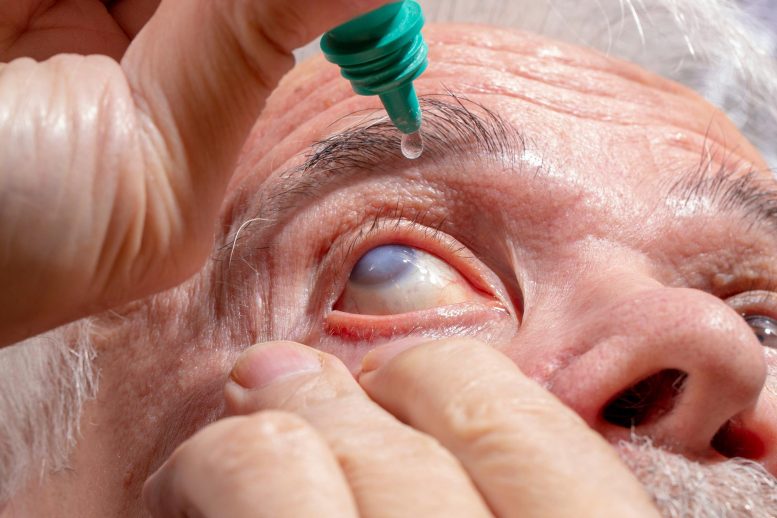
People with high genetic risk for glaucoma may need to curb caffeine to protect their vision.
Consuming large amounts of daily caffeine may increase the risk of glaucoma more than three-fold for those with a genetic predisposition to higher eye pressure according to an international, multi-center study. The research led by the Icahn School of Medicine at Mount Sinai is the first to demonstrate a dietary—genetic interaction in glaucoma. The study results published in the June print issue of Ophthalmology may suggest patients with a strong family history of glaucoma should cut down on caffeine intake.
The study is important because glaucoma is the leading cause of blindness in the United States. It looks at the impact of caffeine intake on glaucoma, and intraocular pressure (IOP) which is pressure inside the eye. Elevated IOP is an integral risk factor for glaucoma, although other factors do contribute to this condition. With glaucoma, patients typically experience few or no symptoms until the disease progresses and they have vision loss.
“We previously published work suggesting that high caffeine intake increased the risk of the high-tension open angle glaucoma among people with a family history of the disease. In this study we show that an adverse relation between high caffeine intake and glaucoma was evident only among those with the highest genetic risk score for elevated eye pressure,” says lead/corresponding author Louis R. Pasquale, MD, FARVO, Deputy Chair for Ophthalmology Research for the Mount Sinai Health System.

A team of researchers used the UK Biobank, a large-scale population-based biomedical database supported by various health and governmental agencies. They analyzed records of more than 120,000 participants between 2006 and 2010. Participants were between 39 and 73 years old and provided their health records along with DNA samples, collected to generate data. They answered repeated dietary questionnaires focusing on how many caffeinated beverages they drink daily, how much caffeine-containing food they eat, the specific types, and portion size. They also answered questions about their vision, including specifics on if they have glaucoma or a family history of glaucoma. Three years into the study later they had their IOP checked and eye measurements.
Caffeine and Eye Health Analysis
Researchers first looked at the relationship looked between caffeine intake, IOP, and self-reported glaucoma by running multivariable analyses. Then they assessed if accounting for genetic data modified these relationships. They assigned each subject an IOP genetic risk score and performed interaction analyses.
The investigators found high caffeine intake was not associated with increased risk for higher IOP or glaucoma overall; however, among participants with the strongest genetic predisposition to elevated IOP — in the top 25 percentile — greater caffeine consumption was associated with higher IOP and higher glaucoma prevalence. More specifically, those who consumed the highest amount of daily caffeine- more than 480 milligrams which is roughly four cups of coffee — had a 0.35 mmHg higher IOP. Additionally, those in the highest genetic risk score category who consumed more than 321 milligrams of daily caffeine — roughly three cups of coffee — had a 3.9-fold higher glaucoma prevalence when compared to those who drink no or minimal caffeine and in the lowest genetic risk score group.
Patient Lifestyle Choices
“Glaucoma patients often ask if they can help to protect their sight through lifestyle changes, however, this has been a relatively understudied area until now. This study suggested that those with the highest genetic risk for glaucoma may benefit from moderating their caffeine intake. It should be noted that the link between caffeine and glaucoma risk was only seen with a large amount of caffeine and in those with the highest genetic risk,” says co-author Anthony Khawaja, MD, PhD, Associate Professor of Ophthalmology University College London (UCL) Institute of Ophthalmology and ophthalmic surgeon at Moorfields Eye Hospital. “The UK Biobank study is helping us to learn more than ever before about how our genes affect our glaucoma risk and the role that our behaviors and environment could play. We look forward to continuing to expand our knowledge in this area.”
Reference: “Intraocular Pressure, Glaucoma, and Dietary Caffeine Consumption — A Gene–Diet Interaction Study from the UK Biobank” by Jihye Kim, PhD; Hugues Aschard, PhD; Jae H. Kang, ScD; Marleen A.H. Lentjes, PhD; Ron Do, PhD; Janey L. Wiggs, MD, PhD; Anthony P. Khawaja, PhD, FRCOphth and Louis R. Pasquale, MD on behalf of the Modifiable Risk Factors for Glaucoma Collaboration, 14 December 2020, Ophthalmology.
DOI: 10.1016/j.ophtha.2020.12.009
National Eye Institute which is part of the National Institutes of Health, and New York Eye and Ear Infirmary of Mount Sinai helped to fund this study.
Never miss a breakthrough: Join the SciTechDaily newsletter.
Follow us on Google and Google News.
1 Comment
I’m not going to the original article. If this report is accurate, then among those with genetic predisposition a 0.35 mm hg increase in IOP? It is a trivial result. IOP is measured in whole numbers. Someone with 15 mm Hg would be 15 before and after coffee. And given an inherent statistical inaccuracy in the measurement, the change in mean IOPs reported here might actually be reversed in individual patients. And this is correlation and not causation. I wonder how many people will read the headline and stop drinking coffee? Freedom of speech notwithstanding, people ought to shut up about this result unless they fully understand the nature of the experiment and what it says, otherwise lay glaucoma patients might alter their behavior based on a misinterpretation of the results.