
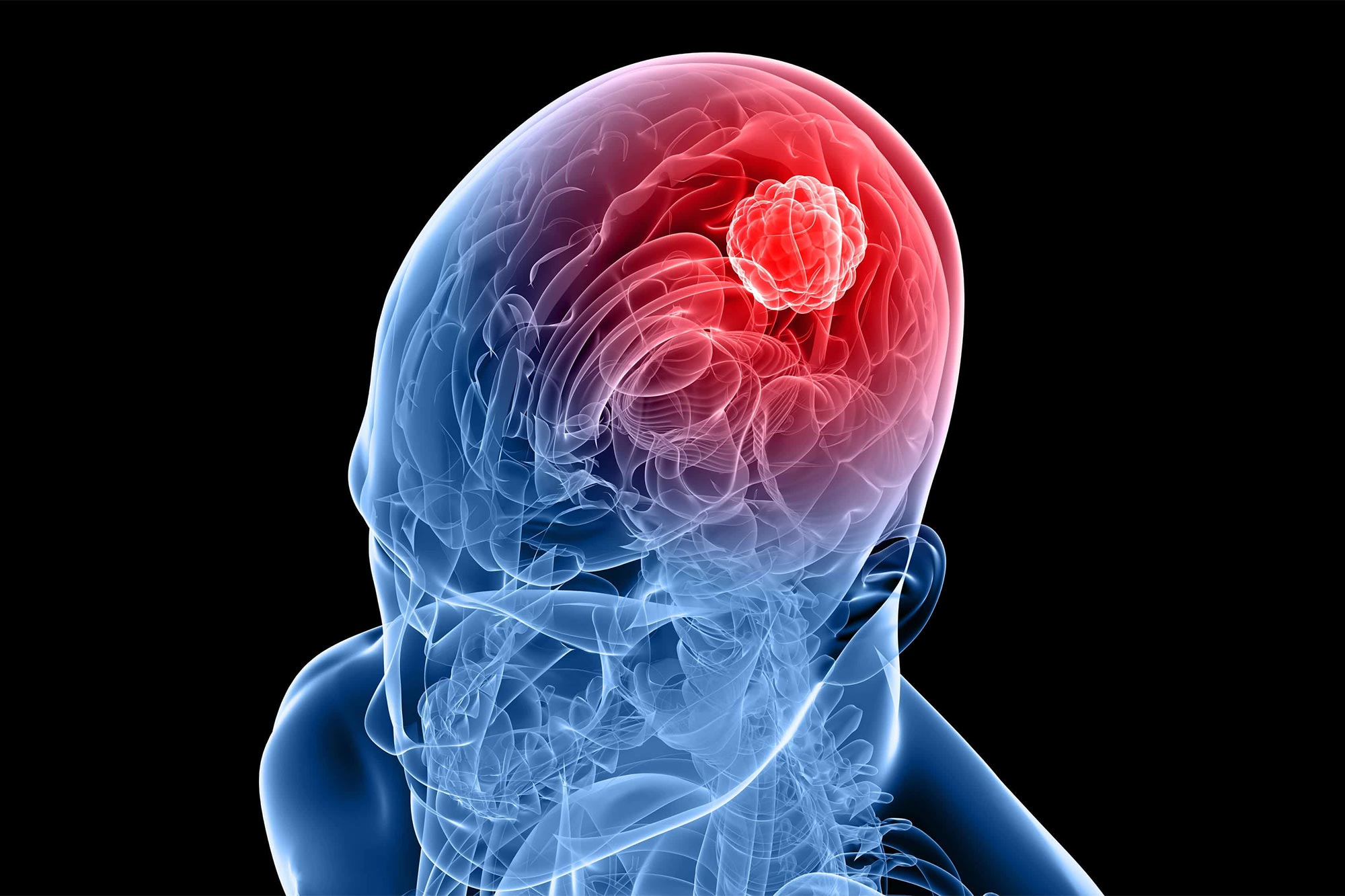
Researchers have identified a molecule that disrupts a critical gene in glioblastoma.
Scientists at the UVA Comprehensive Cancer Center say they have found a small molecule that can shut down a gene tied to glioblastoma, a discovery that could eventually point to a new way to treat this aggressive brain cancer.
The finding comes from the lab of Hui Li, PhD, who previously identified the “oncogene” that helps drive glioblastoma. In a new study published in Science Translational Medicine, Li reports that the newly identified compound blocked the gene’s activity in both cell samples and laboratory mice. In the mouse experiments, the molecule worked without causing harmful side effects.
The research is still at an early stage, and the team emphasizes that much more work is needed before the approach could be considered for patients. Even so, Li says the results hint at something especially important for glioblastoma: slowing a tumor that spreads by infiltrating healthy brain tissue rather than staying in one clearly defined mass.
“Glioblastoma is a devastating disease. Essentially, no effective therapy exists,” said Li, of the University of Virginia School of Medicine’s Department of Pathology. “What’s novel here is that we’re targeting a protein that GBM cells uniquely depend on, and we can do it with a small molecule that has clear in vivo activity. To our knowledge, this pathway hasn’t been therapeutically exploited before.”

About Glioblastoma
Glioblastoma grows quickly and is almost always fatal. After diagnosis, average survival is about 15 months, and more than 14,000 Americans are diagnosed each year. Doctors often begin with surgery, but the cancer spreads through brain tissue in a way that makes complete removal extremely difficult.
Patients may also receive chemotherapy and radiotherapy, yet these treatments usually add only a few months of survival. Because those options can also severely affect day-to-day functioning, some people decide to forgo treatment entirely. The combination of limited benefit and heavy burden is a major reason researchers continue to push for new strategies.
Li hopes this line of work can help fill that gap by going after a specific genetic driver. In 2020, his team pinpointed the oncogene, a cancer-causing gene, behind glioblastoma. The gene, AVIL, normally helps cells maintain their size and shape, but the researchers found it can be pushed into an overactive state by a variety of factors, setting the stage for cancer cells to form and spread.
Earlier experiments showed that blocking AVIL activity could wipe out glioblastoma cells in laboratory mice without harming healthy cells. The problem was practicality: the method used to prove that point in the lab was not suitable for people. That challenge is what sent the researchers searching for a molecule that could interrupt the gene’s harmful effects in a drug-like way.
Finding a Promising Molecule
Their pursuit has confirmed the role of AVIL in glioblastoma. The researchers found that the protein the gene produces is hardly found in the healthy human brain but is abundant in patients with glioblastoma.
The scientists used a technique called “high-throughput screening” to quickly and efficiently evaluate many compounds for their potential to block AVIL activity. The molecule they have found appears to affect only tumor cells, sparing healthy brain tissue. Further, the molecule can cross the brain’s protective barrier that keeps out many potential treatments for neurological diseases.
As a treatment, the compound could be taken by mouth, like any other prescription pill, the researchers say.
Before the compound could become available for patients, much additional research will need to be done to optimize the molecule for use in people. If all goes according to plan, the resulting drug would then be tested extensively in human volunteers before the federal Food and Drug Administration decides whether it is sufficiently safe and effective to be offered as a treatment.
While there is much more work to be done, Li and his colleagues are excited by the promise of their latest findings.
“GBM patients desperately need better options. Standard therapy hasn’t fundamentally changed in decades, and survival remains dismal,” he said. “Our goal is to bring an entirely new mechanism of action into the clinic — one that targets a core vulnerability in glioblastoma biology.”
Reference: “A first-in-class small-molecule inhibitor targeting AVIL exhibits safety and antitumor efficacy in preclinical models of glioblastoma” by Zhongqiu Xie, Pawel Ł. Janczyk, Robert Cornelison, Sarah Lynch, Martyna Glowczyk-Gluc, Becky Leifer, Yiwei Wang, Philip Hahn, Johnathon D. Dooley, Adelaide Fierti, Xinrui Shi, Yiyu Zhang, Tingxuan Li, Qiong Wang, Zhi Zhang, Laine Marrah, Angela Koehler, James W. Mandell, Michael Hilinski and Hui Li, 28 January 2026, Science Translational Medicine.
DOI: 10.1126/scitranslmed.adt1211
The research was supported by the National Institutes of Health, grants R01CA240601 and R01CA269594, and by the Ben & Catherine Ivy Foundation.
Li has founded a company, AVIL Therapeutics, to develop AVIL inhibitors. He and Xie also have obtained a patent related to the approach.
Never miss a breakthrough: Join the SciTechDaily newsletter.
Follow us on Google and Google News.
2 Comments
break down the electron with an electrolyte laser. the electrolyte is for multiple uses as to not have the brain react negatively. use blood cell properties as to be ionized is a laser concept which could be studied. using electrolyte properties with said could be utilized for multiple purposes in the body. to use with said laser compressing LED lights this could be achieved
sorry brain functon and body