
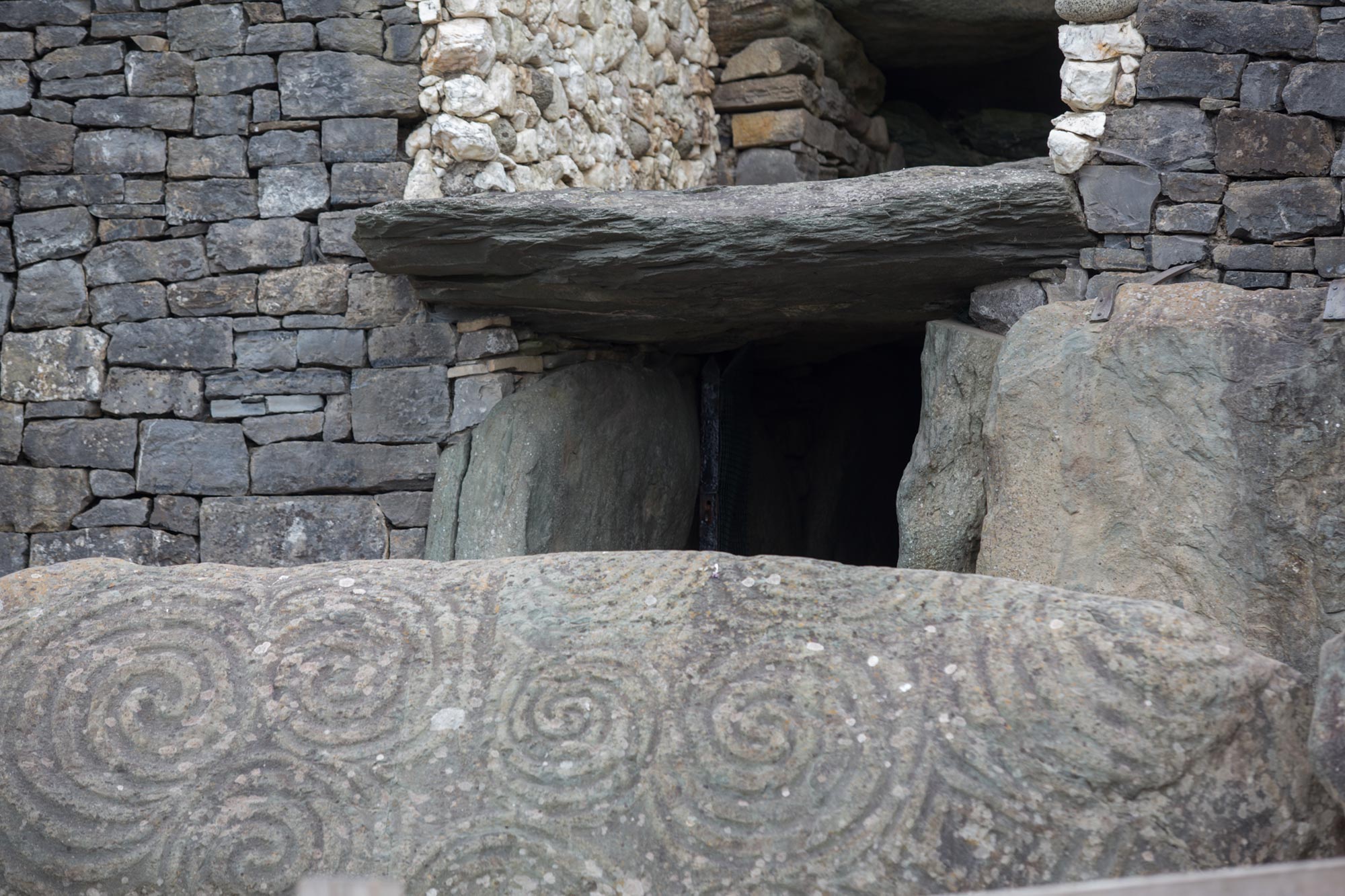
Evidence from Newgrange suggests ancient Ireland was more egalitarian than once believed, with no clear signs of a ruling elite despite the discovery of an incest-born individual in the tomb.
New research is challenging earlier claims that an incestuous ruling class governed the people of ancient Ireland more than 5,000 years ago.
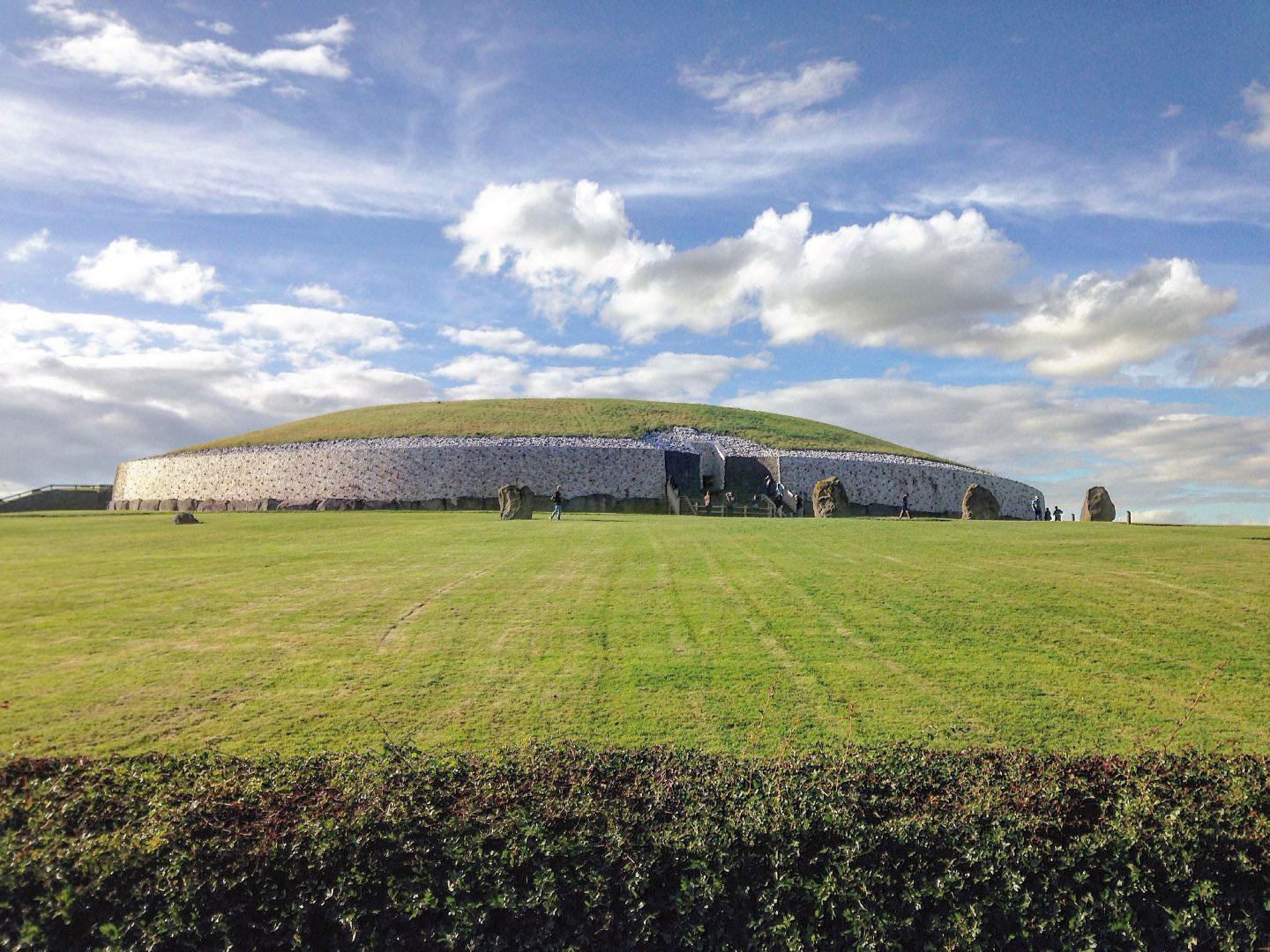
Scientists reexamined evidence from burials at the Newgrange prehistoric monument in Ireland. The site is a large circular mound with an internal chamber where both cremated and unburnt human remains were placed. When this chamber was first studied, its design and the selective nature of the burials led many to assume that those interred there belonged to a royal family or a powerful social group.
In 2020, DNA tested from a skull fragment recovered inside the chamber indicated that one individual had been born from a relationship between two siblings or between a parent and child. This person also showed distant genetic links to others buried at the site.
Because only certain people were placed in the chamber, researchers initially believed that those selected must have held a unique or elevated role in their community. From this, some concluded that an incest-born individual being buried there meant such unions were tolerated, or even typical, within a ruling elite.
New Findings Challenge the Elite Hypothesis
A recent study by researchers from the University of York and University College Dublin has found no supporting evidence in surrounding settlements, food practices, or trade systems that would suggest the presence of a socially or economically distinct elite.
Instead, the team argues that the society of the time appears to have been relatively equal. The archaeological record shows shared access to resources and living spaces that were broadly similar in structure and quality, indicating a community that functioned without strong social divisions.
Professor Penny Bickle from the University of York’s Department of Archaeology, said: “The evidence all points to a much more collective ethos. There are not wide disparities in diet, houses are relatively flimsy, and all similar to each other.
“There are no large settlement systems or trade mechanisms, and we also don’t see production of craft on the scale that we see in other ancient societies, such as in Ancient Egypt, where incest was thought to be practiced by the ruling elite.
“We can only begin to understand these monuments and tombs if we examine the social lives or the communities that built and use them, and when we start to do this, this idea of a ‘social elite’ or a form of royalty starts to appear less likely.”
Contextualizing Newgrange
Older than Stonehenge and the Pyramids of Giza, Newgrange is believed to have been built by a farming community that prospered in the Boyne Valley, County Meath, some 5,000 years ago. Newgrange was rediscovered in AD 1699 and its interior had been heavily disturbed prior to its modern excavation in the 1960s. Therefore, researchers question whether this was even the original burial place of the skull fragment, referred to as NG10, dated to 3340 – 3020 BC.
The genetic clustering in passage tombs, such as at Newgrange, typically reflects very distant biological relationships – like second cousins or great-great-great-grandparents – rather than close familial ties. To establish if the tombs were reserved for an elite, researchers say they would expect much closer genetic ties than they have seen at Newgrange.
It is more likely that these tombs were places that reflect family, work, and other social relationships, rather than the mark of an elite family group.
Why Certain People Were Buried Remains a Mystery
Associate Professor Jessica Smyth, from University College Dublin, said: “People were definitely being selected for burial in passage tombs – the whole community does not end up in these monuments. However, we don’t know the reasons behind this selection, and why they were thought to be special.
“Unlike today, bodies don’t tend to be buried ‘whole’ or ‘intact’ in this time period. Before they end up in megalithic monuments, bodies are broken down, sometimes cremated, and even circulated around their communities.”
As so many of the dead found in these passage tombs were broken down and mixed with cremated remains, and possibly moved around to different places in the landscape, it is not clear the people who placed NG10 fragment in Newgrange knew who they were in life or who the parents of this individual were, casting further doubt on how ‘special’ the individual might have been.
Professor Penny Bickle said: “It is by no means clear that the monument was the first burial site of NG10 and the tomb grew in stages, so tracing who this individual was is a very difficult task indeed. As it stands, the incestuous origins of NG10 is a one-off compared to all of the DNA data we have for Neolithic Ireland.
“There are still many questions to solve here, but building this picture means looking at the monument together with the society that was built up around it, and from this, we get a step closer to understanding a community that was much more inclusive and equal than previously thought.”
Reference: “The ‘king’ of Newgrange? A critical analysis of a Neolithic petrous fragment from the passage tomb chamber” by Jessica Smyth, Neil Carlin, Daniela Hofmann, Catherine J. Frieman, Penny Bickle, Kerri Cleary, Susan Greaney and Rachel Pope, 24 June 2025, Antiquity.
DOI: 10.15184/aqy.2025.63
Never miss a breakthrough: Join the SciTechDaily newsletter.
Follow us on Google and Google News.
5 Comments
Ireland’s problem isn’t incest it’s anti-Semitism, unfortunately. The Irish have been recently convinced that their indigenous Hebrew cousins in Israel (the same people that actually threw the British out and reclaimed their homeland) are somehow a foreign power. Forgetting the 1500 year colonial enterprise of lsIam that almost eliminated Christianity in Europe and successfully colonized a gigantic area. Yet the Irish have been convinced of the opposite when the Jews are involved.
Are you just dumb Steve scaffer or ignorant and dumb.
Ireland and Europe was Celt. And pagans!!!! Not Christian not Catholic that was forced on us. No Israeli saved us but the Palestinian people sent us grain. Get your facts right maybe read a book. I love my country and I stand for Palestinian people. Not murderers or theivs.
Are you just dumb Steve scaffer or ignorant and dumb.
Ireland and Europe was Celt. And pagans!!!! Not Christian not Catholic that was forced on us. No Israeli saved us but the Palestinian people sent us grain. Get your facts right maybe read a book. I love my country and I stand for Palestinian people. Not murderers or theivs.
They’re clearly a foreign power if one is not allowed to criticise them publicly even in one’s own country.
But tell me, since when is criticising a genocide “antisemitic”? Israel is a genocidal state, run by genocidal maniacs. That’s not antisemitism, that’s just a fact.
Dunno ’bout ancient Ireland, but there’s one ruling England right now.