
Close Menu
    Facebook X (Twitter) Instagram
    SciTechDaily
    • Biology
    • Chemistry
    • Earth
    • Health
    • Physics
    • Science
    • Space
    • Technology
    Facebook X (Twitter) Pinterest YouTube RSS
    SciTechDaily
    Home»Space»Next-Gen Refueling Spacecraft to Revitalize Satellites in Geostationary Orbit
    Space

    Next-Gen Refueling Spacecraft to Revitalize Satellites in Geostationary Orbit

    By Southwest Research InstituteApril 3, 2024No Comments3 Mins Read
    Facebook Twitter Pinterest Telegram LinkedIn WhatsApp Email Reddit
    Share
    Facebook Twitter LinkedIn Pinterest Telegram Email Reddit
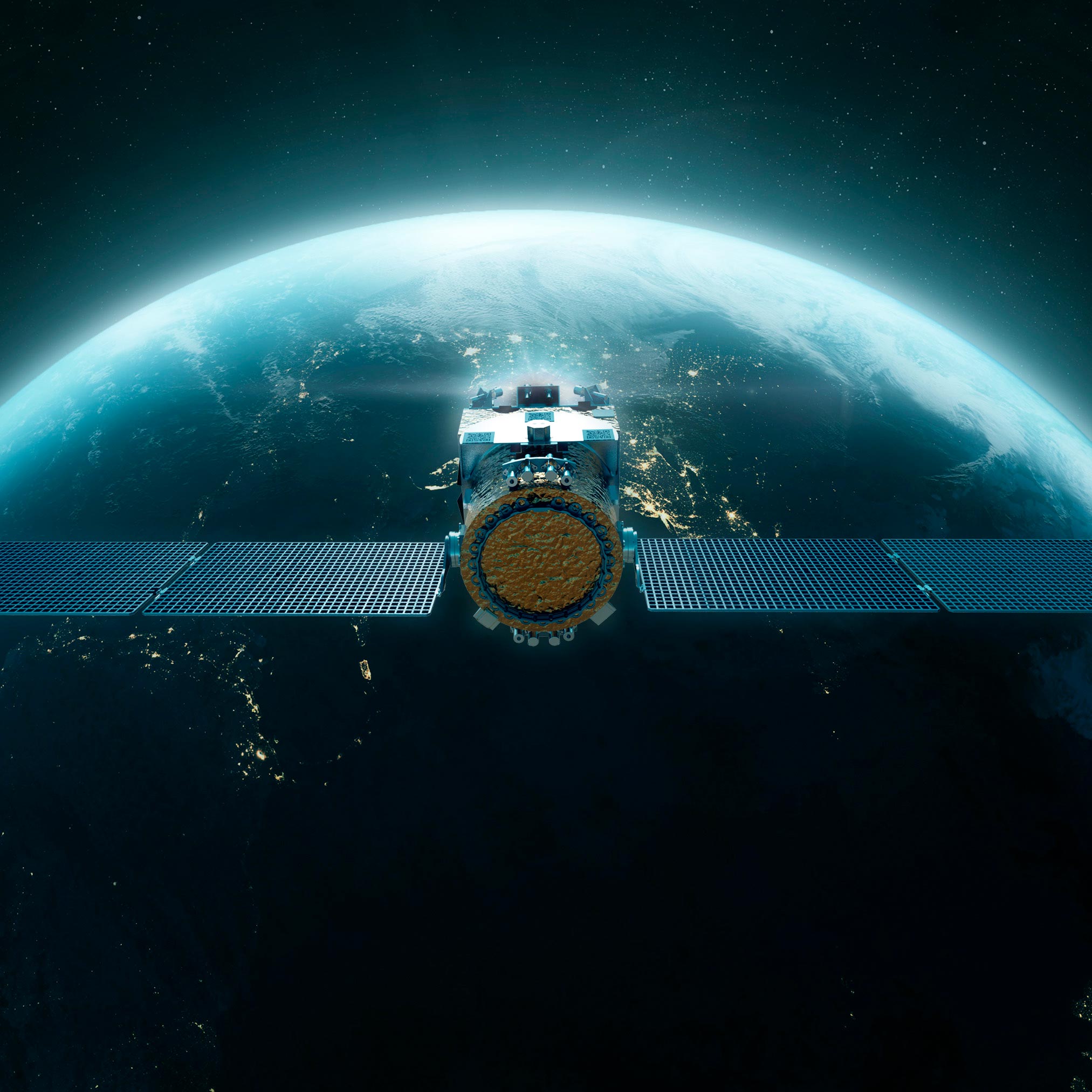
    Astroscale Prototype Servicer for Refueling
    Southwest Research Institute (SwRI) will build, integrate and test a small demonstration spacecraft as part of a $25.5 million Space Mobility and Logistics (SML) prototyping project funded by the U.S. Space Force and led by prime contractor Astroscale U.S. The spacecraft, called the Astroscale Prototype Servicer for Refueling (APS-R), will be able to refuel other vehicles while in geostationary orbit. Credit: Astroscale U.S.

    The Southwest Research Institute (SwRI) is developing a spacecraft named Astroscale Prototype Servicer for Refueling (APS-R) as part of a $25.5 million project with the U.S. Space Force.

    Southwest Research Institute (SwRI) will build, integrate, and test a small demonstration spacecraft as part of a $25.5 million Space Mobility and Logistics (SML) prototyping project funded by the U.S. Space Force and led by prime contractor Astroscale U.S. The spacecraft, called the Astroscale Prototype Servicer for Refueling (APS-R), will refuel other compatible vehicles while in geostationary orbit.

    “Running low on fuel is a common issue for spacecraft in Earth orbit,” said SwRI Staff Engineer Steve Thompson, the SwRI project systems engineer. “When they have expended all of their fuel, their mission ends — even though the vehicle may be in otherwise excellent health. A refueling vehicle can extend those missions, and we can get additional lifetime out of spacecraft that are already in orbit.”

    The APS-R will operate in geostationary orbit around the Earth, meaning it will follow a circular orbit in sync with the Earth’s rotational period of 24 hours. The spacecraft will carry hydrazine propellant from a depot, also in geostationary orbit, to the spacecraft in need of fuel. The APS-R can service any spacecraft fitted with a compatible refueling port.

    “Recently, other approaches to life extension have emerged, such as a vehicle that can use its thrusters to push another spacecraft where it needs to go after it runs out of fuel,” Thompson said. “A refueling vehicle broadens life extension options with a flexible alternative.”

    Over the next 16 months, SwRI will construct the host vehicle for the APS-R in the Institute’s new 74,000-square-foot Space System Spacecraft and Payload Processing Facility, which was created to rapidly respond to customers needing to design, assemble, and test spacecraft, particularly small satellites.

    “The maximum dimensions are 24-by-28-by-45 inches when stowed for launch, and the total vehicle launch mass is 437 pounds, including propellant,” Thompson said.

    When the host spacecraft bus is complete, SwRI will integrate the Astroscale-supplied payload and perform system-level environmental testing to prepare the vehicle for launch. SwRI will deliver the launch-ready APS-R by 2026.

    Never miss a breakthrough: Join the SciTechDaily newsletter.
    Follow us on Google and Google News.

    Southwest Research Institute
    Share. Facebook Twitter Pinterest LinkedIn Email Reddit

    Related Articles

    Solar Wind Measurements on New Horizons Spacecraft Help Predict Location of Termination Shock

    Surprise: Saturn’s Icy Rings May Actually Be As Old As the Solar System Itself

    Unusual Pair of Asteroids Reveal Evidence for Early Planetary Shake-Up

    New Mars Model Details the Violent Birth of Phobos and Deimos

    Jupiter’s Colored Bands Extend Thousands of Miles into the Planet

    SwRI Astronomers Identify the Oldest Known Asteroid Family

    Gradual Accumulation Planetary Pebbles Formed Gas-Giant Planets

    New Research Shows Pluto May Still Be Geologically Active

    Hubble Detects Water Vapor Over Jupiter’s Moon Europa

    Leave A Reply Cancel Reply

    • Facebook
    • Twitter
    • Pinterest
    • YouTube

    Don't Miss a Discovery

    Subscribe for the Latest in Science & Tech!

    Trending News

    Popular Sugar-Free Sweetener Linked to Liver Disease, Study Warns

    What Is Hantavirus? The Deadly Disease Raising Alarm Worldwide

    Scientists Just Discovered How the Universe Builds Monster Black Holes

    Scientists Unveil New Treatment Strategy That Could Outsmart Cancer

    A Simple Vitamin May Hold the Key to Treating Rare Genetic Diseases

    Scientists Think the Real Fountain of Youth May Be Hiding in Your Gut

    Ravens Don’t Follow Wolves, They Predict Them

    This Common Knee Surgery May Be Doing More Harm Than Good

    Follow SciTechDaily
    • Facebook
    • Twitter
    • YouTube
    • Pinterest
    • Newsletter
    • RSS
    SciTech News
    • Biology News
    • Chemistry News
    • Earth News
    • Health News
    • Physics News
    • Science News
    • Space News
    • Technology News
    Recent Posts
    • Scientists Build a Living AI Device Using Real Brain Cells
    • Why Are So Many New Fathers Dying? Scientists Say the U.S. Has a Dangerous Blind Spot
    • Scientists Identify Simple Supplement That Greatly Reduces Alzheimer’s Damage
    • You May Have a Dangerous Type of Cholesterol Even if Your Tests Look Normal
    • Study Reveals Dangerous Flaw in AI Symptom Checkers
    Copyright © 1998 - 2026 SciTechDaily. All Rights Reserved.
    • Science News
    • About
    • Contact
    • Editorial Board
    • Privacy Policy
    • Terms of Use

    Type above and press Enter to search. Press Esc to cancel.