

Arctic ozone depletion disrupts northern weather, strengthening the polar vortex and altering temperatures.
Many people are aware of the hole in the ozone layer over Antarctica, but what is less widely known is that the protective ozone in the stratosphere over the Arctic is periodically destroyed as well, thinning the ozone layer there. This last happened in the spring of 2020, and before that, in the spring of 2011.
Climate scientists have seen weather abnormalities over the whole northern hemisphere every time the ozone layer over the north pole has been thinned out. Those spring seasons were unusually warm and dry throughout central and northern Europe, Russia, and especially in Siberia. However, in other areas, such as polar regions, wet conditions prevailed. These weather anomalies were particularly pronounced in 2020. That spring in Switzerland was also abnormally warm and dry.
In climate research, it is a matter of debate whether there is a causal relationship between stratospheric ozone destruction and the observed weather anomalies. A role is also played by the polar vortex in the stratosphere, which forms in winter and decays in spring. Researchers who have investigated the phenomenon so far have arrived at contradictory results and different conclusions.
New findings are now shining light on the situation, thanks to doctoral student Marina Friedel and Swiss National Science Foundation Ambizione Fellow Gabriel Chiodo. Both are members of the research group headed by Thomas Peter, Professor of Atmospheric Chemistry at ETH Zurich, and are collaborating with Princeton University and other institutions.
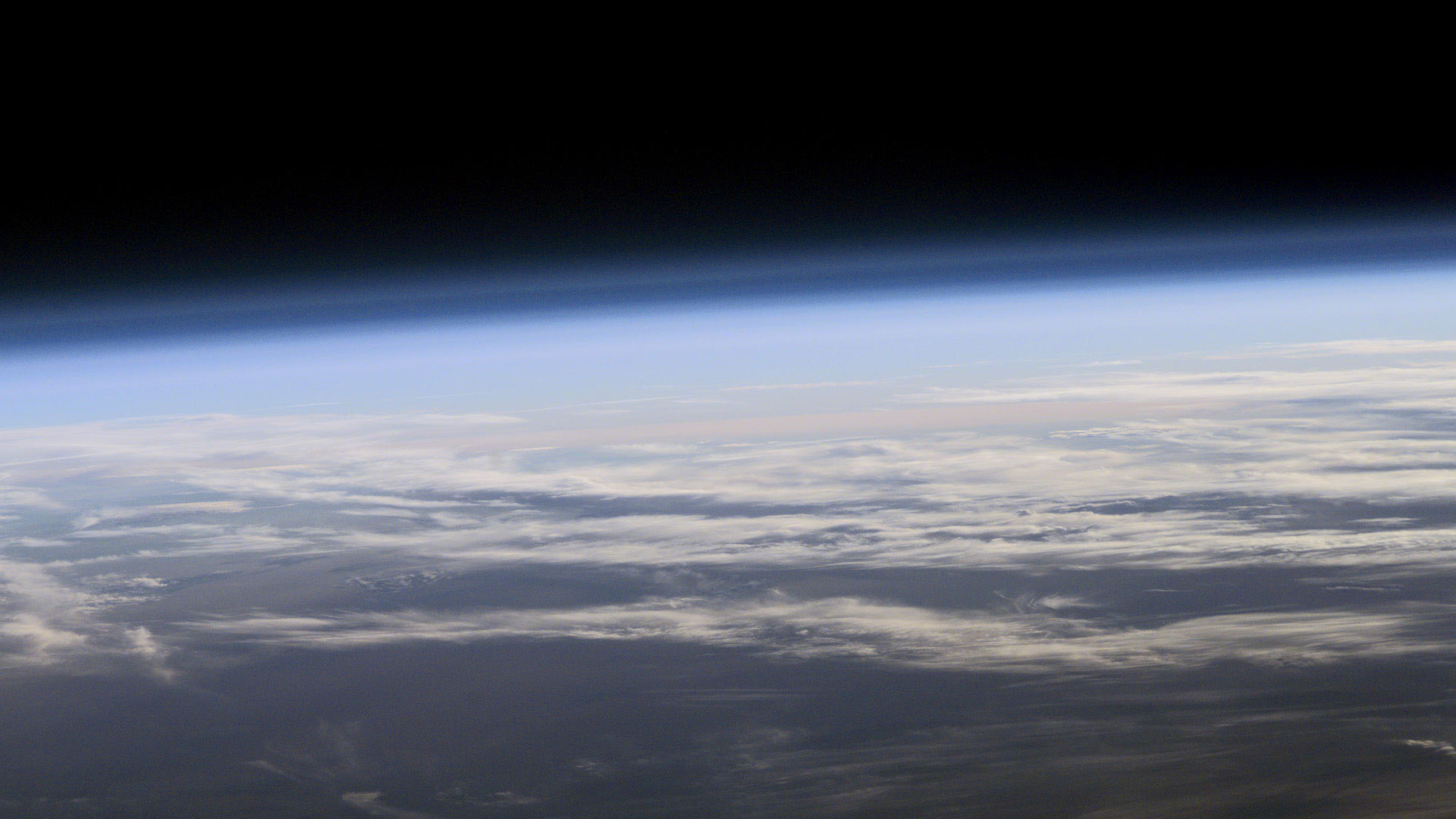
Simulations Reveal Correlation
To uncover a possible causal relationship, the scientists ran simulations that integrated ozone depletion into two different climate models. Most climate models consider only physical factors, not fluctuations in stratospheric ozone levels, in part because this would require much more computing power.
However, the new calculations make it clear: the cause of the weather anomalies observed in the northern hemisphere in 2011 and 2020 is mostly ozone depletion over the Arctic. The simulations the scientists ran with the two models largely coincided with observational data from those two years, as well as eight other such events that were used for comparison purposes. But when the scientists “turned off” ozone destruction in the models, they could not reproduce those results.
“What surprised us most from a scientific point of view is that, even though the models we were using for the simulation are utterly different, they produced similar results,” says co-author Gabriel Chiodo, SNSF Ambizione Fellow at the Institute for Atmospheric and Climate Science.
False-color view of total ozone over the Arctic pole. The purple and blue colors are where there is the least ozone, and the yellows and reds are where there is more ozone. Credit: NASA Ozone Watch
The Mechanism Explained
According to the researchers’ new understanding, the phenomenon begins with ozone depletion in the stratosphere. For ozone to be broken down there, temperatures in the Arctic must be very low. “Ozone destruction occurs only when it is cold enough and the polar vortex is strong in the stratosphere, about 30 to 50 kilometers above the ground,” Friedel points out.
Normally, ozone absorbs UV radiation emitted by the sun, thereby warming the stratosphere and helping to break down the polar vortex in spring. But if there is less ozone, the stratosphere cools and the vortex becomes stronger. “A strong polar vortex then produces the effects observed at the Earth’s surface,” Chiodo says. Ozone thus plays a major role in temperature and circulation changes around the North Pole.
Greater Accuracy Possible for Long-Term Forecasts
The new findings could help climate researchers make more accurate seasonal weather and climate forecasts in the future. This allows for better prediction of heat and temperature changes, “which is important for agriculture,” Chiodo says.
Friedel adds, “It will be interesting to observe and model the future evolution of the ozone layer.” This is because ozone depletion continues, even though ozone-depleting substances such as chlorofluorocarbons (CFCs) have been banned since 1989. CFCs are very long-lived and linger in the atmosphere for 50 to 100 years; their potential to cause ozone destruction lasts for decades after they have been taken out of circulation. “Yet CFC concentrations are steadily declining, and this raises the question of how quickly the ozone layer is recovering and how this will affect the climate system,” she says.
Reference: “Springtime arctic ozone depletion forces northern hemisphere climate anomalies” by Marina Friedel, Gabriel Chiodo, Andrea Stenke, Daniela I. V. Domeisen, Stephan Fueglistaler, Julien G. Anet and Thomas Peter, 7 July 2022, Nature Geoscience.
DOI: 10.1038/s41561-022-00974-7
Never miss a breakthrough: Join the SciTechDaily newsletter.
Follow us on Google and Google News.
3 Comments
I noticed you forgot to name the Chinese as the only people still pumping ozone killing gasses into the atmosphere. I guess they paid for this article maybe? You guys are despicable. If the U.S. was doing the bad thing, you would scream like bundles of branches.
Where is the color scale translating the concentration of ozone? Without the scale, it is impossible to compare and contrast this to what is happening in Antarctica. By the time of the Vernal Equinox, when sunlight touches the North Pole for the first time in six months, there is a buildup of anomalously high O3 held back by the circumpolar vortex. Might this lead to higher than usual temperatures in the enriched areas? The article blames CFCs for destroying ozone, which has a relatively short half-life. However, one sees a similar phenomenon in Antarctica — a disruption of the Brewer-Dobson circulation and a buildup of O3 outside the circumpolar vortex as the ozone decays. If one is operating under an unexamined and false assumption, then it it impossible to reach the correct conclusions. Funny how that works!
Also, what is depicted is more properly called a pseudo-color rendition, not false-color. NASA isn’t what it used to be.
“The simulations the scientists ran with the two models LARGELY coincided with observational data from those two years, as well as eight other such events that were used for comparison purposes.”
Largely? Words like “largely” and “mostly” fall in the category of hand waving. What is the correlation coefficient? Do the simulations also show the anomalously high ozone outside the vortex?