
Close Menu
    Facebook X (Twitter) Instagram
    SciTechDaily
    • Biology
    • Chemistry
    • Earth
    • Health
    • Physics
    • Science
    • Space
    • Technology
    Facebook X (Twitter) Pinterest YouTube RSS
    SciTechDaily
    Home»Earth»Hurricanes Are Getting Stronger According to Analysis of Long-Term Satellite Imagery
    Earth

    Hurricanes Are Getting Stronger According to Analysis of Long-Term Satellite Imagery

    By University of Wisconsin-MadisonMay 18, 2020No Comments3 Mins Read
    Facebook Twitter Pinterest Telegram LinkedIn WhatsApp Email Reddit
    Share
    Facebook Twitter LinkedIn Pinterest Telegram Email Reddit
    Hurricane Harvey
    Hurricane Harvey over North America in 2017 from GOES-16. GOES stands for Geostationary Operational Environmental Satellite. Credit: UW-Madison SSEC

    In almost every region of the world where hurricanes form, their maximum sustained winds are getting stronger. That is according to a new study by scientists at the National Oceanic and Atmospheric Administration National Center for Environmental Information and University of Wisconsin-Madison Cooperative Institute for Meteorological Satellite Studies, who analyzed nearly 40 years of hurricane satellite imagery.

    A warming planet may be fueling the increase.

    “Through modeling and our understanding of atmospheric physics, the study agrees with what we would expect to see in a warming climate like ours,” says James Kossin, a NOAA scientist based at UW-Madison and lead author of the paper, which is published today (May 18, 2020) in the Proceedings of the National Academy of Sciences.
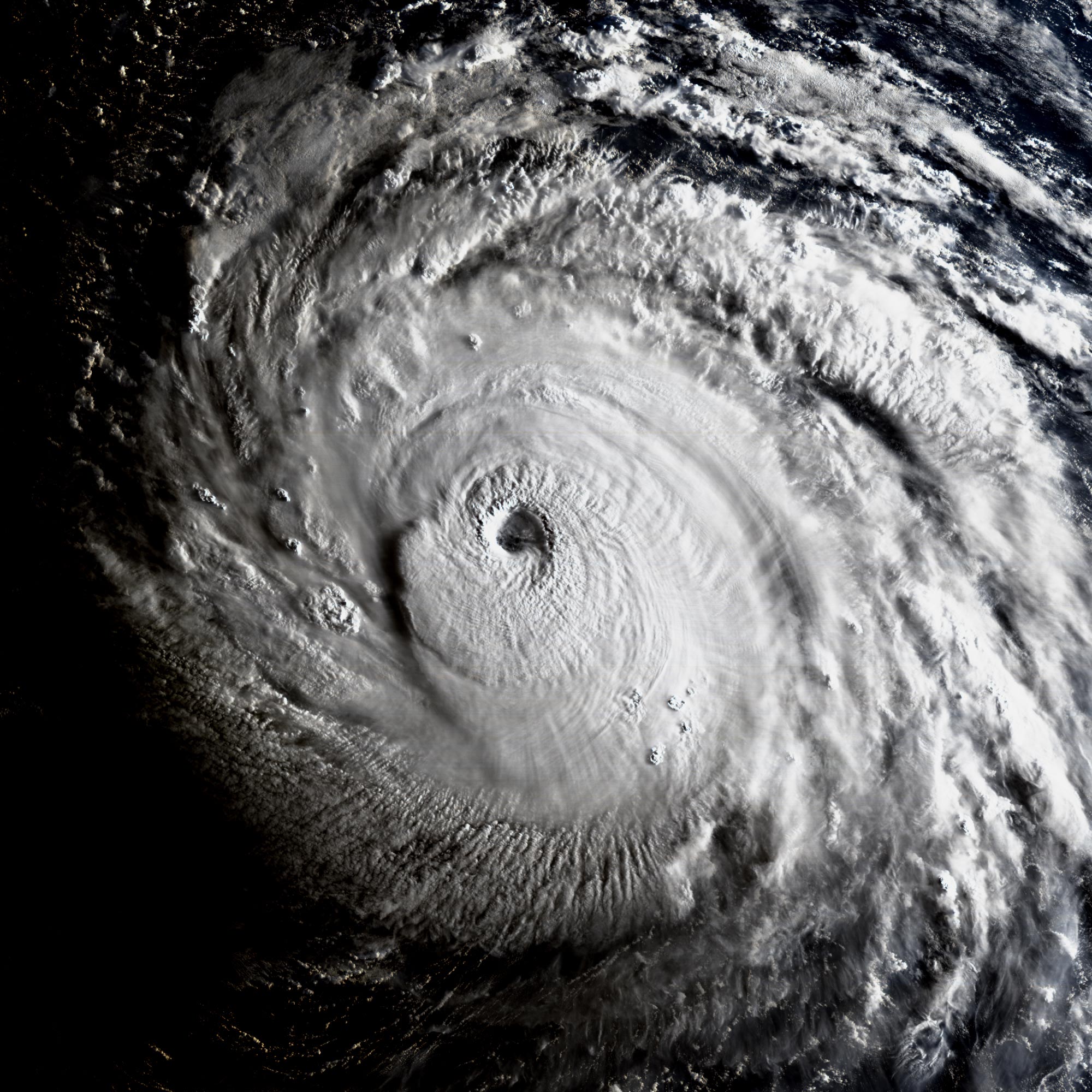
    Hurricane Irma
    A visible light image of Hurricane Irma in 2017 from GOES-16. GOES stands for Geostationary Operational Environmental Satellite. Credit: UW-Madison SSEC

    The research builds on Kossin’s previous work, published in 2013, which identified trends in hurricane intensification across a 28-year data set. However, says Kossin, that timespan was less conclusive and required more hurricane case studies to demonstrate statistically significant results.

    To increase confidence in the results, the researchers extended the study to include global hurricane data from 1979-2017. Using analytical techniques, including the CIMSS Advanced Dvorak Technique that relies on infrared temperature measurements from geostationary satellites to estimate hurricane intensity, Kossin and his colleagues were able to create a more uniform data set with which to identify trends.

    “The main hurdle we have for finding trends is that the data are collected using the best technology at the time,” says Kossin. “Every year the data are a bit different than last year, each new satellite has new tools and captures data in different ways, so in the end we have a patchwork quilt of all the satellite data that have been woven together.”

    Kossin’s previous research has shown other changes in hurricane behavior over the decades, such as where they travel and how fast they move. In 2014, he identified poleward migrations of hurricanes, where tropical cyclones are traveling farther north and south, exposing previously less-affected coastal populations to greater risk.

    In 2018, he demonstrated that hurricanes are moving more slowly across land due to changes in Earth’s climate. This has resulted in greater flood risks as storms hover over cities and other areas, often for extended periods of time.

    “Our results show that these storms have become stronger on global and regional levels, which is consistent with expectations of how hurricanes respond to a warming world,” says Kossin. “It’s a good step forward and increases our confidence that global warming has made hurricanes stronger, but our results don’t tell us precisely how much of the trends are caused by human activities and how much may be just natural variability.”

    Reference: “Global increase in major tropical cyclone exceedance probability over the past four decades” by James P. Kossin, Kenneth R. Knapp, Timothy L. Olander, and Christopher S. Velden, 18 May 2020, Proceedings of the National Academy of Sciences.
    DOI: 10.1073/pnas.1920849117

    This work was supported by NOAA Oceanic and Atmospheric Research Climate Program Office.

    Never miss a breakthrough: Join the SciTechDaily newsletter.
    Follow us on Google and Google News.

    Atmospheric Science Climate Change Hurricane Popular University of Wisconsin-Madison Weather
    Share. Facebook Twitter Pinterest LinkedIn Email Reddit

    Related Articles

    Future Hurricanes and Typhoons Will Roam Over More of the Earth

    Antarctic Ice Sheet Retreat Could Trigger Chain Reaction – Possibly Came Close to Collapse in the Past

    Global Warming Warning: Devastating Hurricanes Could Be Up to Five Times More Likely in the Caribbean

    Emerging Across the Globe: Potentially Fatal Combinations of Heat and Humidity

    Scientists Warn: Nine Climate Tipping Points Now ‘Active’ – Could Threaten the Existence of Human Civilization

    Hurricanes Have Become More Destructive for USA – Climatic Increase in Frequency of Worst Storms

    Melting Arctic Ice May Lead to Severe Weather Changes

    Third Pole Glacial Measuring Stations Will Give Monitor Glacier Health in Tibet

    Earth’s Clouds are Getting Lower, May be in Response to Global Warming

    Leave A Reply Cancel Reply

    • Facebook
    • Twitter
    • Pinterest
    • YouTube

    Don't Miss a Discovery

    Subscribe for the Latest in Science & Tech!

    Trending News

    Mezcal “Worm” in a Bottle Mystery: DNA Testing Reveals a Surprise

    New Research Reveals That Your Morning Coffee Activates an Ancient Longevity Switch

    This Is What Makes You Irresistible to Mosquitoes

    Shockingly Powerful Giant Octopuses Ruled the Seas 100 Million Years Ago

    Scientists Stunned by New Organic Molecules Found on Mars

    Rewriting Dinosaur Evolution: Scientists Unearth Remarkable 150-Million-Year-Old Stegosaur Skull

    Omega-3 Supplements Linked to Cognitive Decline in Surprising New Study

    First-of-Its-Kind Discovery: Homer’s Iliad Found Embedded in a 1,600-Year-Old Egyptian Mummy

    Follow SciTechDaily
    • Facebook
    • Twitter
    • YouTube
    • Pinterest
    • Newsletter
    • RSS
    SciTech News
    • Biology News
    • Chemistry News
    • Earth News
    • Health News
    • Physics News
    • Science News
    • Space News
    • Technology News
    Recent Posts
    • New Research Challenges Long-Held Beliefs About How the Brain Makes Decisions
    • Breakthrough Technology Reveals New Treatment Targets for Cancer
    • Scientists Discover New Way To Make Drug-Resistant Cancer Treatable Again
    • This Simple Exercise Trick Builds Muscle With Less Effort, Study Finds
    • Middle Age Is Becoming a Breaking Point in America, Study Reveals
    Copyright © 1998 - 2026 SciTechDaily. All Rights Reserved.
    • Science News
    • About
    • Contact
    • Editorial Board
    • Privacy Policy
    • Terms of Use

    Type above and press Enter to search. Press Esc to cancel.