
Close Menu
    Facebook X (Twitter) Instagram
    SciTechDaily
    • Biology
    • Chemistry
    • Earth
    • Health
    • Physics
    • Science
    • Space
    • Technology
    Facebook X (Twitter) Pinterest YouTube RSS
    SciTechDaily
    Home»Earth»NOAA’s GOES-T Reaches Geostationary Orbit 22,236 Miles Above Earth – Now Designated GOES-18
    Earth

    NOAA’s GOES-T Reaches Geostationary Orbit 22,236 Miles Above Earth – Now Designated GOES-18

    By NOAAMarch 16, 2022No Comments4 Mins Read
    Facebook Twitter Pinterest Telegram LinkedIn WhatsApp Email Reddit
    Share
    Facebook Twitter LinkedIn Pinterest Telegram Email Reddit
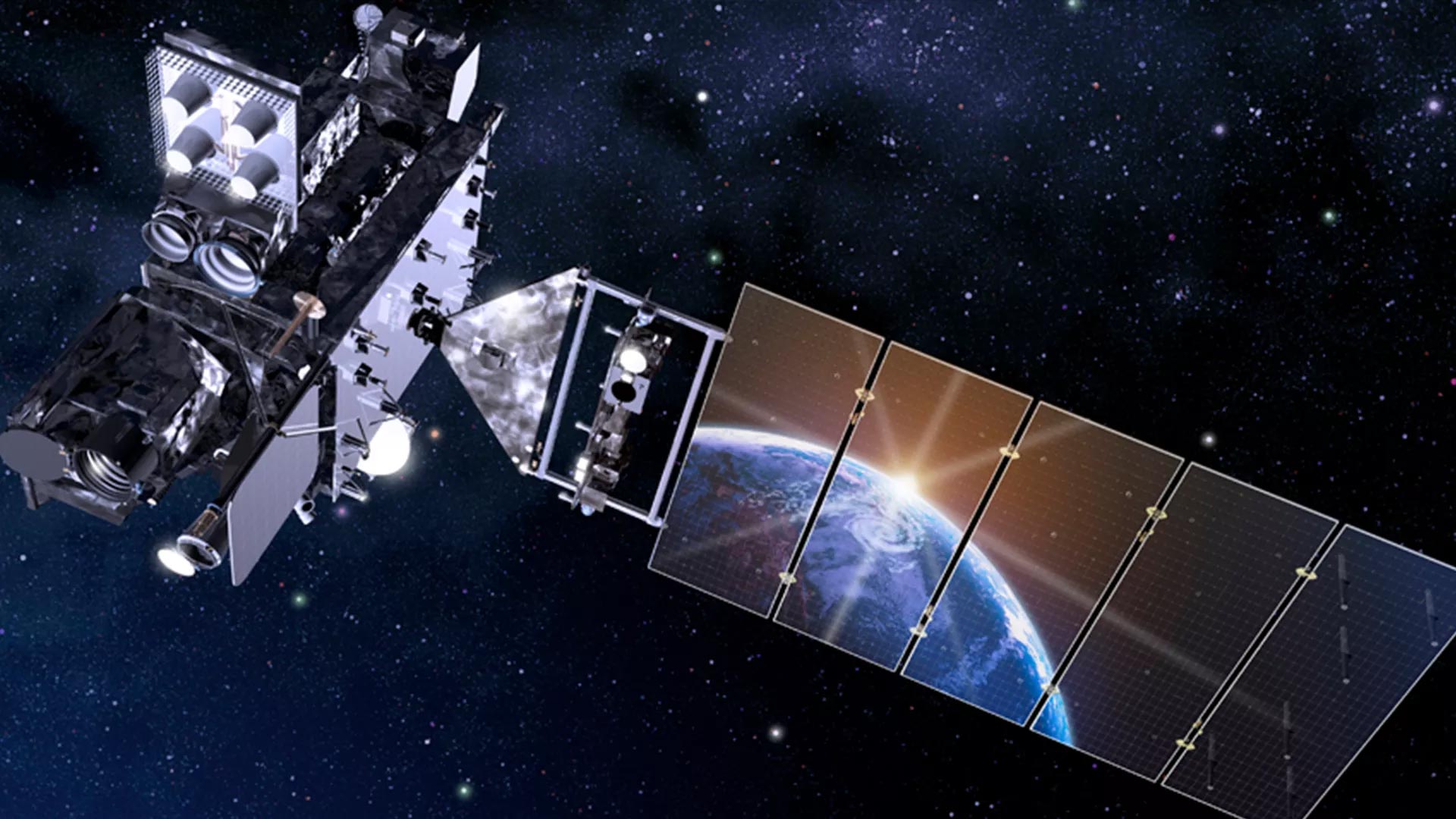
    NOAA GOES-T Satellite
    NOAA’s GOES-T is the third satellite in the Geostationary Operational Environmental Satellites (GOES) – R Series, the Western Hemisphere’s most sophisticated weather-observing and environmental-monitoring system. The GOES-R Series provides advanced imagery and atmospheric measurements, real-time mapping of lightning activity, and monitoring of space weather. Credit: NOAA

    On March 14, 2022, GOES-T executed its final engine burn, placing the satellite in geostationary orbit 22,236 miles (13,816 miles) above Earth. Upon reaching this milestone, GOES-T was renamed GOES-18. GOES satellites are designated with a letter prior to launch and a number once they achieve geostationary orbit.

    NOAA’s GOES-T satellite launched on March 1, 2022, at 4:38 p.m. EST, lifting off from Cape Canaveral Space Force Station in Florida. The satellite launched aboard a United Launch Alliance Atlas V rocket from Space Launch Complex 41. The launch was managed by NASA’s Launch Services Program, based at Kennedy Space Center.

    GOES-T separated from the Atlas V Centaur upper stage at 8:11 p.m. EST on March 1. GOES-T mission managers confirmed that its solar arrays successfully deployed at 8:28 p.m. EST and the satellite was operating on its own power.

    The launch vehicle delivered GOES-T to a geostationary transfer orbit, a highly elliptical orbit where the satellite is close to the Earth during one part of its orbit and far from the Earth on the opposite side. Placing GOES-T in a geostationary transfer orbit provides the satellite a path to reach its final geostationary orbit over the equator (see diagram below). After a series of orbit-raising maneuvers and engine burns, on March 14, GOES-T was delivered into a circular geostationary orbit. The satellite is now in position to orbit at the same rate Earth rotates, so it can keep constant watch over the same region.
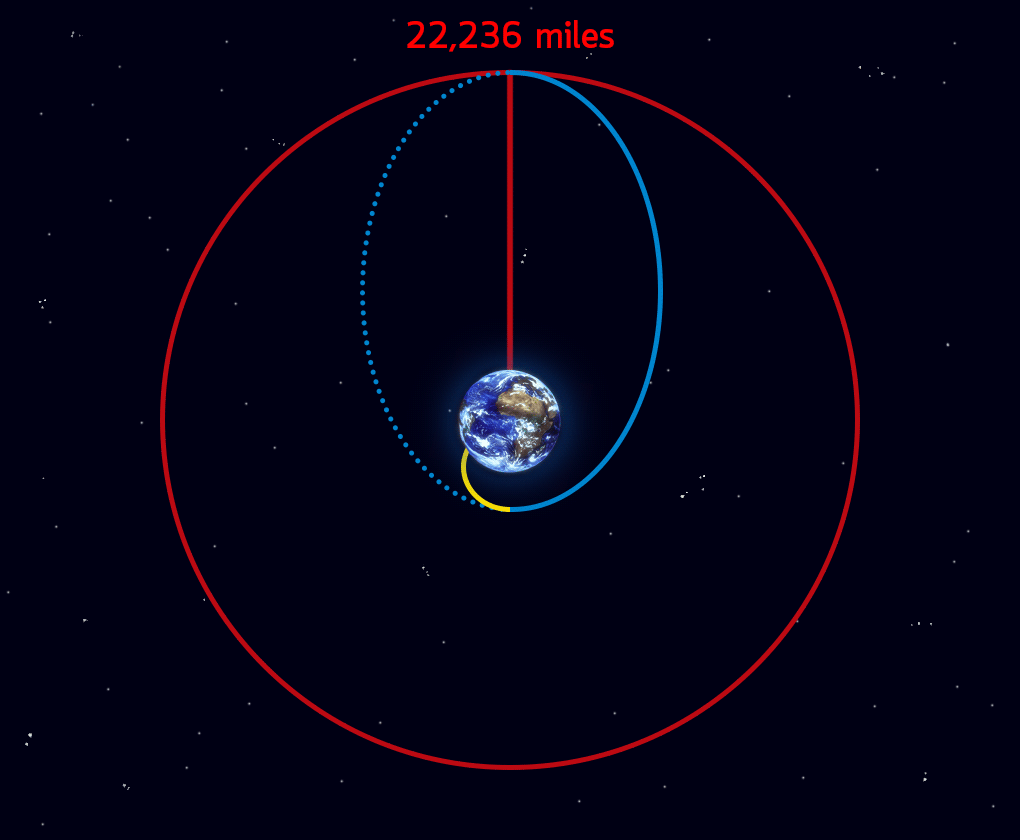
    Geostationar Transfer Orbit
    Geostationary transfer orbit: After liftoff, the launch vehicle makes its way to space following a path shown by the yellow line. At the target destination, the rocket releases the payload which sets it off on an elliptical orbit, following the blue line which sends the payload farther away from Earth. The point farthest away from the Earth on the blue elliptical orbit is called the apogee and the point closest is called the perigee. When the payload reaches the apogee at the geostationary altitude of 22,236 miles, it fires its engines in such a way that it enters onto the circular geostationary orbit and stays there, shown by the red line in the diagram. The geostationary transfer orbit is the blue path from the yellow orbit to the red orbit. Credit: European Space Agency

    Next, GOES-18 will perform its second stage solar array deployment, releasing the solar array. The deployed solar panels will form a single solar array wing that will rotate once per day to continuously point its photovoltaic (solar) cells toward the sun. The photovoltaic cells will convert energy from the sun into electricity to power the entire satellite, including the instruments, computers, data processors, sensors, and telecommunications equipment.  

    In the days that follow, several maneuvers will be conducted to put GOES-T in its 89.5 degrees west longitude initial checkout position, between the operational GOES-East and GOES-West satellites. Then, the magnetometer boom will be deployed. The satellite will then begin on-orbit checkout and validation of its instruments and systems. 
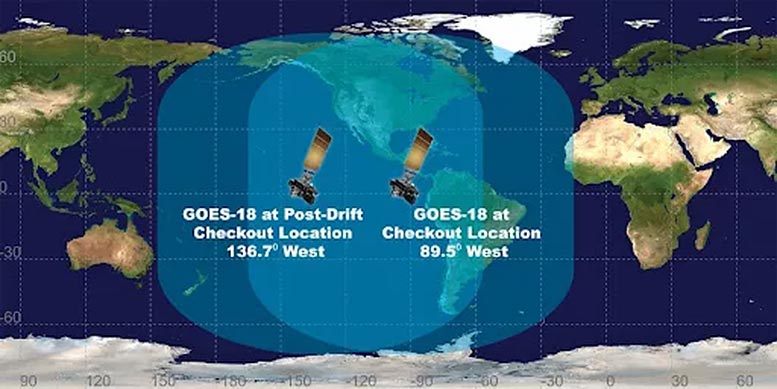
    GOES-18 View of Western Hemisphere
    GOES-18 view of the Western Hemisphere at its initial checkout location and post-drift checkout location. Credit: NOAA

    NOAA expects to see the first images from GOES-18 in May. Then GOES-18 will drift west to 136.8 degrees west longitude and finish post-launch testing. NOAA plans for GOES-18 to take over as the operational GOES-West satellite in early 2023, replacing GOES-17. GOES-17 will become the on-orbit backup.  

    GOES-18 will track destructive wildfires, lightning, Pacific Ocean-based storms, dense fog, and other hazards that threaten the U.S. West Coast, Hawaii, and Alaska. It will also monitor solar activity and space weather to provide early warnings of disruptions to power grids, communications, and navigation systems.

    Never miss a breakthrough: Join the SciTechDaily newsletter.
    Follow us on Google and Google News.

    NASA NOAA Popular
    Share. Facebook Twitter Pinterest LinkedIn Email Reddit

    Related Articles

    La Niña’s Return Cools the Pacific and Shakes Up Global Weather

    Stunning First Imagery of Earth From Advanced GOES-18 Satellite

    U.S. Government Report: Sea Level To Rise Up to a Foot by 2050

    NASA To Launch 4 Fascinating Earth Science Missions in 2022 – Monitoring Our Changing Planet

    Robotic Navigation Tech – That Helped NASA’s Perseverance Rover Land on Mars – Will Explore the Deep Ocean

    Incredible Satellite View of the Moon’s Shadow Crossing the Surface of Earth During the Total Solar Eclipse

    NASA Launched Rocket into Aurora Borealis

    Research Shows Roughly 150 Billion Tons of Ice Lost Annually

    ‘Blue Marble’ Image of the Earth Taken from NASA’s Suomi NPP Satellite

    Leave A Reply Cancel Reply

    • Facebook
    • Twitter
    • Pinterest
    • YouTube

    Don't Miss a Discovery

    Subscribe for the Latest in Science & Tech!

    Trending News

    Largest-Ever Study Finds Medicinal Cannabis Ineffective for Anxiety, Depression, PTSD

    250-Million-Year-Old Egg Solves One of Evolution’s Biggest Mysteries

    Living With Roommates Might Be Changing Your Gut Microbiome Without You Knowing

    Century-Old Cleaning Chemical Linked to 500% Increased Risk of Parkinson’s Disease

    What if Your Memories Never Happened? Physicists Take a New Look at the Boltzmann Brain Paradox

    One of the Universe’s Largest Stars May Be Getting Ready To Explode

    Scientists Discover Enzyme That Could Supercharge Ozempic-Like Weight Loss Drugs

    Popular Sweetener Linked to DNA Damage – “It’s Something You Should Not Be Eating”

    Follow SciTechDaily
    • Facebook
    • Twitter
    • YouTube
    • Pinterest
    • Newsletter
    • RSS
    SciTech News
    • Biology News
    • Chemistry News
    • Earth News
    • Health News
    • Physics News
    • Science News
    • Space News
    • Technology News
    Recent Posts
    • Scientists Say This Overlooked Organ Could Hold the Key to Longer Life
    • Want Less Stress? Landmark Study Points to a Simple Habit
    • Scientists Reveal Eating Fruits and Vegetables May Increase Your Risk of Lung Cancer
    • AI Reveals Explosive Growth of Floating Algae Across the World’s Oceans
    • 5.5 Million Bees Discovered Living Beneath a New York Cemetery
    Copyright © 1998 - 2026 SciTechDaily. All Rights Reserved.
    • Science News
    • About
    • Contact
    • Editorial Board
    • Privacy Policy
    • Terms of Use

    Type above and press Enter to search. Press Esc to cancel.