
Close Menu
    Facebook X (Twitter) Instagram
    SciTechDaily
    • Biology
    • Chemistry
    • Earth
    • Health
    • Physics
    • Science
    • Space
    • Technology
    Facebook X (Twitter) Pinterest YouTube RSS
    SciTechDaily
    Home»Space»NASA, ULA Launch GOES-T: NOAA’s Newest Earth Observing Satellite
    Space

    NASA, ULA Launch GOES-T: NOAA’s Newest Earth Observing Satellite

    By NASAMarch 1, 2022No Comments3 Mins Read
    Facebook Twitter Pinterest Telegram LinkedIn WhatsApp Email Reddit
    Share
    Facebook Twitter LinkedIn Pinterest Telegram Email Reddit
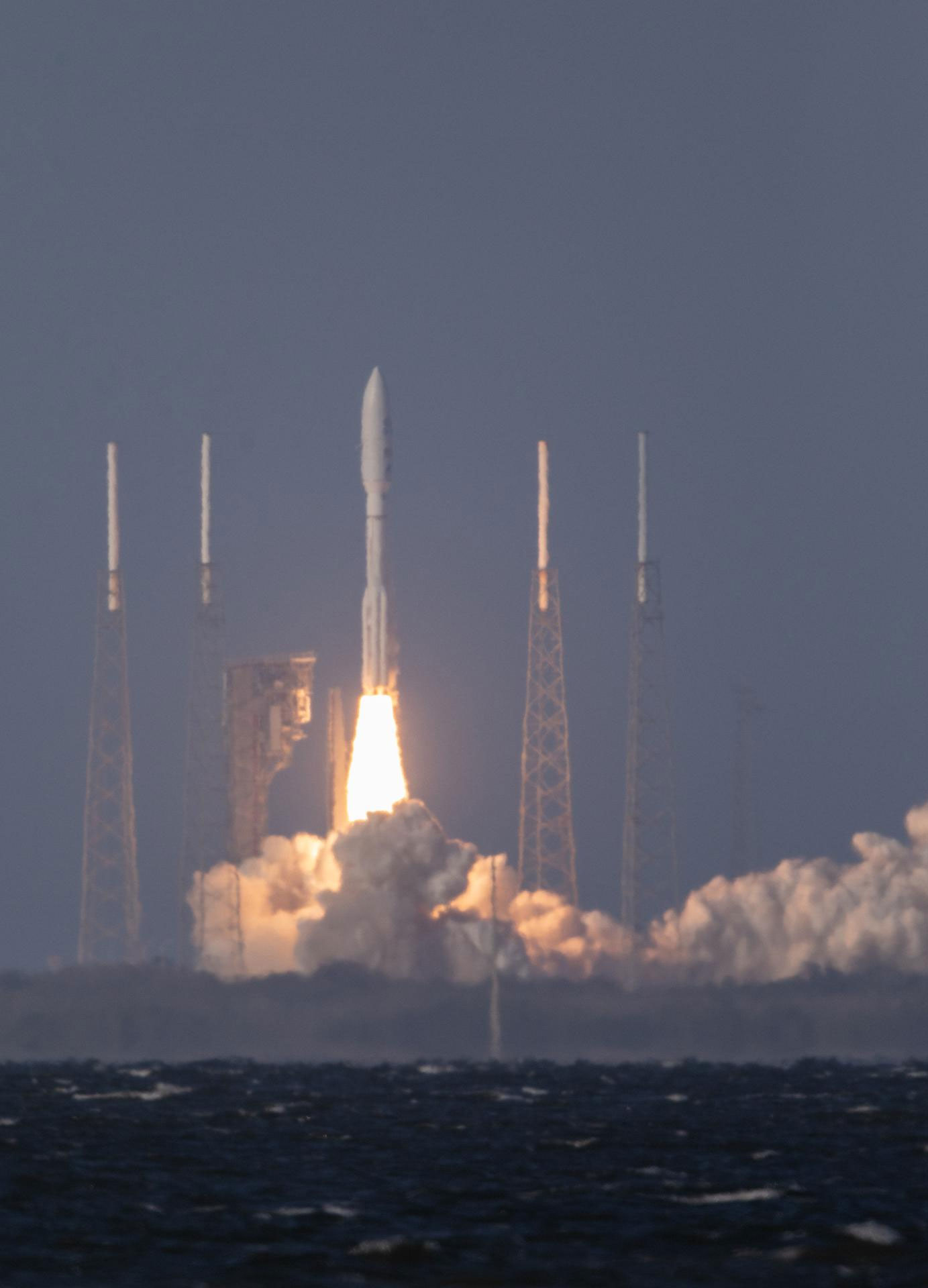
    Atlas V 541 Rocket GOES-T Launch
    A United Launch Alliance Atlas V 541 rocket, carrying the National Oceanic and Atmospheric Administration’s (NOAA) Geostationary Operational Environmental Satellite-T (GOES-T), lifts off from Space Launch Complex 41 at Cape Canaveral Space Force Station in Florida on March 1, 2022. Credit: NASA/Kim Shiflett

    NASA successfully launched the third in a series of next-generation weather satellites for the National Oceanic and Atmospheric Administration (NOAA) at 4:38 p.m. EST Tuesday. The newest Geostationary Operational Environmental Satellite, GOES-T, launched on a United Launch Alliance Atlas V rocket from Cape Canaveral Space Force Station.

    GOES-T mission managers confirmed at 8:28 p.m. the spacecraft’s solar arrays successfully deployed and the spacecraft was operating on its own power.

    “We at NASA are proud to support our joint agency partner, NOAA, and their mission to provide critical data and imagery to forecasters and researchers tracking hazardous weather,” said NASA Deputy Administrator Pam Melroy. “While the GOES-R series satellites’ main job is to help with weather prediction, these satellites produce observations that also help with NASA science. Our agencies’ collaboration brings great benefits toward understanding our planet.”
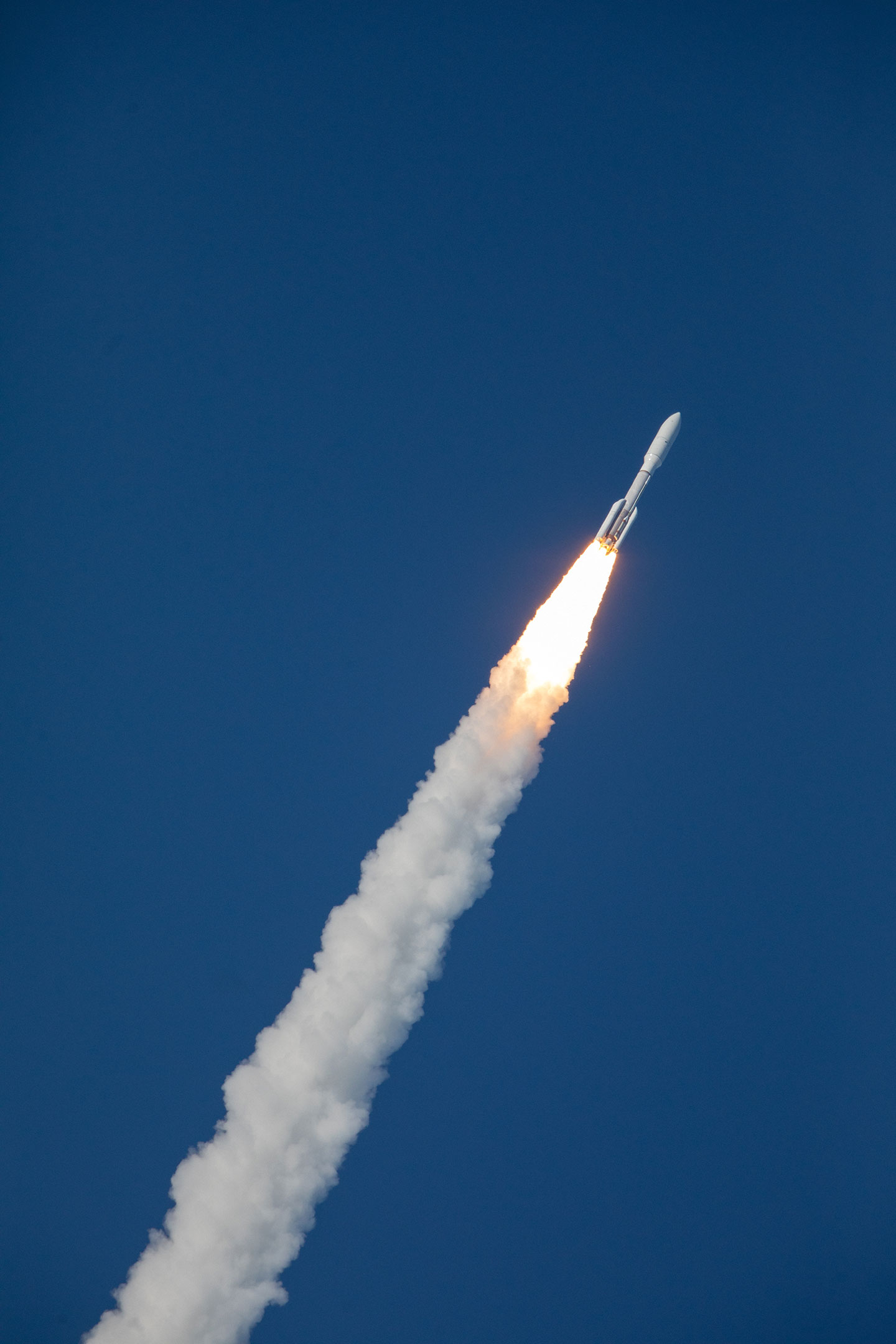
    GOES-T Launch Rocket
    A joint effort between NASA and the National Oceanic and Atmospheric Administration (NOAA), the GOES-T satellite will be positioned to watch over the western contiguous United States, Alaska, Hawaii, Mexico, Central America, and the Pacific Ocean. Credit: NASA/Kim Shiflett

    The satellite will provide continuous coverage of weather and hazardous environmental conditions in the Western Hemisphere. The GOES program also predicts space weather near Earth that can interfere with satellite electronics, GPS, and radio communications.

    “We at NASA feel honored to continue to work with NOAA on this strategic and successful partnership. Besides our work on spacecraft development and launch, NASA supported science teams are looking forward to analyzing the precious data that GOES-T will provide,” said Thomas Zurbuchen, the associate administrator for the Science Mission Directorate at NASA Headquarters in Washington. “These observations are a key part of our research towards improving understanding and models of climate, weather, and space weather – models that, in turn, support NOAA’s crucial work as they lead the weather and space weather forecasts for the nation.”

    Once GOES-T is positioned in a geostationary orbit 22,300 miles above Earth, it will be renamed GOES-18. Following a successful orbital checkout of its instruments and systems, GOES-18 will go into service over the U.S. West Coast and Pacific Ocean. This position puts it in a key spot where it can observe weather sweeping in from the west to the east over the U.S. – giving forecasters an upstream view of what is coming.

    “This launch continues a 48-year history of NOAA, NASA, industry, and academia working together on geostationary satellite observations,” said John Gagosian, director of NASA’s Joint Agency Satellite Division. “GOES satellites help us every day. They bring advanced new capabilities to help forecasters better monitor and predict dangerous environmental conditions like hurricanes, thunderstorms, floods, and fires.”

    NASA’s Goddard Space Flight Center in Greenbelt, Maryland, oversees the acquisition of the GOES-R spacecraft and instruments and built the Magnetometer instrument for GOES-T, as well as for the future GOES-U satellite. NASA’s Launch Services Program, based at the agency’s Kennedy Space Center in Florida, provided launch management for the mission. NOAA oversees the GOES-R Series Program through an integrated NOAA-NASA office, managing the ground system, operating the satellites, and distributing their data to users worldwide. Lockheed Martin designs, builds, and tests the GOES-R series satellites. L3Harris Technologies provides the main instrument payload, the Advanced Baseline Imager, along with the ground system, which includes the antenna system for data reception.

    Never miss a breakthrough: Join the SciTechDaily newsletter.
    Follow us on Google and Google News.

    NASA NOAA Rocket United Launch Alliance
    Share. Facebook Twitter Pinterest LinkedIn Email Reddit

    Related Articles

    Helium Leak Forces NASA to Delay Boeing Starliner Launch Again

    Aiming for the Moon: Technicians Add “Target” to NASA Artemis II Rocket Hardware

    Liftoff! Stunning Photos of Successful Launch for JPSS-2, LOFTID

    GOES-T Satellite Separates From Spacecraft, Continues on Journey To Save Lives

    NOAA’s GOES-T Rolled Out to the Pad for Today’s Launch

    “Go for Launch” – NOAA’s GOES-T Satellite Cleared for Tuesday Launch

    ULA Atlas V Rocket Topped Off With NOAA’s GOES-T Satellite – Ready for Launch

    NASA Lucy Launched on Atlas V Rocket – Asteroid Mission to “Fossils” of Planet Formation

    NASA Confiscates Stolen Rocket Engine

    Leave A Reply Cancel Reply

    • Facebook
    • Twitter
    • Pinterest
    • YouTube

    Don't Miss a Discovery

    Subscribe for the Latest in Science & Tech!

    Trending News

    Breakthrough Bowel Cancer Trial Leaves Patients Cancer-Free for Nearly 3 Years

    Natural Compound Shows Powerful Potential Against Rheumatoid Arthritis

    100,000-Year-Old Neanderthal Fossils in Poland Reveal Unexpected Genetic Connections

    Simple “Gut Reset” May Prevent Weight Gain After Ozempic or Wegovy

    2.8 Days to Disaster: Scientists Warn Low Earth Orbit Could Suddenly Collapse

    Common Food Compound Shows Surprising Power Against Superbugs

    5 Simple Ways To Remember More and Forget Less

    The Atomic Gap That Could Cost the Semiconductor Industry Billions

    Follow SciTechDaily
    • Facebook
    • Twitter
    • YouTube
    • Pinterest
    • Newsletter
    • RSS
    SciTech News
    • Biology News
    • Chemistry News
    • Earth News
    • Health News
    • Physics News
    • Science News
    • Space News
    • Technology News
    Recent Posts
    • ADHD Isn’t Just a Deficit: Study Reveals Powerful Hidden Strengths
    • Scientists Uncover “Astonishing” Hidden Property of Light
    • Scientists Discover Stem Cells That Could Regrow Teeth and Bone
    • Scientists Discover Natural Molecule That Stops Alzheimer’s Protein Clumps From Forming
    • Early Cannabis Use May Stall Key Brain Skills in Teens
    Copyright © 1998 - 2026 SciTechDaily. All Rights Reserved.
    • Science News
    • About
    • Contact
    • Editorial Board
    • Privacy Policy
    • Terms of Use

    Type above and press Enter to search. Press Esc to cancel.