
Close Menu
    Facebook X (Twitter) Instagram
    SciTechDaily
    • Biology
    • Chemistry
    • Earth
    • Health
    • Physics
    • Science
    • Space
    • Technology
    Facebook X (Twitter) Pinterest YouTube RSS
    SciTechDaily
    Home»Space»NOAA’s GOES-T Rolled Out to the Pad for Today’s Launch
    Space

    NOAA’s GOES-T Rolled Out to the Pad for Today’s Launch

    By Jim Cawley, NASA’s Kennedy Space CenterMarch 1, 20221 Comment2 Mins Read
    Facebook Twitter Pinterest Telegram LinkedIn WhatsApp Email Reddit
    Share
    Facebook Twitter LinkedIn Pinterest Telegram Email Reddit
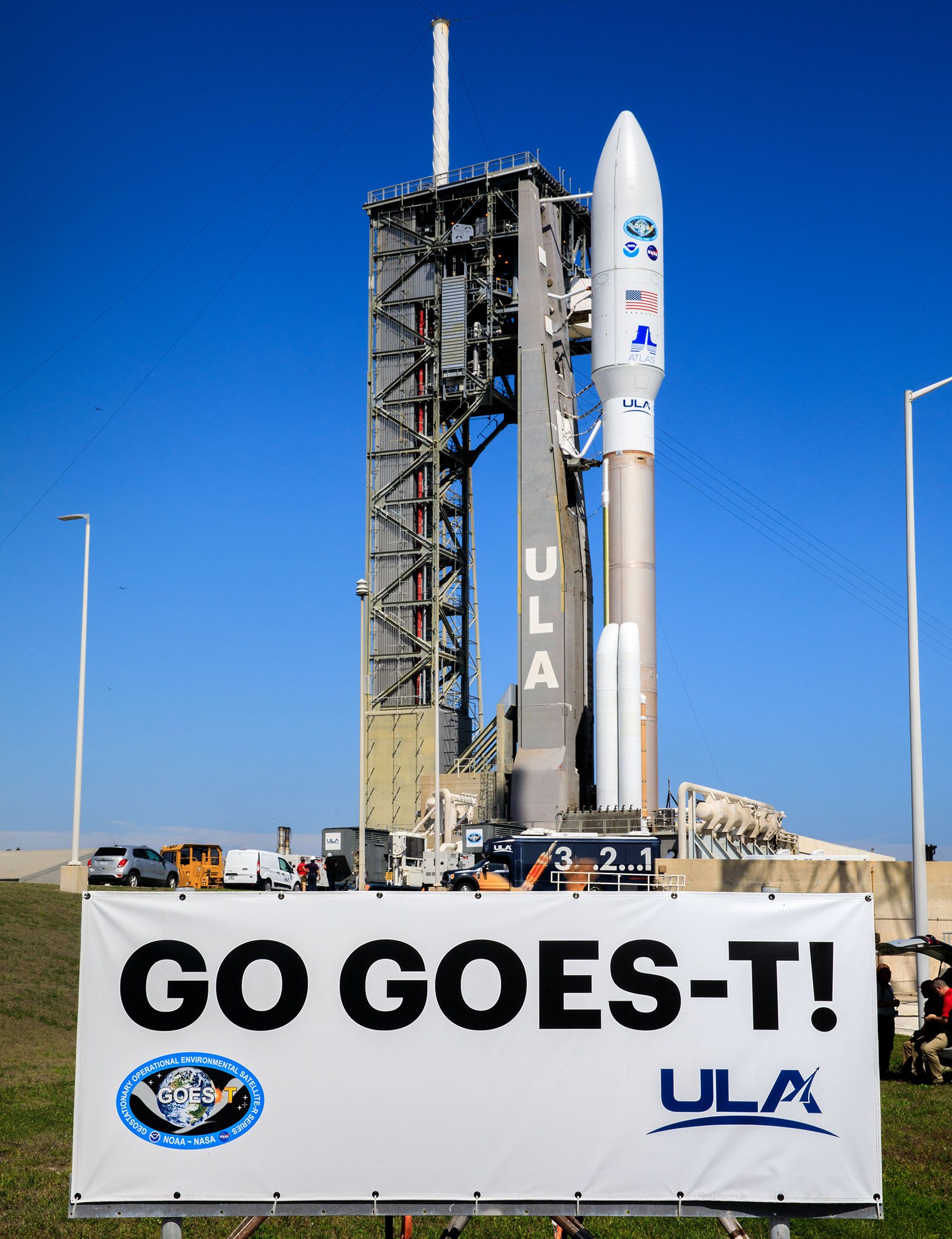
    NOAA GOES-T Launch Pad
    A United Launch Alliance Atlas V 541 rocket, carrying the National Oceanic and Atmospheric Administration’s (NOAA) Geostationary Operational Environmental Satellite-T (GOES-T), rolls out from the Vertical Integration Facility to Space Launch Complex 41 at Cape Canaveral Space Force Station in Florida on February 28, 2022. Credit: NASA/Kim Shiflett

    The Geostationary Operational Environmental Satellite-T (GOES-T) satellite, a joint effort between NASA and the National Oceanic and Atmospheric Administration (NOAA), is out at the launch pad and ready for its ride into space.

    On Monday, February 28, 2022, GOES-T rolled out from United Launch Alliance’s (ULA) Vertical Integration Facility Cape Canaveral Space Force Station’s Space Launch Complex 41. Secured atop a ULA V 541 rocket, GOES-T is targeted to lift off Tuesday, March 1, at 4:38 p.m. EST. There is a two-hour launch window.

    The GOES satellite network helps meteorologists observe and predict local weather events, including thunderstorms, tornadoes, fog, hurricanes, flash floods, and other severe weather. In addition, GOES observations have proven helpful in monitoring dust storms, volcanic eruptions, and forest fires.

    The launch is being managed by NASA’s Launch Services Program, based at the agency’s Kennedy Space Center.

    “For us, this is really the last big operation other than launch,” said GOES-T Mission Manager Rex Engelhardt. “The end of my job is the beginning of the on-orbit checkout and operations that will go on for years and years. Once we separate the spacecraft into its correct orbit, we’re done. And that’s a good feeling; there is accomplishment there.”

    GOES-T is the third satellite in NOAA’s GOES-R series – the Western Hemisphere’s most sophisticated weather observing and environmental monitoring system. The GOES-R series will maintain the two-satellite system, extending the operational lifetime through December 2036.

    Follow the launch day activities by tuning in to NASA TV, the NASA app, or the agency’s website, starting today at 4 p.m.

    Never miss a breakthrough: Join the SciTechDaily newsletter.
    Follow us on Google and Google News.

    Kennedy Space Center NASA NOAA United Launch Alliance
    Share. Facebook Twitter Pinterest LinkedIn Email Reddit

    Related Articles

    GOES-T Satellite Separates From Spacecraft, Continues on Journey To Save Lives

    NASA, ULA Launch GOES-T: NOAA’s Newest Earth Observing Satellite

    NOAA’s GOES-T “Earth in High Definition” Satellite Preparing for Liftoff From Cape Canaveral Space Force Station

    NASA’s Mars Helicopter Undergoes Final Testing – Will Be First Aircraft to Fly on Another Planet

    Orion Spacecraft Returns to Kennedy Space Center for Final Preparations Before Artemis I Launch

    NOAA’s GOES-S Satellite is Ready for Today’s Launch, Watch It Live

    Microgravity Mimics Aging in Immune Cells

    NOAA Solar Eruption Classifications

    Construction Begins on Space Shuttle Atlantis Exhibit at Kennedy Space Center Visitor Complex

    1 Comment

    1. Lorenzo Antonio Quesada on June 4, 2024 7:28 pm

      Self titled babyjesus 09 06 1985 footprint Lorenzo Antonio Quesada babyjesus

      Reply
    Leave A Reply Cancel Reply

    • Facebook
    • Twitter
    • Pinterest
    • YouTube

    Don't Miss a Discovery

    Subscribe for the Latest in Science & Tech!

    Trending News

    Scientists Discover 132-Million-Year-Old Dinosaur Tracks on South Africa’s Coast

    Scientists Uncover the Secret Ingredient Behind the Spark That May Have Started Life on Earth

    Physicists Observe Matter in Two Places at Once in Mind-Bending Quantum Experiment

    Stanford Scientists Discover Hidden Brain Circuit That Fuels Chronic Pain

    New Study Reveals Why Ozempic Works Better for Some People Than Others

    Climate Change Is Altering a Key Greenhouse Gas in a Way Scientists Didn’t Expect

    New Study Suggests Gravitational Waves May Have Created Dark Matter

    Scientists Discover Why the Brain Gets Stuck in Schizophrenia

    Follow SciTechDaily
    • Facebook
    • Twitter
    • YouTube
    • Pinterest
    • Newsletter
    • RSS
    SciTech News
    • Biology News
    • Chemistry News
    • Earth News
    • Health News
    • Physics News
    • Science News
    • Space News
    • Technology News
    Recent Posts
    • 320 Light-Years Away, a Planet Confirms a Fundamental Cosmic Assumption
    • Astronomers Solve Decades-Long Mystery About Saturn’s Spin – “Something Strange Was Happening”
    • Scientists Uncover Strange New State of Matter Inside Uranus and Neptune
    • The Crown Jewel of Dentistry? Breakthrough Tech Could Transform Tooth Repair
    • The Surprising Non-Medical Factor That Determines Cancer Survival
    Copyright © 1998 - 2026 SciTechDaily. All Rights Reserved.
    • Science News
    • About
    • Contact
    • Editorial Board
    • Privacy Policy
    • Terms of Use

    Type above and press Enter to search. Press Esc to cancel.