
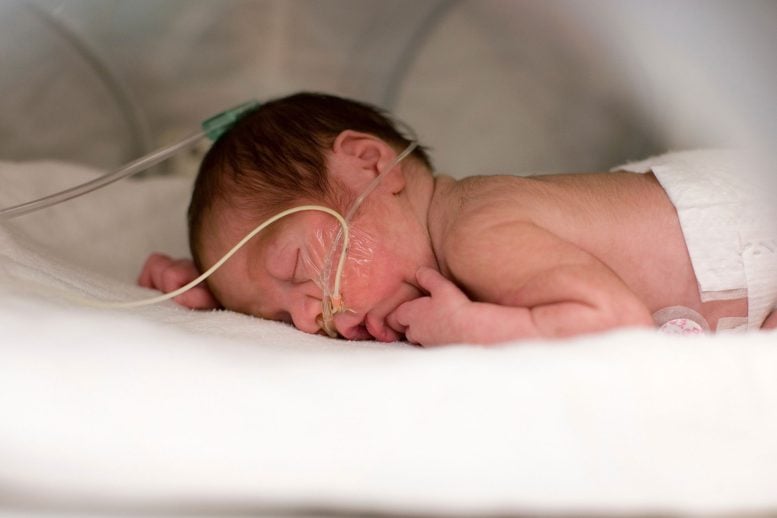
Epigenetic biomarkers found in parents of preterm infants may help predict premature births. A future test could aid in early intervention and prevention.
A signature found in the cheek cells of mothers and fathers of preterm infants may help develop a test to determine whether a pregnancy may end too early. Such a test could help prevent premature births and the many resulting health impacts on infants by alerting medical providers to the need for early intervention measures.
In a study published in Scientific Reports today (March 1, 2022), researchers documented more than 100 epigenetic biomarkers in mothers of preterm babies that were distinct from mothers of babies carried to term. Fathers had fewer biomarkers but enough to indicate a likely paternal role in preterm birth.
“The signature we found was present in all the parents we analyzed,” said senior author Michael Skinner, a professor in Washington State University’s School of Biological Sciences. “This is likely to lead eventually to a very useful test. We used buccal cells, which are collected by a cheek swab. It’s very non-invasive and easy to do.”
Epigenetics and Transgenerational Inheritance
Epigenetics are molecular factors and processes around DNA that determine how genes behave. While independent of DNA sequence, epigenetic modifications, which can be caused by things such as toxicant exposure, poor nutrition, and alcohol use, can also be inherited.
In this study, researchers found that the preterm female babies carried more than 100 of these biomarkers, indicating the propensity to have a preterm baby may be passed down. That transgenerational capacity is also supported by the fact the signature is found in cheek cells, Skinner said. If an epigenetic modification is present in both sperm and ovum, the resulting baby will have that modification present in every cell of their body – including their cheek cells.
For this study, the researchers took cheek swabs from two groups of mother-father-infant triads shortly after the babies were born. In one set of 19 triads, the infants were born premature and in another group of 21 triads, the babies were carried to full term. The epigenetic analysis revealed the signature in the mothers, fathers, and female preterm babies, but none in the male preterm infants.
This is a “proof of concept” study, and the researchers note that the next step would be to test this with greater numbers of parents and children.
Potential for Early Intervention
Early birth before 37 weeks of gestation can be fatal for infants, and many who survive face a host of health issues, some of which can follow them their entire lives, including cognitive disabilities and cardiovascular problems. There are many risk factors that can cause preterm birth such as a twin or multiple pregnancy and the high-blood pressure condition known as preclampsia – but some early births are unexpected. Having a diagnostic test in the first term of pregnancy can allow caregivers to take steps to delay or prevent a preterm birth, Skinner said.
Skinner’s lab has previously published studies on other potential epigenetic biomarkers, including one for autism and rheumatoid arthritis, paving the way for earlier treatment.
“Although we may not be able to fix the problem, if we know that it’s going to develop because of these diagnostics, we can treat it,” said Skinner. “This could help with the transition from reactionary medicine to preventive medicine.”
Reference: “Preterm birth buccal cell epigenetic biomarkers to facilitate preventative medicine” by Paul Winchester, Eric Nilsson, Daniel Beck and Michael K. Skinner, 1 March 2022, Scientific Reports.
DOI: 10.1038/s41598-022-07262-9
In addition to Skinner, co-authors on this paper include Paul Winchester at Indiana University as well as Eric Nilsson and Daniel Beck from WSU. This study was supported by grants from the John Templeton Foundation.
Never miss a breakthrough: Join the SciTechDaily newsletter.
Follow us on Google and Google News.