
Close Menu
    Facebook X (Twitter) Instagram
    SciTechDaily
    • Biology
    • Chemistry
    • Earth
    • Health
    • Physics
    • Science
    • Space
    • Technology
    Facebook X (Twitter) Pinterest YouTube RSS
    SciTechDaily
    Home»Space»ULA Atlas V Rocket Topped Off With NOAA’s GOES-T Satellite – Ready for Launch
    Space

    ULA Atlas V Rocket Topped Off With NOAA’s GOES-T Satellite – Ready for Launch

    By NASAFebruary 28, 2022No Comments2 Mins Read
    Facebook Twitter Pinterest Telegram LinkedIn WhatsApp Email Reddit
    Share
    Facebook Twitter LinkedIn Pinterest Telegram Email Reddit
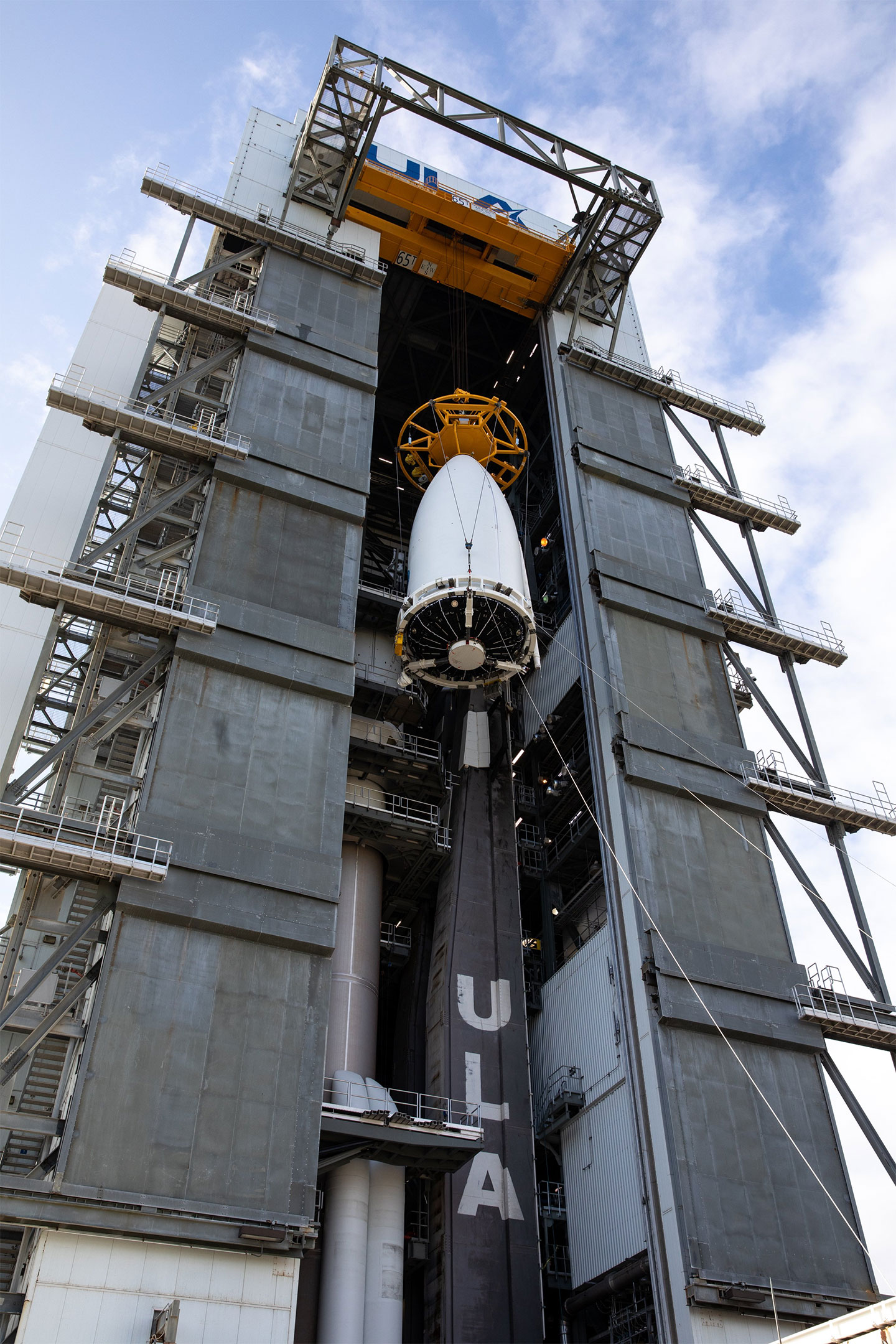
    NOAA GOES-T Satellite Payload Fairing
    The National Oceanic and Atmospheric Administration’s (NOAA) Geostationary Operational Environmental Satellite-T (GOES-T), enclosed in its payload fairing, is moved into the Vertical Integration Facility at Space Launch Complex 41 at Cape Canaveral Space Force Station in Florida on February 17, 2022. Credit: NASA/Kim Shiflett

    The National Oceanic and Atmospheric Administration’s (NOAA) Geostationary Operational Environmental Satellite-T (GOES-T) satellite now officially has its ride.

    GOES-T was transported from Astrotech’s Space Operations facility in Titusville, Florida, to United Launch Alliance’s (ULA) nearby Vertical Integration Facility at Cape Canaveral Space Force Station’s Space Launch Complex 41. It was then mated to the top of the Atlas V 541 rocket, which will carry it into space. Liftoff is targeted for March 1, 2022, at 4:38 p.m.

    The launch is managed by NASA’s Launch Services Program based at the agency’s Kennedy Space Center, America’s multi-user spaceport.

    After securing GOES-T atop the Atlas V, technicians conducted final validation of the communication paths through the rocket. The spacecraft and launch vehicle were then tested by successfully powering up both into launch mode to ensure they are compatible as a system.

    GOES-T had been located inside the Astrotech facility since its arrival to Florida on November 10, 2021. Numerous activities were conducted there, including lifting and mating the spacecraft to the payload adapter, and encapsulation, where the two halves of the ULA payload fairings were brought together and installed around the satellite to protect it during launch. The fully assembled launch vehicle will roll to the launch pad on February 28.

    The third satellite in NOAA’s GOES-R series, GOES-T will be delivered into a geosynchronous transfer orbit, separated from the launch vehicle, and then moved up to a higher geostationary orbit and renamed GOES-18. After being checked out, calibrated, and deemed ready for operations, GOES-18 will replace GOES-17 in the GOES-West position, keeping an eye on the U.S. West Coast, Alaska, Hawaii and the Pacific Ocean.

    The GOES satellite network helps meteorologists observe and predict local weather events that affect public safety, including thunderstorms, tornadoes, fog, hurricanes, flash floods, and other severe weather.

    Never miss a breakthrough: Join the SciTechDaily newsletter.
    Follow us on Google and Google News.

    NASA NOAA Rocket
    Share. Facebook Twitter Pinterest LinkedIn Email Reddit

    Related Articles

    NASA, ULA Launch GOES-T: NOAA’s Newest Earth Observing Satellite

    “Go for Launch” – NOAA’s GOES-T Satellite Cleared for Tuesday Launch

    NASA Readies for Future Artemis Moon Missions With SLS Rocket Engine Test Series

    Solar Cycle 25 Has Begun. Experts From NASA and NOAA Explain What It Means

    NOAA’s GOES-S Satellite is Ready for Today’s Launch, Watch It Live

    FORTIS Rocket Ready for Launch, Set to Study Extra-Galactic Dust

    Unmanned Orbital Sciences Corp Spacecraft Explodes During Launch

    NOAA Solar Eruption Classifications

    NASA Confiscates Stolen Rocket Engine

    Leave A Reply Cancel Reply

    • Facebook
    • Twitter
    • Pinterest
    • YouTube

    Don't Miss a Discovery

    Subscribe for the Latest in Science & Tech!

    Trending News

    Millions Take These IBS Drugs, But a New Study Finds Serious Risks

    Scientists Unlock Hidden Secrets of 2,300-Year-Old Mummies Using Cutting-Edge CT Scanner

    Bread Might Be Making You Gain Weight Even Without Eating More Calories

    Scientists Discover Massive Magma Reservoir Beneath Tuscany

    Europe’s Most Active Volcano Just Got Stranger – Here’s Why Scientists Are Rethinking It

    Alzheimer’s Symptoms May Start Outside the Brain, Study Finds

    Millions Take This Popular Supplement – Scientists Discover a Concerning Link to Heart Failure

    The Universe Is Expanding Too Fast and Scientists Can’t Explain Why

    Follow SciTechDaily
    • Facebook
    • Twitter
    • YouTube
    • Pinterest
    • Newsletter
    • RSS
    SciTech News
    • Biology News
    • Chemistry News
    • Earth News
    • Health News
    • Physics News
    • Science News
    • Space News
    • Technology News
    Recent Posts
    • Simple Blood Test May Predict Alzheimer’s Years Before Brain Scans Show Signs
    • Scientists Say Adding This Unusual Seafood to Your Diet Could Reverse Signs of Aging
    • U.S. Waste Holds $5.7 Billion Worth of Crop Nutrients
    • Scientists Say a Hidden Structure May Exist Inside Earth’s Core
    • Doctors Surprised by the Power of a Simple Drug Against Colon Cancer
    Copyright © 1998 - 2026 SciTechDaily. All Rights Reserved.
    • Science News
    • About
    • Contact
    • Editorial Board
    • Privacy Policy
    • Terms of Use

    Type above and press Enter to search. Press Esc to cancel.