
Close Menu
    Facebook X (Twitter) Instagram
    SciTechDaily
    • Biology
    • Chemistry
    • Earth
    • Health
    • Physics
    • Science
    • Space
    • Technology
    Facebook X (Twitter) Pinterest YouTube RSS
    SciTechDaily
    Home»Space»FORTIS Rocket Ready for Launch, Set to Study Extra-Galactic Dust
    Space

    FORTIS Rocket Ready for Launch, Set to Study Extra-Galactic Dust

    By Sarah Frazier, NASA’s Goddard Space Flight CenterDecember 16, 2015No Comments3 Mins Read
    Facebook Twitter Pinterest Telegram LinkedIn WhatsApp Email Reddit
    Share
    Facebook Twitter LinkedIn Pinterest Telegram Email Reddit
    FORTIS to Study Extra-Galactic Dust
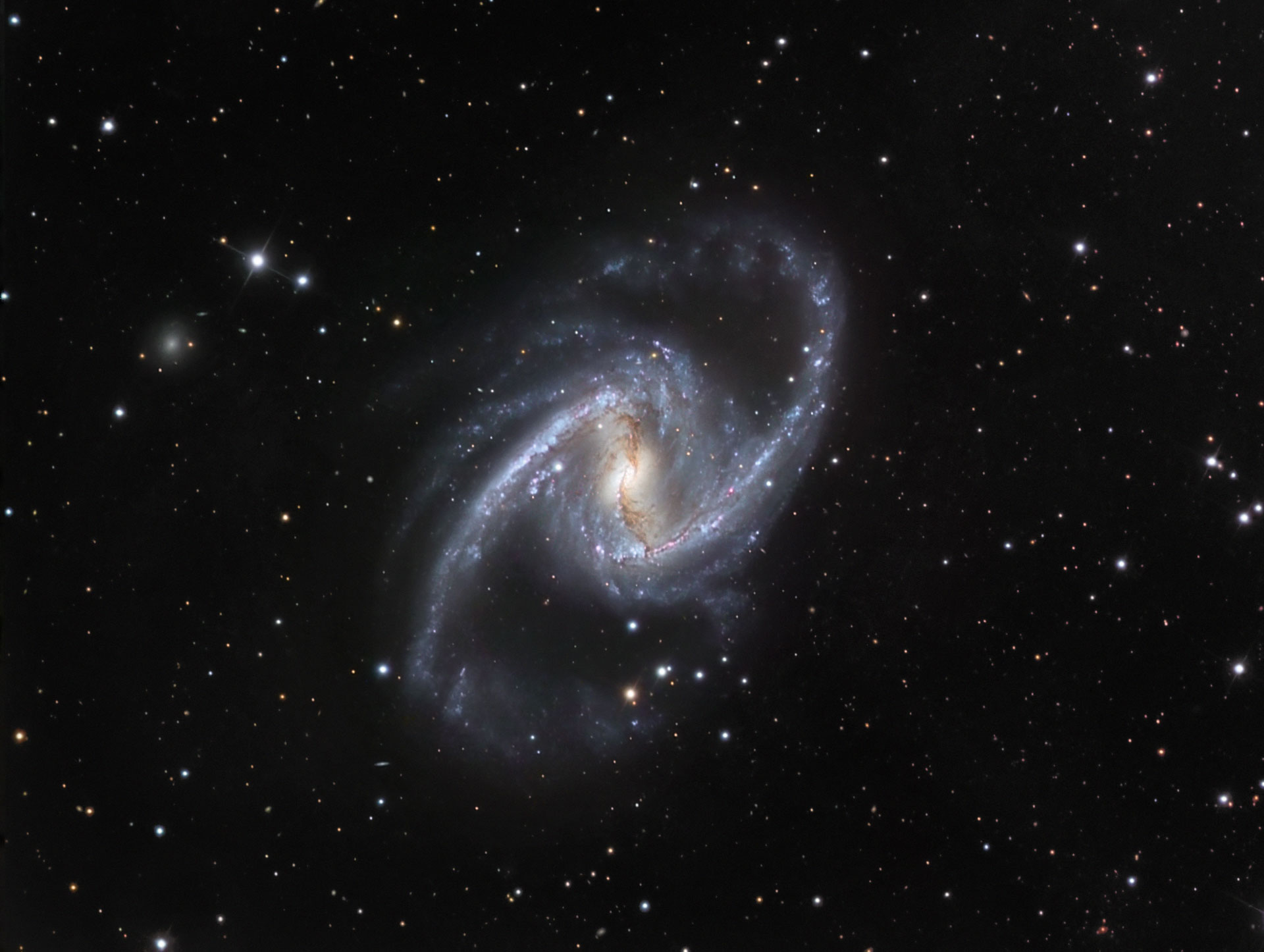
    FORTIS will focus on galaxy NGC 1365, otherwise known as the Great Barred Spiral Galaxy. By examining specific wavelengths of absorption and emission, scientists will use FORTIS’ data to quantify the amounts of materials flowing in and out of the galaxy. Credit: ESO/IDA/Danish 1.5 m/ R. Gendler, J-E. Ovaldsen, C. Thöne, and C. Feron

    NASA prepares to launch the FORTIS sounding rocket, which will study far-ultraviolet light from galaxy NGC 1365 to understand how material is flowing in and out of the galaxy.

    This month, the NASA-funded FORTIS sounding rocket—short for Far-ultraviolet Off Rowland-circle Telescope for Imaging and Spectroscopy—will launch from the White Sands Missile Range in New Mexico to investigate the properties of galaxy NGC 1365, also known as the Great Barred Spiral Galaxy.

    FORTIS will use an instrument called a spectrograph to split the light from the target galaxy into its composite wavelengths, creating a kind of image called a spectrum. How much of each wavelength is present can hold clues to the atoms present in the space through which the light is traveling. In this case, scientists will study the wavelengths of light emitted and absorbed by different types of hydrogen to quantify how much material is flowing in and out of the galaxy.

    “Star-forming galaxies like NGC 1365 are swallowing mass from the intergalactic medium, and that material becomes stars,” said Stephan McCandliss, principal investigator for FORTIS from Johns Hopkins University in Baltimore, Maryland. “When these new stars ignite, they heat the surrounding gas and dust, making it emit light in these particular wavelengths.”

    FORTIS will fly on a Black Brant IX suborbital sounding rocket to an altitude of about 173 miles, taking data for six minutes. In the first 30 seconds, FORTIS will use its auto-targeting system to pick out the 40 brightest regions of NGC 1365 to study. It will then focus in on these promising regions—using a micro-shutter array originally developed for NASA’s James Webb Space Telescope—and take spectra of these regions focusing on far ultraviolet wavelengths of light.

    These types of observations can only be taken from space because Earth’s atmosphere absorbs far ultraviolet light. Sounding rockets provide a low-cost way to access space, collecting valuable data from outside Earth’s atmosphere for a fraction of the cost of a full-fledged satellite mission.

    The FORTIS launch is supported through NASA’s Sounding Rocket Program at the Goddard Space Flight Center’s Wallops Flight Facility in Virginia. NASA’s Heliophysics Division manages the sounding rocket program.

    Never miss a breakthrough: Join the SciTechDaily newsletter.
    Follow us on Google and Google News.

    Astronomy Astrophysics Cosmology FORTIS NASA Rocket
    Share. Facebook Twitter Pinterest LinkedIn Email Reddit

    Related Articles

    Webb Explores Cosmic Dawn: Witnessing the First Galaxies Feeding on Cold Gas

    Kepler Discovers a Planetary Object Being Vaporized by a White Dwarf

    NASA’s Interstellar Boundary Explorer Provides New Details on Solar System Boundary

    Evidence of Galaxy Star Birth Regulated by Black Holes

    Astronomers Take a Closer Look at Black Widow and Redback Binary Systems

    Uniform Heavy Element Distribution Points to Early Cosmic ‘Seeding’

    NASA Data Suggests Black Holes Abundant Among the Earliest Stars

    Fermi’s Motion Captured by Vela Pulsar Video

    The Bolshoi Simulation: Boxing the Universe

    Leave A Reply Cancel Reply

    • Facebook
    • Twitter
    • Pinterest
    • YouTube

    Don't Miss a Discovery

    Subscribe for the Latest in Science & Tech!

    Trending News

    Scientists Discover Game-Changing New Way To Treat High Cholesterol

    This Small Change to Your Exercise Routine Could Be the Secret to Living Longer

    Scientists Discover 430,000-Year-Old Wooden Tools, Rewriting Human History

    AI Could Detect Early Signs of Alzheimer’s in Under a Minute – Far Before Traditional Tests

    What if Dark Matter Has Two Forms? Bold New Hypothesis Could Explain a Cosmic Mystery

    This Metal Melts in Your Hand – and Scientists Just Discovered Something Strange

    Beef vs. Chicken: Surprising Results From New Prediabetes Study

    Alzheimer’s Breakthrough: Scientists Discover Key Protein May Prevent Toxic Protein Clumps in the Brain

    Follow SciTechDaily
    • Facebook
    • Twitter
    • YouTube
    • Pinterest
    • Newsletter
    • RSS
    SciTech News
    • Biology News
    • Chemistry News
    • Earth News
    • Health News
    • Physics News
    • Science News
    • Space News
    • Technology News
    Recent Posts
    • Where Does Mass Come From? Scientists Find Evidence of a New Exotic Nuclear State
    • Quantum Breakthrough: Unhackable Keys Sent Over 120 km Using Quantum Dots
    • Researchers Discover Unknown Beetle Species Just Steps From Their Lab
    • Jellyfish Caught Feasting on Exploding Sea Worms for the First Time
    • Ancient “Spaghetti” in Dogs’ Hearts Reveals Heartworm’s Shocking Origins
    Copyright © 1998 - 2026 SciTechDaily. All Rights Reserved.
    • Science News
    • About
    • Contact
    • Editorial Board
    • Privacy Policy
    • Terms of Use

    Type above and press Enter to search. Press Esc to cancel.