
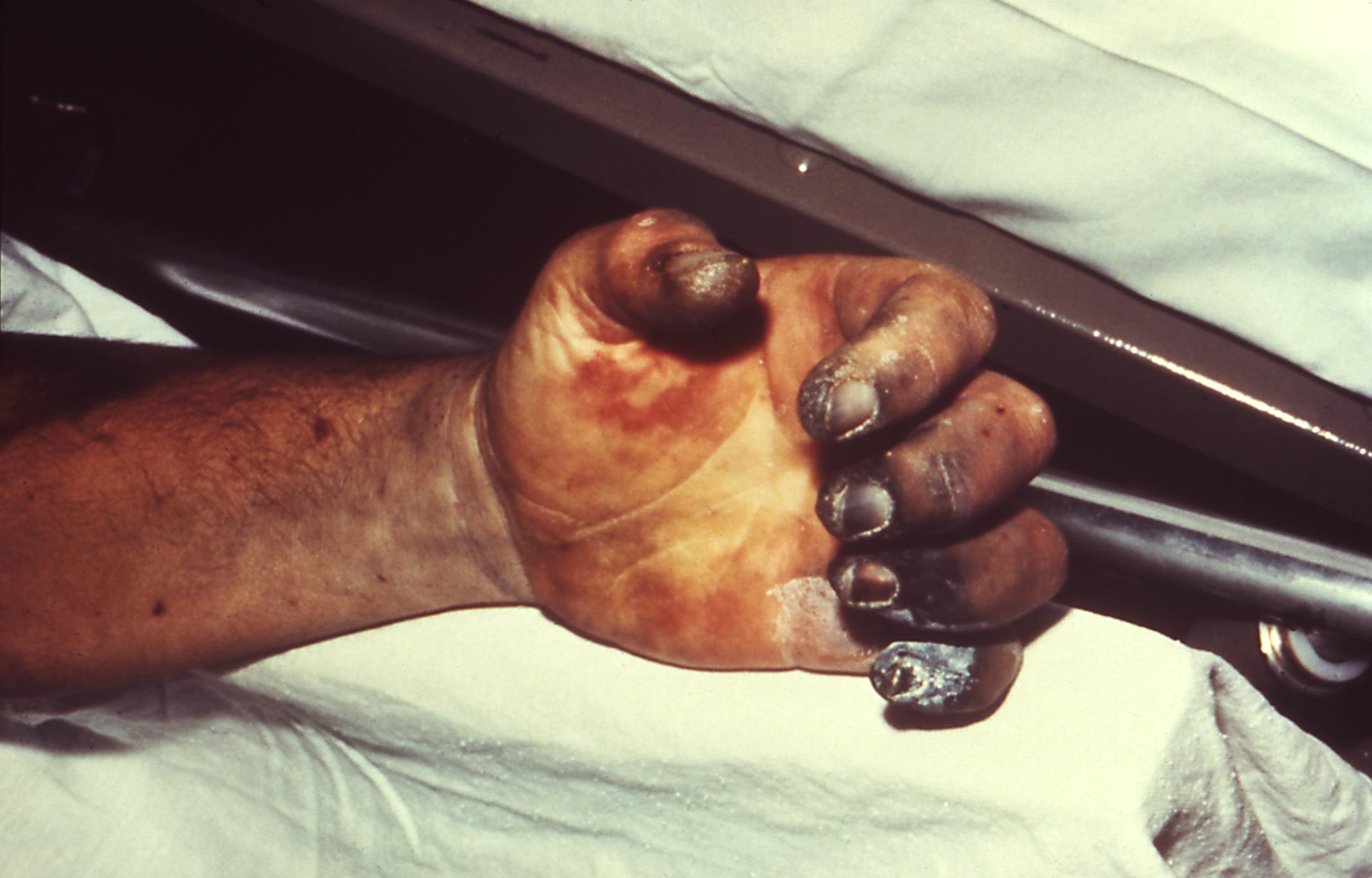
‘Plague skeptics’ are wrong to underestimate the devastating impact that bubonic plague had in the 6th–8th centuries CE, argues a new study based on ancient texts and recent genetic discoveries. The same study suggests that bubonic plague may have reached England before its first recorded case in the Mediterranean via a currently unknown route, possibly involving the Baltic and Scandinavia.
The Justinianic Plague is the first known outbreak of bubonic plague in west Eurasian history and struck the Mediterranean world at a pivotal moment in its historical development, when the Emperor Justinian was trying to restore Roman imperial power.
“We have a lot to learn from how our forebears responded to epidemic disease.” Peter Sarris
For decades, historians have argued about the lethality of the disease; its social and economic impact; and the routes by which it spread. In 2019-20, several studies, widely publicized in the media, argued that historians had massively exaggerated the impact of the Justinianic Plague and described it as an ‘inconsequential pandemic’. In a subsequent piece of journalism, written just before COVID-19 took hold in the West, two researchers suggested that the Justinianic Plague was ‘not unlike our flu outbreaks’.
In a new study, published in Past & Present, Cambridge historian Professor Peter Sarris argues that these studies ignored or downplayed new genetic findings, offered misleading statistical analysis and misrepresented the evidence provided by ancient texts.
Sarris says: “Some historians remain deeply hostile to regarding external factors such as disease as having a major impact on the development of human society, and ‘plague skepticism’ has had a lot of attention in recent years.”
Ancient Texts Must Be Read in Context
Sarris, a Fellow of Trinity College, is critical of the way that some studies have used search engines to calculate that only a small percentage of ancient literature discusses the plague and then crudely argue that this proves the disease was considered insignificant at the time.
Sarris says: “Witnessing the plague first-hand obliged the contemporary historian Procopius to break away from his vast military narrative to write a harrowing account of the arrival of the plague in Constantinople that would leave a deep impression on subsequent generations of Byzantine readers. That is far more telling than the number of plague-related words he wrote. Different authors, writing different types of text, concentrated on different themes, and their works must be read accordingly.”
Sarris also refutes the suggestion that laws, coins, and papyri provide little evidence that the plague had a significant impact on the early Byzantine state or society. He points to a major reduction in imperial law-making between the year 546, by which point the plague had taken hold, and the end of Justinian’s reign in 565. But he also argues that the flurry of significant legislation that was made between 542 and 545 reveals a series of crisis-driven measures issued in the face of plague-induced depopulation, and to limit the damage inflicted by the plague on landowning institutions.
In March 542, in a law that Justinian described as having been written amid the ‘encircling presence of death’, which had ‘spread to every region’, the emperor attempted to prop up the banking sector of the imperial economy.
In another law of 544, the emperor attempted to impose price and wage controls, as workers tried to take advantage of labor shortages. Alluding to the plague, Justinian declared that the ‘chastening which has been sent by God’s goodness’ should have made workers ‘better people’ but instead ‘they have turned to avarice’.
That bubonic plague exacerbated the East Roman Empire’s existing fiscal and administrative difficulties is also reflected in changes to coinage in this period, Sarris argues. A series of light-weight gold coins were issued, the first such reduction in the gold currency since its introduction in the 4th century and the weight of the heavy copper coinage of Constantinople was also reduced significantly around the same time as the emperor’s emergency banking legislation.
Sarris says: “The significance of a historical pandemic should never be judged primarily on the basis of whether it leads to the ‘collapse’ of the societies concerned. Equally, the resilience of the East Roman state in the face of the plague does not signify that the challenge posed by the plague was not real.”
“What is most striking about the governmental response to the Justinianic Plague in the Byzantine or Roman world is how rational and carefully targeted it was, despite the bewilderingly unfamiliar circumstances in which the authorities found themselves.
“We have a lot to learn from how our forebears responded to epidemic disease, and how pandemics impacted on social structures, the distribution of wealth, and modes of thought.”
Bubonic Plague in England
Until the early 2000s, the identification of the Justinianic Plague as ‘bubonic’ rested entirely upon ancient texts which described the appearance of buboes or swellings in the groins or armpits of victims. But then rapid advances in genomics enabled archaeologists and genetic scientists to discover traces of the ancient DNA of Yersinia pestis in Early Medieval skeletal remains. Such finds have been made in Germany, Spain, France, and England.
In 2018, a study of DNA preserved in remains found in an early Anglo-Saxon burial site known as Edix Hill in Cambridgeshire revealed that many of the interred had died carrying the disease. Further analysis revealed that the strain of Y. pestis found was the earliest identified lineage of the bacterium involved in the 6th-century pandemic.
Sarris says: “We have tended to start with the literary sources, which describe the plague arriving at Pelusium in Egypt before spreading out from there, and then fitted the archaeological and genetic evidence into a framework and narrative based on those sources. That approach will no longer do. The arrival of bubonic plague in the Mediterranean around 541 and its initial arrival in England possibly somewhat earlier may have been the result of two separate but related routes, occurring some time apart.”
The study suggests that the plague may have reached the Mediterranean via the Red Sea, and reached England perhaps via the Baltic and Scandinavia, and from there onto parts of the continent.
Not Just Roman: A Pandemic Across Europe
The study emphasizes that despite being called the ‘Justinianic Plague’, it was “never a purely or even primarily Roman phenomenon” and as recent genetic discoveries have proven, it reached remote and rural sites such as Edix Hill, as well as heavily populated cities.
It is widely accepted that the lethal and virulent strain of bubonic plague from which the Justinianic Plague and later the Black Death would descend had emerged in Central Asia by the Bronze Age before evolving further there in antiquity.
Sarris suggests that it may be significant that the advent of both the Justinianic Plague and the Black Death were preceded by the expansion of nomadic empires across Eurasia: the Huns in the 4th and 5th centuries, and the Mongols in the 13th.
Sarris says: “Increasing genetic evidence will lead in directions we can scarcely yet anticipate, and historians need to be able to respond positively and imaginatively, rather than with a defensive shrug.”
Reference: “New Approaches to the ‘Plague of Justinian’” by Peter Sarris, 13 November 2021, Past & Present.
DOI: 10.1093/pastj/gtab024
Never miss a breakthrough: Join the SciTechDaily newsletter.
Follow us on Google and Google News.
1 Comment
The Justinianic Plague is not the first known outbreak of bubonic plague in west Eurasian history. Plague has also been found in a mass grave in Frälsegården, Sweden that is 5000 years old. It may have devastated numerous settlements and cultures during the Neolithic.
N. Rascovan et al., ‘Emergence and Spread of Basal Lineages of Yersinia
pestis during the Neolithic Decline’, Cell, 176, 2019, 1–11.