
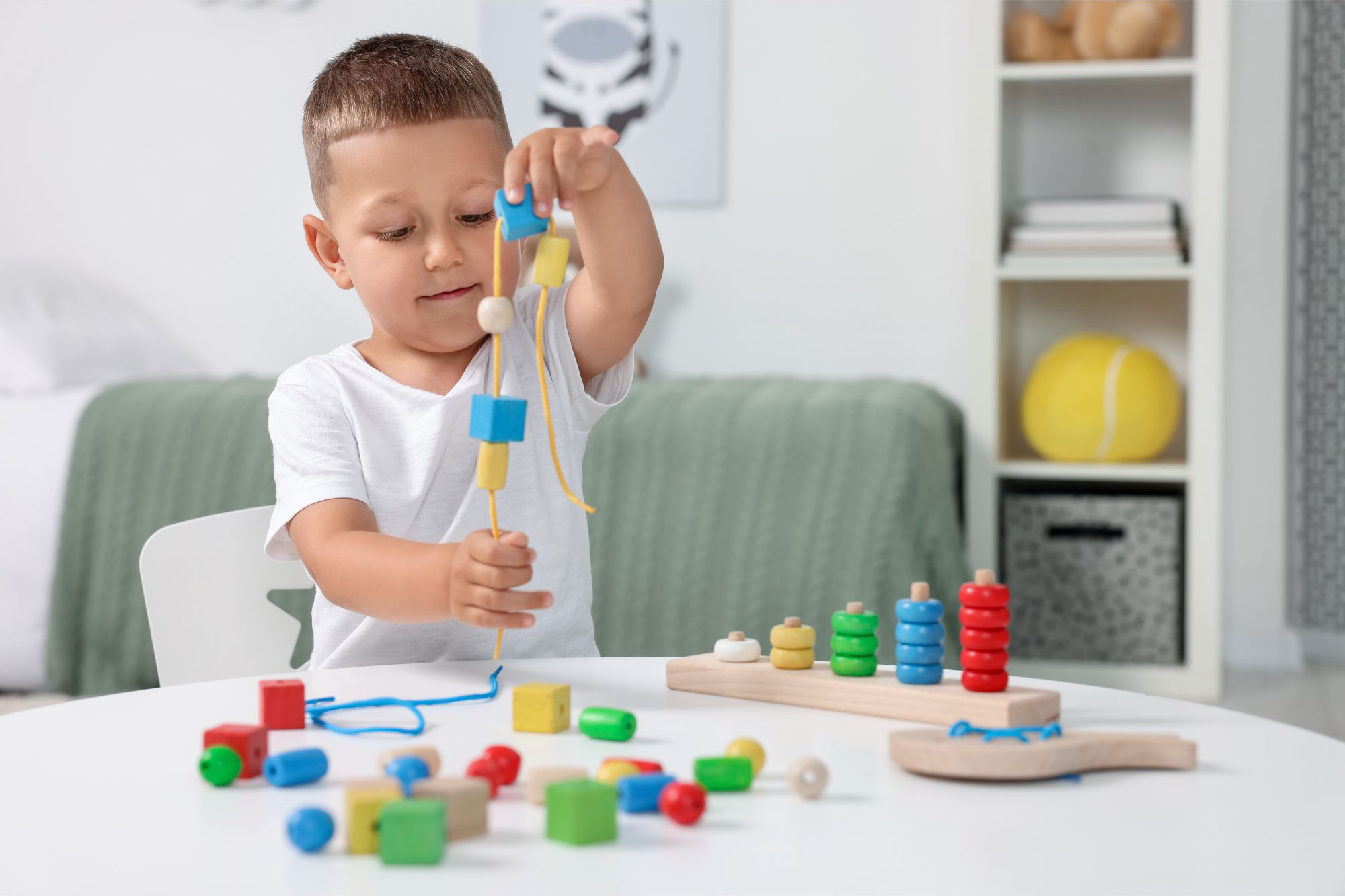
Adults learn skills faster but forget more easily, while children retain skills better due to the benefits of sleep, according to a University of Copenhagen study. These insights could improve training methods across various fields.
Contrary to popular belief, children are not inherently better at learning new skills than adults. In fact, young adults often learn faster than children, though they tend to forget more quickly. Better sleep, however, appears to give children an advantage. This conclusion comes from a new study conducted by the University of Copenhagen.
It’s widely believed that children learn new motor skills faster than adults, whether it’s mastering slopes or skateparks, learning new languages, doing cartwheels, or picking up new dance moves from TikTok.
“There’s an assumption in popular science literature and various textbooks that children in a certain age range – from roughly the age of eight until puberty – are better at learning new skills than adults. This is often described as a ‘golden age for motor skills learning’. But there’s no actual physiological basis for this so-called golden age,” says Jesper Lundbye-Jensen, associate professor at the University of Copenhagen’s Department of Nutrition, Exercise and Sports and head of the section ‘Movement & Neuroscience.
The popular notion of a pre-pubescent motor learning peak prompted the researchers to investigate how age-related differences in our central nervous system affect motor skill learning. Their findings are now published in Developmental Science.
In the study, the researchers tested the motor learning abilities of 132 participants from four age groups: 8-10 years, 12-14 years, 16-18 years, and 20-30 years. In a lab setting, participants practiced moving a cursor on a computer screen with fast and precise finger movements.
Older participants learned faster
Participant performance was measured immediately after being introduced to the task (as a baseline), during the training session, and again 24 hours later.
During the training session itself, both the 16-18-year-olds and 20-30-year-olds improved their skills significantly more than the 8-10-year-olds.
“So, it appears that both teenagers and younger adults are better equipped to quickly acquire new skills compared to children, who showed smaller and slower improvements. At least when it comes to short-term learning and motor skills which this study investigated” explains Mikkel Malling Beck, the research article’s lead author and a former PhD student at the Department of Nutrition, Exercise and Sports who now works as a researcher at the Danish Research Centre for Magnetic Resonance at Hvidovre Hospital.
While the researchers cannot pinpoint the exact reasons for why the adults learn faster, they have a few theories.
“The results demonstrate that the older the participants are, the more skillful they become during the early stages of training. This suggests that they get more out of the task introduction. We suspect that cognitive development and an increased ability to process information play a role – meaning adults may have more experience receiving instructions and translating them into action,” says Jesper Lundbye-Jensen, adding:
“The difference may also be because the fully developed nervous system of an adult provides better structural conditions for learning. In other words, after many years of schooling, adults may be more experienced learners and thereby more efficient at learning new things.”
Children benefit more from sleep
The picture changes when it comes to retention:
“When we look at what happens from the end of training until the participants return the next day, the dynamic reverses. While the youngest participants actually improve overnight, adults lose some of their ability to perform. This means the youngest ones are better at consolidating and reinforcing their memory after they’ve practiced,” says Mikkel Malling Beck.
According to the researchers, this suggests that sleep benefits children’s learning and memory more. But other factors could also be at play. For example, older children and adults typically sleep less and have more “competing” activities throughout the day. Memory-consolidation processes in the nervous system continue for hours after the training ends.
“When a math class ends, the brain keeps working on what was taught, and in doing so, reinforces memory. Sleep is known to aid consolidation. But engaging in other activities in the hours after –especially those that involve learning – can interfere with memory processes and the consolidation of what was just learned,” explains Jesper Lundbye-Jensen.
Potential applications for professionals
While the overall learning outcome doesn’t vary drastically across age groups, the study does show that the learning process differs significantly depending on age, with underlying mechanisms influenced by the maturity of one’s central nervous system.
According to the researchers, the results could be useful in teaching and training fields that involve skill and movement, such as sports and music. Jesper Lundbye-Jensen points out that the results are relevant in other areas as well:
“For anyone aiming to improve their skills, it’s crucial to structure training so that each individual gets the most out of their time. This is also true for people undergoing rehabilitation to regain functional ability. We hope that this new understanding of age-related differences and post-training processes will inspire physiotherapists, occupational therapists, and other professionals when designing training protocols.”
Reference: “Distinct mechanisms for online and offline motor skill learning across human development” by Mikkel Malling Beck, Frederikke Toft Kristensen, Gitte Abrahamsen, Meaghan Elizabeth Spedden, Mark Schram Christensen and Jesper Lundbye-Jensen, 12 June 2024, Developmental Science.
DOI: 10.1111/desc.13536
Never miss a breakthrough: Join the SciTechDaily newsletter.
Follow us on Google and Google News.
1 Comment
So, kids are dumb after all…