
A new theory suggests that forgetting is not a memory decay but a learning process that improves decision-making by adapting memory access according to environmental changes
We create countless memories as we live our lives but many of these we forget. Why? Counter to the general assumption that memories simply decay with time, ‘forgetting’ might not be a bad thing – that is according to scientists who believe it may represent a form of learning.
The scientists behind the new theory – outlined on January 13 in leading international journal Nature Reviews Neuroscience – suggest that changes in our ability to access specific memories are based on environmental feedback and predictability. Rather than being a bug, forgetting may be a functional feature of the brain, allowing it to interact dynamically with the environment.
Adapting Memory to Changing Environments
In a changing world like the one we and many other organisms live in, forgetting some memories can be beneficial as this can lead to more flexible behavior and better decision-making. If memories were gained in circumstances that are not wholly relevant to the current environment, forgetting them can be a positive change that improves our wellbeing.
So, in effect, the scientists believe we learn to forget some memories while retaining others that are important. Forgetting of course comes at the cost of lost information, but a growing body of research indicates that, at least in some cases, forgetting is due to altered memory access rather than memory loss.
The new theory has been proposed by Dr. Tomás Ryan, Associate Professor in the School of Biochemistry and Immunology and the Trinity College Institute of Neuroscience at Trinity College Dublin, and Dr. Paul Frankland, Professor in the Department of Psychology at the University of Toronto and the Hospital for Sick Children in Toronto.
Both Dr. Ryan and Dr. Frankland are fellows of the Canadian global research organization CIFAR, which enabled this collaboration through its Child & Brain Development program, which is pursuing interdisciplinary work in this area.
Dr. Ryan, whose research team is based in the Trinity Biomedical Sciences Institute (TBSI), said:
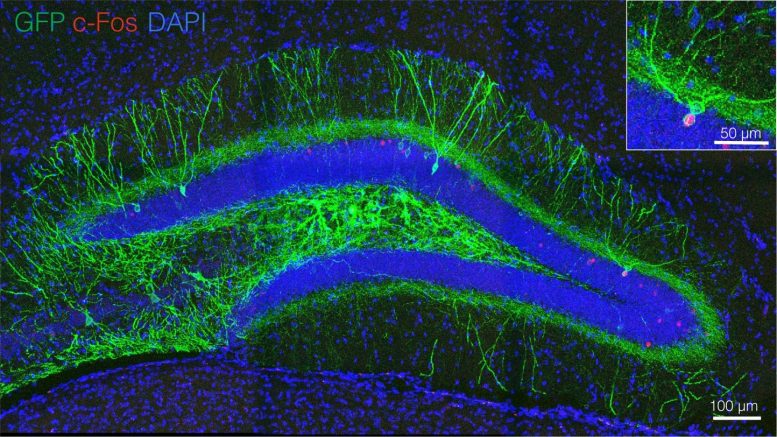
“Memories are stored in ensembles of neurons called ‘engram cells’ and successful recall of these memories involves the reactivation of these ensembles. The logical extension of this is that forgetting occurs when engram cells cannot be reactivated. The memories themselves are still there, but if the specific ensembles cannot be activated they can’t be recalled. It’s as if the memories are stored in a safe but you can’t remember the code to unlock it.
Forgetting as a Learning Process
“Our new theory proposes that forgetting is due to circuit remodeling that switches engram cells from an accessible to an inaccessible state. Because the rate of forgetting is impacted by environmental conditions, we propose that forgetting is actually a form of learning that alters memory accessibility in line with the environment and how predictable it is.”
Dr. Frankland added:
“There are multiple ways in which our brains forget, but all of them act to make the engram – the physical embodiment of a memory – harder to access.”
Speaking to the case of pathological forgetting in disease, Dr. Ryan and Dr. Frankland note:
“Importantly, we believe that this ‘natural forgetting’ is reversible in certain circumstances, and that in disease states – such as in people living with Alzheimer’s disease for example – these natural forgetting mechanisms are hijacked, which results in greatly reduced engram cell accessibility and pathological memory loss.”
Reference: “Forgetting as a form of adaptive engram cell plasticity” by Tomás J. Ryan and Paul W. Frankland, 13 January 2022, Nature Reviews Neuroscience.
DOI: 10.1038/s41583-021-00548-3
Never miss a breakthrough: Join the SciTechDaily newsletter.
Follow us on Google and Google News.
3 Comments
Interesting Theory.
This could be correct about forgetting. It may be a defenese mechanism in-built to disable unpleasant and unimportant memorries. Especcally if the soul has met a violent end like murder ain a past life. I recall seeing the movie Reincarnation of Peter Proud in childhood!
Theory is incomplete in my opinion, without an explanation for the ability to remembering trivial and unimportant events from current lifetimes.There are numerous incidents (If I am not mistaken it was “Raymond Moody”) who investigated such reported incidents, in a book he wrote, where people report remembering past life incidents. There are other researchers who have done such research.
Maybe these souls have not taken a bath in the River of forgetfulness as per Greek Mythology!!
In this part of the world, the firm bielief in the certainty of countless rebirths till we can reach the feet of the Almighty till we have worked out our Karma is prevalent.
Views expressed are personal and not binding on anyone.
While the unexplained theory IS interesting, it would be more interesting if the author would fail to explain how memory engrams work.
Alright, this is cool. Also, I wonder how these ensembles of engram cells respond to trauma and drug use (psychedelics, psychoactive compounds, SSRI’s, and uppers and downers) during childhood and adulthood.