
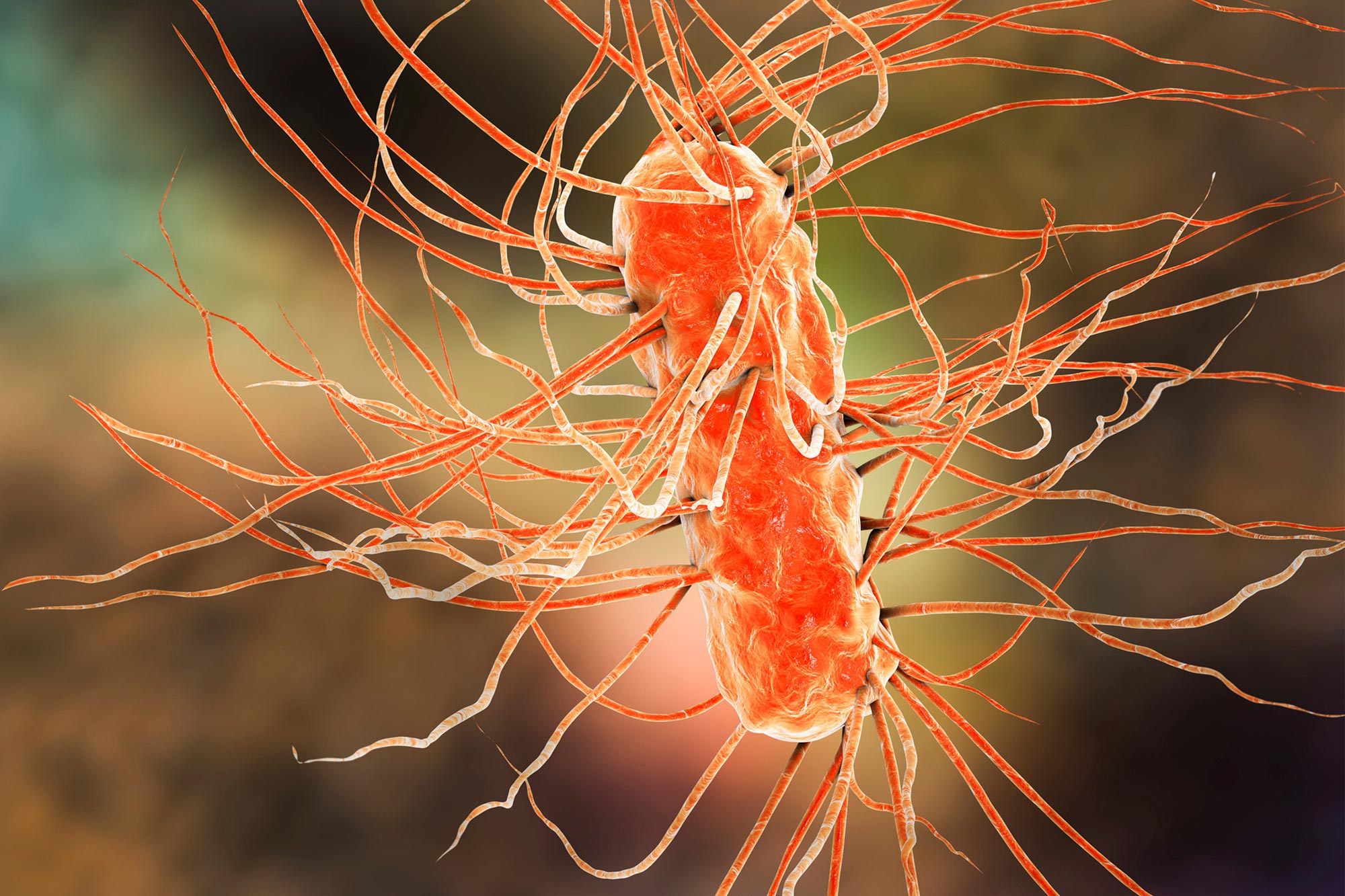
Scientists have discovered that bacteria can form memory-like mechanisms, informing strategies that lead to dangerous infections in humans. These strategies include antibiotic resistance and the formation of bacterial swarms, where millions of bacteria congregate on a single surface.
This discovery has significant implications for preventing and treating bacterial infections, particularly those involving antibiotic-resistant strains. The process involves a common chemical element that bacterial cells utilize to create and transmit these “memories” to subsequent generations.
Discovery by University of Texas Researchers
Researchers at The University of Texas at Austin found that E. coli bacteria use iron levels as a way to store information about different behaviors that can then be activated in response to certain stimuli.
The findings are published in the Proceedings of the National Academy of Sciences.
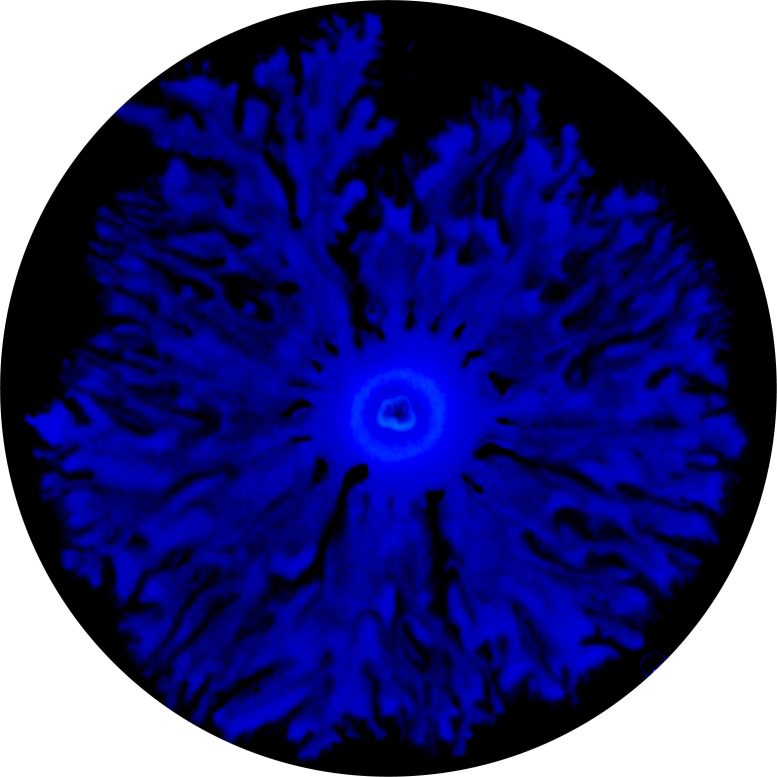
Scientists had previously observed that bacteria that had a prior experience of swarming (moving on a surface as a collective using flagella) improve subsequent swarming performance. The UT-led research team set out to learn why.
Understanding Bacterial “Memories”
Bacteria don’t have neurons, synapses, or nervous systems, so any memories are not like the ones of blowing out candles at a childhood birthday party. They are more like information stored on a computer.
“Bacteria don’t have brains, but they can gather information from their environment, and if they have encountered that environment frequently, they can store that information and quickly access it later for their benefit,” said Souvik Bhattacharyya, the lead author and a provost early career fellow in the Department of Molecular Biosciences at UT.
Iron’s Role in Bacterial Behavior
It all comes back to iron, one of the most abundant elements on Earth. Singular and free-floating bacteria have varying levels of iron. Scientists observed that bacterial cells with lower levels of iron were better swarmers. In contrast, bacteria that formed biofilms, dense, sticky mats of bacteria on solid surfaces, had high levels of iron in their cells. Bacteria with antibiotic tolerance also had balanced levels of iron. These iron memories persist for at least four generations and disappear by the seventh generation.
“Before there was oxygen in the Earth’s atmosphere, early cellular life was utilizing iron for a lot of cellular processes. Iron is not only critical in the origin of life on Earth but also in the evolution of life,” Bhattacharyya said. “It makes sense that cells would utilize it in this way.”
Video of bacterial swarm under a microscope. Credit: The University of Texas at Austin
Researchers theorize that when iron levels are low, bacterial memories are triggered to form a fast-moving migratory swarm to seek out iron in the environment. When iron levels are high, memories indicate this environment is a good place to stick around and form a biofilm.
“Iron levels are definitely a target for therapeutics because iron is an important factor in virulence,” Bhattacharyya said. “Ultimately, the more we know about bacterial behavior, the easier it is to combat them.”
Reference: “A heritable iron memory enables decision-making in Escherichia coli” by Souvik Bhattacharyya, Nabin Bhattarai, Dylan M. Pfannenstiel, Brady Wilkins, Abhyudai Singh and Rasika M. Harshey, 21 November 2023, Proceedings of the National Academy of Sciences.
DOI: 10.1073/pnas.2309082120
The research was funded by the National Institutes of Health. Rasika Harshey, a professor of molecular biosciences and Mary M. Betzner Morrow Centennial Chair in Microbiology, is the senior corresponding author on the paper. Nabin Bhattarai, Dylan M. Pfannenstiel and Brady Wilkins, along with Abhyudai Singh of University of Delaware, also contributed to the research.
Never miss a breakthrough: Join the SciTechDaily newsletter.
Follow us on Google and Google News.