
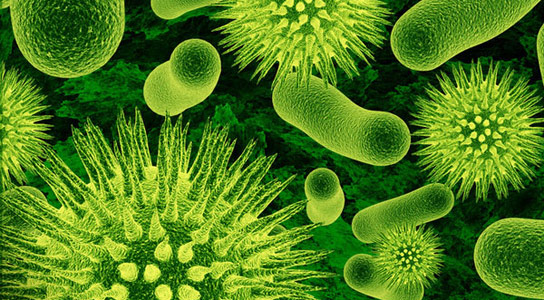
In Indian hospitals, over 50% of bacterial infections are now resistant to commonly used antibiotics. Surveys have shown that many widespread pathogens in India are also resistant to powerful, broad-spectrum antibiotics. In 2010, a team of scientists analyzed bacterial infections in New Delhi and found that 24% could resist the hospital’s last resort intravenous antibiotics, carbapenems, and 13% had a super-resistant gene, New Delhi metallo-ß-lactamase 1 (NDM-1), that conferred resistance to carbapenems and 14 other antibiotics.
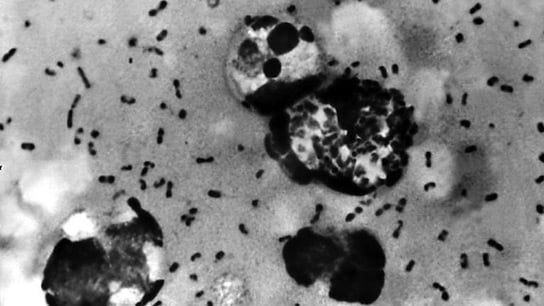
Since then, NDM-1 bacteria have been found in drinking water supplies, in puddles, and in patients in over 35 different countries. Of the infected patients, many are medical tourists, having traveled from Europe, the Middle East, and the Americas to India and Pakistan for inexpensive medical care.
New drugs have been in development to treat microbes with the NDM-1 gene. In the West, gram-positive bacteria, which are structurally vulnerable to antibiotics and disinfectants, are most common while in India and other tropical countries, there tend to be gram-negative bacteria, which have a tougher outer membrane that can repel antibiotics. Since most of the pharmacological industry develops drugs for the Western markets, India is vulnerable to an epidemic.
Antibiotic use is unchecked, so the drugs themselves are overused, which is one of the causes of drug-resistant bacteria. Patients do not need a prescription to get antibiotics.
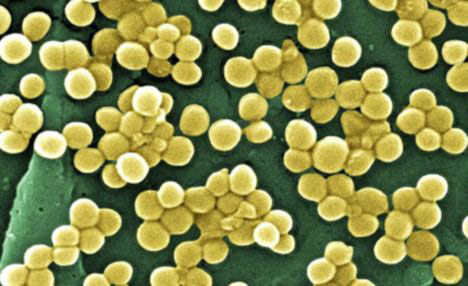
There is also a political component in this, as when the gene was first discovered in Europe in patients who had traveled to India for medical care, it was named after the city from which it seemed to originate, which caused a furor.
For now, NDM-1 bacteria need to gain more notoriety so that the state will do something before there is an outbreak.
Never miss a breakthrough: Join the SciTechDaily newsletter.
Follow us on Google and Google News.
1 Comment
On behalf of my Partners and I, may we inform you.
1. Our medical research team have been the first to understand the underlying mechanism associated with the NDM-1 ‘resistance gene’.
2. We were invited recently by a Senior Officer for the United Nations, to present a new White Paper to a potentially interested officer at the World Health Organization. When so doing, we provided also an ancillary document prepared in 2008, under the heading ‘Medical Science is in Crisis, Worldwide’, in which we warned of the emergence of a severe forthcoming problem concerning ‘antibiotic resistance’.
3. An Appendix is being prepared for the latter report, explaining the mechanisms of drug and antibiotic resistance (including the NDM-1 ‘resistant gene’): these can be shown to be treatable health conditions.
4. We believe the ‘SciTechDaily’ organization has a need to receive, understand, and comment in relation to the advance in nuclear medical physics, which has made the above and other serious medical health problems understandable and treatable.
May we have your agreement to present the relevant documents for your information and guidance? To whom would you advise, the indicated reports should ideally be provided? [If you agree: please provide an address for electronic mail.]
Senior figures in India to whom we have written have neither acknowledged or replied to previous approaches. With respect: one cannot assist closed-minds. An advance has been made beyond the Standard Model: without which the underlying mechanism associated with drug and antibiotic resistance cannot be understood and resolved.
Senior Partner.