
Close Menu
    Facebook X (Twitter) Instagram
    SciTechDaily
    • Biology
    • Chemistry
    • Earth
    • Health
    • Physics
    • Science
    • Space
    • Technology
    Facebook X (Twitter) Pinterest YouTube RSS
    SciTechDaily
    Home»Technology»Mass Social Networking Study Indicates Influence of Close Friends Augmented Voter Participation
    Technology

    Mass Social Networking Study Indicates Influence of Close Friends Augmented Voter Participation

    By SciTechDailySeptember 13, 20121 Comment3 Mins Read
    Facebook Twitter Pinterest Telegram LinkedIn WhatsApp Email Reddit
    Share
    Facebook Twitter LinkedIn Pinterest Telegram Email Reddit
    Facebook-i-voted
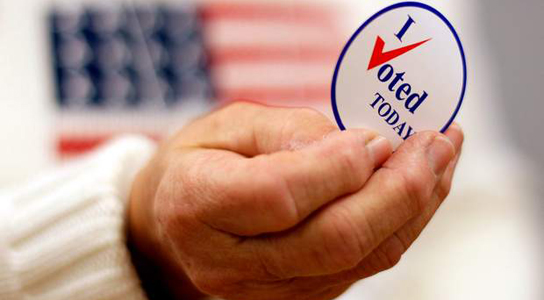
    A study found the closest Facebook friends exerted the most influence in getting people to vote.

    According to a new study, 340,000 extra people turned out to vote in the 2010 US congressional elections because of a single-election day Facebook message. Researchers ran an experiment involving 61 million users of the social network.

    The scientists published their findings in the journal Nature. It’s the first study of its kind to actually demonstrate how the online world can significantly affect the real world on a large scale. The most telling discovery is that the closest Facebook friends exerted the most influence in getting people to vote.
    facebook-vote-here

    Political scientist James Fowler from the University of California in San Diego led the study in collaboration with Facebook’s data-science team. Online networks are powerful, but it’s the real-world ties that have always been there that are making a difference.

    The users, all from the US, over 18, and who accessed the site on November 2nd, 2010, were separated into three groups. About 611,000 users (1%) received an informational message at the top of their feed, encouraging them to vote. 98% received a social message, which included the same elements, but showed profile pictures of up to six randomly selected Facebook friends who had clicked the ‘I voted’ button. The remaining 1% of users was used as a control group that received no message.

    The groups’ online behaviors were matched to the 6.3 million users with publicly available voting records. The users who got the informational message voted at the same rate as those who saw no message at all. However, those who saw the social message were 2% more likely to click the ‘I voted’ button and 0.3% more likely to seek information about a polling place than others, and 0.4% more likely to head to the polls than either other group.

    The social message therefore directly increased the turnout by about 60,000 votes. A further 280,000 people were indirectly nudged towards the polls by seeing messages in their news feeds telling them that their friends had clicked the ‘I voted’ button.

    Only close friends influenced users to vote in the real world. On average, Facebook users have 150 friends, but they have close relationships with only about 10 of those.

    In comparison, door-knocking campaigns can raise voter turnout by about 8%, email campaigns achieve gains of 1% or less.

    Reference: “A 61-million-person experiment in social influence and political mobilization” by Robert M. Bond, Christopher J. Fariss, Jason J. Jones, Adam D. I. Kramer, Cameron Marlow, Jaime E. Settle and James H. Fowler, 12 September 2012, Nature.
    DOI: 10.1038/nature11421

    Never miss a breakthrough: Join the SciTechDaily newsletter.
    Follow us on Google and Google News.

    Behavioral Science Facebook Online Social Networking
    Share. Facebook Twitter Pinterest LinkedIn Email Reddit

    Related Articles

    Combining Three Brain-Imaging Techniques Boosts Precision – Could Have a “Profound Effect” on Human Neuroscience

    Researchers Warn: AI Algorithms Can Influence People’s Voting and Dating Decisions

    How AI Falsifies Satellite Images: A Growing Problem of “Deepfake Geography”

    First People in the US to Experience Drone Delivery Give It a Seal of Approval

    MIT Twitter Experiment Shows Clear Self-Selection Into Social Media “Echo Chambers” Due to Political Preferences

    Seeing Is No Longer Believing: The Manipulation of Online Images

    Researchers Use Eye Tracking to Discover How Mobile Apps Grab Our Attention – With Surprising Results

    The Hype Machine: Why Social Media Has Changed the World — And How to Fix It

    American Online News Consumption Finally Surpasses Radio & Print

    1 Comment

    1. rajoo ananth on September 9, 2019 12:36 pm

      saw this happen in a ewcwnt election where an incumbant was able to very narrowly win over an extremely populae and qualified candidate

      Reply
    Leave A Reply Cancel Reply

    • Facebook
    • Twitter
    • Pinterest
    • YouTube

    Don't Miss a Discovery

    Subscribe for the Latest in Science & Tech!

    Trending News

    The Universe Is Expanding Too Fast and Scientists Can’t Explain Why

    “Like Liquid Metal”: Scientists Create Strange Shape-Shifting Material

    Early Warning Signals of Esophageal Cancer May Be Hiding in Plain Sight

    Common Blood Pressure Drug Shows Surprising Power Against Deadly Antibiotic-Resistant Superbug

    Scientists Uncover Dangerous Connection Between Serotonin and Heart Valve Disease

    Scientists Discover a “Protector” Protein That Could Help Reverse Hair Loss

    Bone-Strengthening Discovery Could Reverse Osteoporosis

    Scientists Uncover Hidden Trigger Behind Stem Cell Aging

    Follow SciTechDaily
    • Facebook
    • Twitter
    • YouTube
    • Pinterest
    • Newsletter
    • RSS
    SciTech News
    • Biology News
    • Chemistry News
    • Earth News
    • Health News
    • Physics News
    • Science News
    • Space News
    • Technology News
    Recent Posts
    • A Common Diabetes Drug May Hold the Key to Stopping HIV From Coming Back
    • Ancient “Syphilis-Like” Disease in Vietnam Challenges Key Scientific Assumptions
    • Drinking Alcohol To Cope in Your 20s Could Damage Your Brain for Life
    • Scientists Crack Alfalfa’s Chromosome Mystery After Decades of Debate
    • Ancient Ant-Plant Alliance Collapses As Predatory Wasps Move In
    Copyright © 1998 - 2026 SciTechDaily. All Rights Reserved.
    • Science News
    • About
    • Contact
    • Editorial Board
    • Privacy Policy
    • Terms of Use

    Type above and press Enter to search. Press Esc to cancel.