
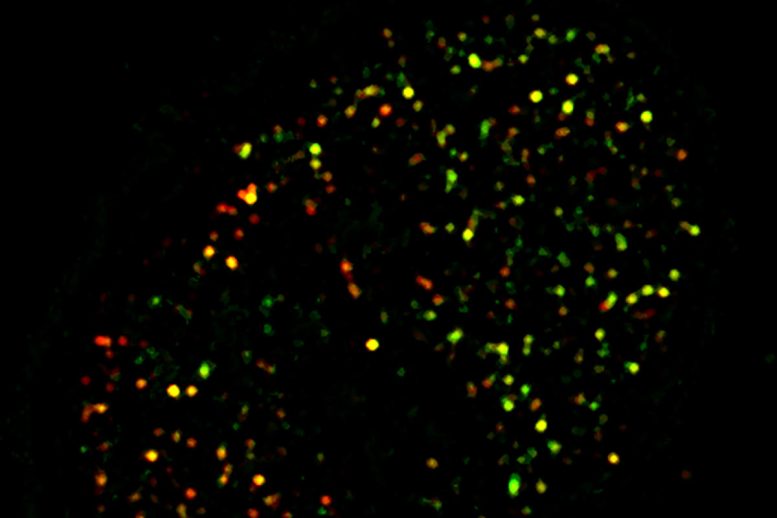
Many individuals with high insulin levels also exhibit impairments in an enzyme crucial to fatty acid processing.
The risk of developing diabetes is significantly higher in individuals who are overweight or obese, however, the precise mechanism behind this is not clear.
A recent study at Washington University School of Medicine in St. Louis may shed light on how excessive weight contributes to diabetes and offer researchers a target for preventing or delaying the onset of the disease in at-risk individuals. The research suggests that many individuals with high insulin levels, a sign of increased diabetes risk, also have impairments in an enzyme essential for processing a crucial dietary fatty acid.
The research was recently published in the journal Cell Metabolism.
“Between 30 million and 40 million people in the United States have Type 2 diabetes, and another 90 million to 100 million have risk factors that make them likely to develop Type 2 diabetes in the future,” said senior investigator Clay F. Semenkovich, MD, director of the Division of Endocrinology, Metabolism & Lipid Research at the School of Medicine. “Many at risk for diabetes have elevated levels of insulin, a hallmark of insulin resistance and a signal that means trouble may be brewing. If we could intervene before they actually develop diabetes, we might be able to prevent significant health problems — such as heart disease, chronic kidney disease, nerve damage, vision loss, and other problems — in a great number of people.”
Insulin Resistance and Beta Cell Function
When a person has too much body fat, it signals beta cells in the pancreas to secrete more insulin. When insulin levels become elevated and remain high, the body can become resistant to insulin, and eventually the beta cells that secrete insulin can fail, leading to diabetes.
Studying human tissue samples, Semenkovich, the Irene E. and Michael M. Karl Professor; first author Guifang Dong, Ph.D., a senior scientist; Xiaochao Wei, Ph.D., an associate professor of medicine; and other Washington University researchers found that the overproduction of insulin involves a process called palmitoylation. This is the process by which cells attach the fatty acid palmitate to proteins.
Deficiency in APT1 Enzyme and Diabetes Development
Thousands of human proteins can be attached to palmitate, but the researchers found that when this fatty acid isn’t removed from proteins in beta cells, diabetes is the end result. Examining tissue samples from people who were thin or overweight, and with and without diabetes, the researchers found that the people with diabetes were deficient in an enzyme that removes palmitate from beta cells.
“They hyper-secrete insulin because this process goes awry, and they can’t appropriately regulate the release of insulin from beta cells,” Semenkovich explained. “Regulating insulin release is controlled in part by this palmitoylation process.”
With colleagues David W. Piston, Ph.D., the Edward W. Mallinckrodt Jr. Professor and head of the Department of Cell Biology & Physiology, Maria S. Remedi, Ph.D., a professor of medicine and of cell biology & physiology, and Fumihiko Urano, MD, Ph.D., a professor of medicine and of pathology & immunology, the research team also genetically engineered a mouse that was deficient in the enzyme called APT1, an enzyme responsible for palmitate removal from proteins. The engineered mice went on to develop diabetes.
Searching for Therapeutic Targets
Because impaired APT1 function contributed to diabetes risk, the researchers worked with the university’s Center for Drug Discovery to screen and identify compounds that can increase the activity of the APT1 enzyme.
“We’ve found several candidate drugs, and we’re pursuing those,” Semenkovich said. “We think that by increasing APT1 activity, we might reverse this process and potentially prevent people at risk from progressing to diabetes.”
Although he said the new findings identifying APT1 as a target are an important step, Semenkovich explained that APT1 is only one treatment target among many.
“There are several ways that Type 2 diabetes may develop,” he said. “This enzyme is not the answer, but it’s an answer, and it appears we have some promising tools that might keep some people with prediabetes from developing diabetes.”
Reference: “Palmitoylation couples insulin hypersecretion with β cell failure in diabetes” by Guifang Dong, Sangeeta Adak, George Spyropoulos, Qiang Zhang, Chu Feng, Li Yin, Sarah L. Speck, Zeenat Shyr, Shuntaro Morikawa, Rie Asada Kitamura, Rahul S. Kathayat, Bryan C. Dickinson, Xue Wen Ng, David W. Piston, Fumihiko Urano, Maria S. Remedi, Xiaochao Wei and Clay F. Semenkovich, 11 January 2023, Cell Metabolism.
DOI: 10.1016/j.cmet.2022.12.012
The study was funded by the National Institute of Diabetes and Digestive and Kidney Diseases, the National Heart, Lung and Blood Institute, the National Institute of General Medical Sciences, the China Scholarship Council, and the Manpei Suzuki Diabetes Foundation.
Never miss a breakthrough: Join the SciTechDaily newsletter.
Follow us on Google and Google News.