
Study Reports Five-Year Survival Outcomes
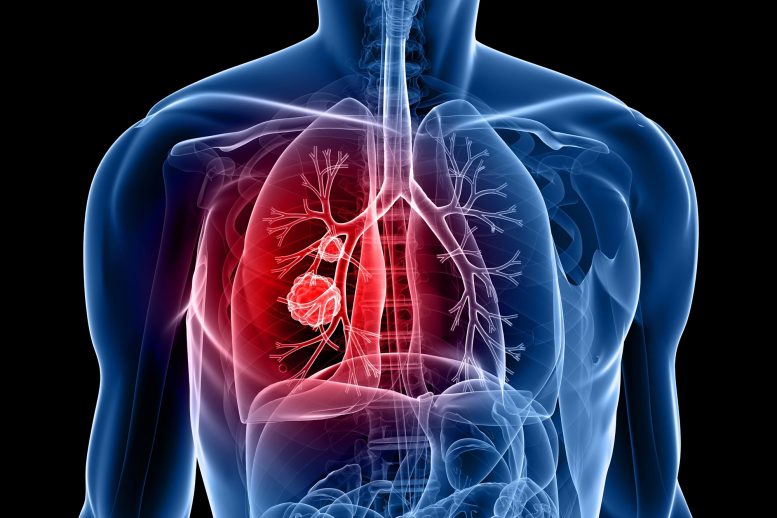
Patients with resectable non-small cell lung cancer (NSCLC) who were treated with neoadjuvant nivolumab had improved five-year recurrence-free and overall survival rates compared with historical outcomes.
The research will be published today, February 15, 2023, in Clinical Cancer Research, a journal of the American Association for Cancer Research (AACR), a non-profit organization dedicated to advancing cancer research and improving patient outcomes through education, collaboration, and advocacy..
Patrick Forde, MBBCh, the senior author of the study, is an associate professor of oncology and director of the Thoracic Oncology Clinical Research Program at the Sidney Kimmel Comprehensive Cancer Center at Johns Hopkins.
Samuel Rosner, MD, is co-first author of the study and is a medical oncology fellow at the Sidney Kimmel Comprehensive Cancer Center at Johns Hopkins and a member of Forde’s research group.
NSCLC Background
NSCLC is the most common type of lung cancer and is a leading cause of cancer-related death worldwide. Despite strides in treating metastatic NSCLC, new treatments for earlier-stage disease have only recently emerged, according to Forde.
Rosner added that there is great interest in optimizing neoadjuvant strategies for earlier-stage NSCLCs that are eligible for surgical resection. Rosner is a medical oncology fellow at the Sidney Kimmel Comprehensive Cancer Center at Johns Hopkins and a member of Forde’s research group.
Forde, Rosner, and colleagues previously reported safety and efficacy results from a phase II clinical trial in which patients with stage I-III resectable NSCLC were treated with two doses of neoadjuvant nivolumab. Major pathological responses were observed in 45 percent of patients, independent of tumor PD-L1 expression, and 73 percent of patients whose tumors were surgically resected were recurrence-free 18 months following surgery.
The latest publication reports the final analyses from this trial, including five-year recurrence-free and overall survival rates for the 20 patients who underwent surgical resection.
“To our knowledge, this is the longest follow-up to date for a PD-1/PD-L1 inhibitor in the neoadjuvant setting for any solid tumor,” said Forde.
Study Results
Among the 20 patients who underwent surgical resection, 12 patients (60 percent) remained recurrence-free five years after surgery, and 16 patients (80 percent) were alive, exceeding the 36 to 68 percent five-year survival rate historically observed for patients with stage I-III NSCLC, Rosner noted. Forde added that the observed patient outcomes after neoadjuvant nivolumab were better than those historically observed among patients treated with neoadjuvant chemotherapy.
The authors also identified major pathologic response after neoadjuvant nivolumab as a potential predictive biomarker of recurrence-free and overall survival. Of the nine patients who had a major pathological response after neoadjuvant nivolumab, eight were alive and cancer-free five years after treatment. One patient experienced a recurrence within the first 10 months after treatment but has since been disease-free after definitive chemoradiation. The one death in this subgroup was unrelated to cancer.
In contrast, six of the 11 patients who did not have a major pathological response experienced disease recurrence, and three of these patients died due to their cancer. These results indicate that a major pathological response following neoadjuvant nivolumab may be associated with a lower risk of disease recurrence and death, although the authors caution that these results are preliminary and require further validation in larger studies.
Neoadjuvant nivolumab did not lead to surgical delays, and there was only one late-onset immune-related adverse event, which occurred 16 months after nivolumab treatment and was successfully managed, the authors noted.
“The results from the five-year follow-up analysis indicate that neoadjuvant nivolumab was safe in long-term follow-up and led to encouraging survival in this patient cohort,” said Forde. “The long-term safety and efficacy data from this study provide further support for the use of nivolumab in the neoadjuvant setting.”
Neoadjuvant nivolumab in combination with chemotherapy was approved by the U.S. Food and Drug Administration in March 2022 for the treatment of lung cancer. “Further studies will help us determine whether select patients may benefit from immunotherapy alone,” Forde noted.
“An interesting finding from the analysis was the difference in outcomes between patients with and without a major pathological response,” said Rosner. “Although the sample size was small, the results illustrate the potential power of pathological response as a predictive biomarker.”
Reference: “Five-Year Clinical Outcomes after Neoadjuvant Nivolumab in Resectable Non-Small Cell Lung Cancer” by Samuel Rosner, Joshua E. Reuss, Marianna Zahurak, Jiajia Zhang, Zhen Zeng, Janis Taube, Valsamo Anagnostou, Kellie N. Smith, Joanne Riemer, Peter B. Illei, Stephen R. Broderick, David R. Jones, Suzanne L. Topalian, Drew M. Pardoll, Julie R. Brahmer, Jamie E. Chaft and Patrick M. Forde, 16 February 2023, Clinical Cancer Research.
DOI: 10.1158/1078-0432.CCR-22-2994
Study Limitations: Limitations of the study include the small cohort size and the single-arm design.
Funding & Disclosures: The study was supported by funding from Stand Up To Cancer (AACR is the Scientific Partner of Stand Up To Cancer), Bristol-Myers Squibb, the International Immuno-Oncology Network, the LUNGevity Foundation, the International Association for the Study of Lung Cancer, the Prevent Cancer Foundation, the Lung Cancer Foundation of America, the MacMillan Foundation, the ECOG-ACRIN Cancer Research Group, the National Institutes of Health, Johns Hopkins University Cancer Center, and Memorial Sloan Kettering Cancer Center.
Rosner declares no conflicts of interest. Forde has received payments to his institution from Array BioPharma, AstraZeneca, Bristol-Myers Squibb, Corvus Pharmaceuticals, Kyowa-Kirin, Novartis, and Regeneron Pharmaceuticals; has received consulting fees from Amgen, AstraZeneca, Bristol-Myers Squibb, Genentech, G1 Therapeutics, Surface Oncology, F-Star Therapeutics, iTeos Therapeutics, Janssen, Novartis, Daichii Sankyo, and Sanofi; has participated on advisory boards with Polaris Pharmaceuticals and Flame Biosciences; and has participated on scientific advisory boards for LUNGevity Foundation, Mesothelioma Applied Research Foundation, and Cancer Trials Ireland.
Never miss a breakthrough: Join the SciTechDaily newsletter.
Follow us on Google and Google News.