
Close Menu
    Facebook X (Twitter) Instagram
    SciTechDaily
    • Biology
    • Chemistry
    • Earth
    • Health
    • Physics
    • Science
    • Space
    • Technology
    Facebook X (Twitter) Pinterest YouTube RSS
    SciTechDaily
    Home»Space»Astronomy & Astrophysics 101: Optical Astronomy
    Space

    Astronomy & Astrophysics 101: Optical Astronomy

    By ESA/HubbleJanuary 29, 2024No Comments2 Mins Read
    Facebook Twitter Pinterest Telegram LinkedIn WhatsApp Email Reddit
    Share
    Facebook Twitter LinkedIn Pinterest Telegram Email Reddit
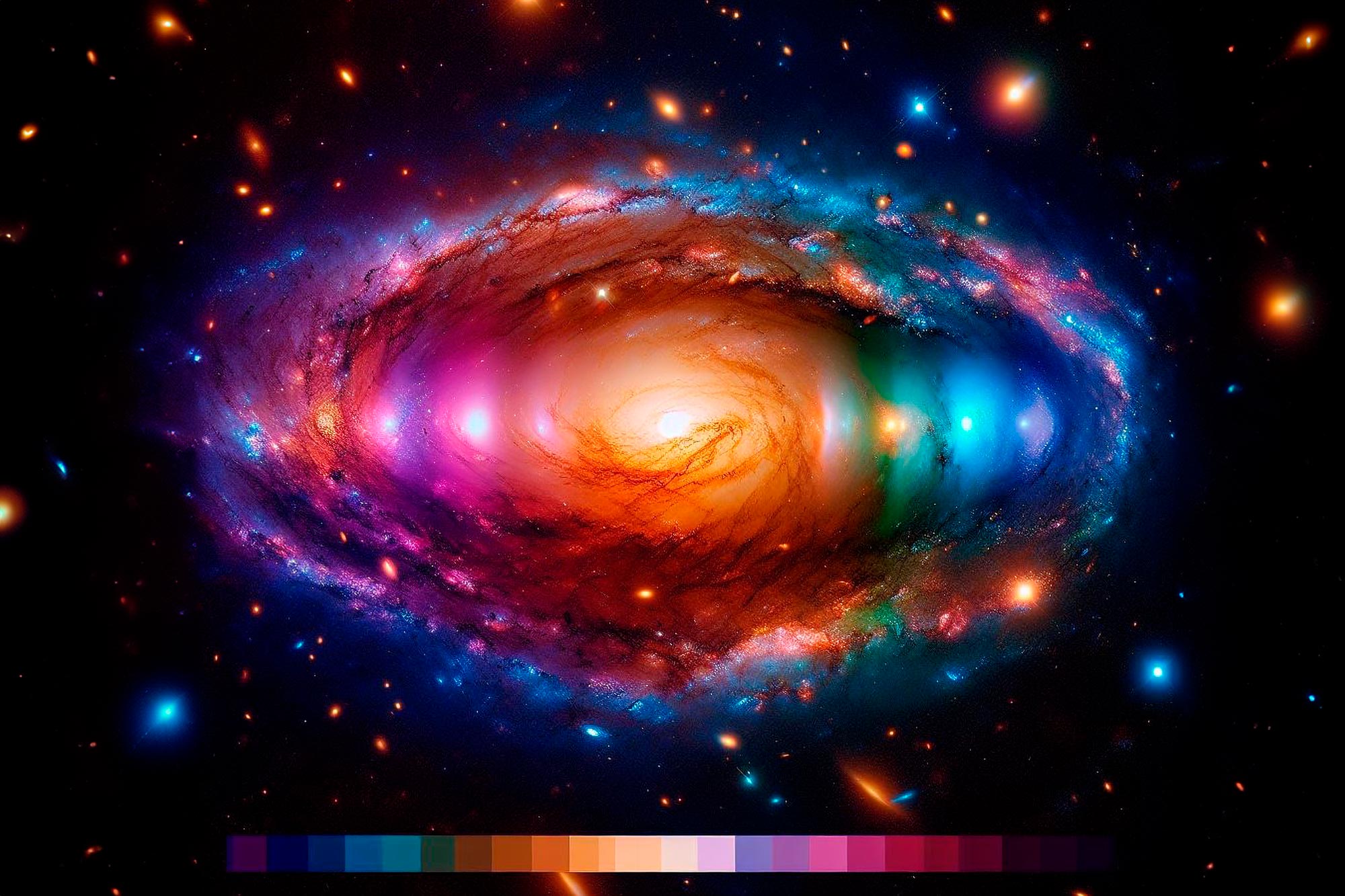
    Optical Astronomy Colorful Galaxy Art Concept
    Optical astronomy focuses on studying visible light, or light within the wavelength range detectable by the human eye, using telescopes to gather more light than the eye can. It involves analyzing this light, which ranges from 380 to 750 nanometers in wavelength, to understand celestial objects and develop theories about the Universe. Credit: SciTechDaily.com

    What Is Optical Astronomy?

    Optical astronomy refers to an area of astronomy where astronomers observe and analyze light from the Universe that falls within the wavelength range that the human eye is sensitive to, also referred to as visible light.

    Astronomers analyze light (electromagnetic radiation) in order to study the Universe. Telescopes collect light, and the data collected by telescopes allow astronomers to learn about specific celestial objects, and to develop better theories about the past, present, and future of such celestial objects, and of the Universe in general.

    Human eyes also collect light, but they collect far less light than telescopes can, and they are also only sensitive to light at specific wavelengths. Light that human eyes can detect is referred to as visible light. Optical astronomy, so called because it uses familiar ‘optical’ elements such as lenses and mirrors, and sometimes referred to as visible-light astronomy, is astronomy that is concerned with measuring visible light.

    This corresponds to electromagnetic waves with wavelengths of 380 to 750 nanometers. The shorter wavelengths correspond to blue light, and the longer to red light, with the full spectrum of visible colors in between. Most celestial objects emit some visible light.

    You can compare the optical/visible vs. other wavelength views (including near-infrared) from Hubble of different objects by exploring these images of the Pillars of Creation, the Carina Nebula, the Lagoon Nebula, and Jupiter.
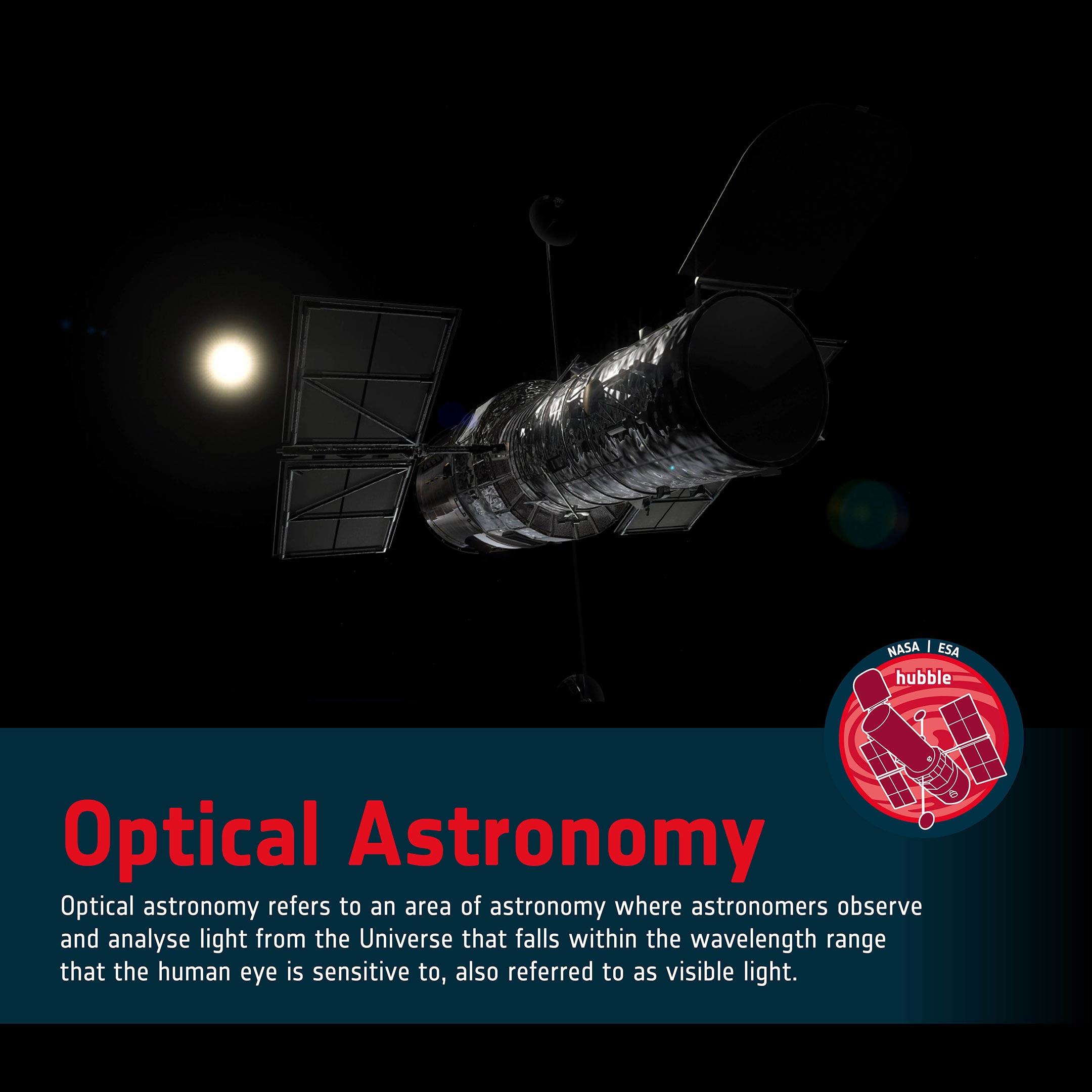
    Word Bank Optical Astronomy
    Optical Astronomy. Credit: NASA & ESA

    We also invite you to watch this Hubblecast that explores how Hubble’s observations differ across different wavelengths of the electromagnetic spectrum, and how these observations will be complemented by those of the James Webb Space Telescope.

    Never miss a breakthrough: Join the SciTechDaily newsletter.
    Follow us on Google and Google News.

    Astronomy Astrophysics European Space Agency Hubble Space Telescope
    Share. Facebook Twitter Pinterest LinkedIn Email Reddit

    Related Articles

    Hubble Captures a Dangerous Dance Over 100 Million Light-Years From Earth

    Hubble Captures the Final Acts of a Monster Star

    Hubble Find Surprises Astronomers: White Dwarfs Can Still Undergo Stable Thermonuclear Activity

    First Evidence of Water Vapor at Jupiter’s Moon Ganymede – May Hold More Water Than All of Earth’s Oceans

    Our Giant Universe: Hubble Spots Massive Galaxy Cluster With a Wealth of Exciting Possibilities

    Tantrums of a Baby Star: Herbig-Haro Objects

    Unexpected Discovery: Hubble Space Telescope Uncovers Concentration of Small Black Holes

    “Unprecedented” – Unusual Planetary Nebula Fades Mere Decades After It Arrived

    Hubble Captures Unprecedented Fading of Stingray Nebula – “This Is Very, Very Dramatic, and Very Weird”

    Leave A Reply Cancel Reply

    • Facebook
    • Twitter
    • Pinterest
    • YouTube

    Don't Miss a Discovery

    Subscribe for the Latest in Science & Tech!

    Trending News

    Scientists Discover Game-Changing New Way To Treat High Cholesterol

    This Small Change to Your Exercise Routine Could Be the Secret to Living Longer

    Scientists Discover 430,000-Year-Old Wooden Tools, Rewriting Human History

    AI Could Detect Early Signs of Alzheimer’s in Under a Minute – Far Before Traditional Tests

    What if Dark Matter Has Two Forms? Bold New Hypothesis Could Explain a Cosmic Mystery

    This Metal Melts in Your Hand – and Scientists Just Discovered Something Strange

    Beef vs. Chicken: Surprising Results From New Prediabetes Study

    Alzheimer’s Breakthrough: Scientists Discover Key Protein May Prevent Toxic Protein Clumps in the Brain

    Follow SciTechDaily
    • Facebook
    • Twitter
    • YouTube
    • Pinterest
    • Newsletter
    • RSS
    SciTech News
    • Biology News
    • Chemistry News
    • Earth News
    • Health News
    • Physics News
    • Science News
    • Space News
    • Technology News
    Recent Posts
    • Revolutionary Imaging Technique Unlocks Secrets of Matter at Extreme Speeds
    • Where Does Mass Come From? Scientists Find Evidence of a New Exotic Nuclear State
    • Quantum Breakthrough: Unhackable Keys Sent Over 120 km Using Quantum Dots
    • Researchers Discover Unknown Beetle Species Just Steps From Their Lab
    • Jellyfish Caught Feasting on Exploding Sea Worms for the First Time
    Copyright © 1998 - 2026 SciTechDaily. All Rights Reserved.
    • Science News
    • About
    • Contact
    • Editorial Board
    • Privacy Policy
    • Terms of Use

    Type above and press Enter to search. Press Esc to cancel.