
Close Menu
    Facebook X (Twitter) Instagram
    SciTechDaily
    • Biology
    • Chemistry
    • Earth
    • Health
    • Physics
    • Science
    • Space
    • Technology
    Facebook X (Twitter) Pinterest YouTube RSS
    SciTechDaily
    Home»Space»Astronomy & Astrophysics 101: Infrared Astronomy
    Space

    Astronomy & Astrophysics 101: Infrared Astronomy

    By ESA/HubbleApril 30, 2022No Comments3 Mins Read
    Facebook Twitter Pinterest Telegram LinkedIn WhatsApp Email Reddit
    Share
    Facebook Twitter LinkedIn Pinterest Telegram Email Reddit
    Word Bank Infrared Astronomy
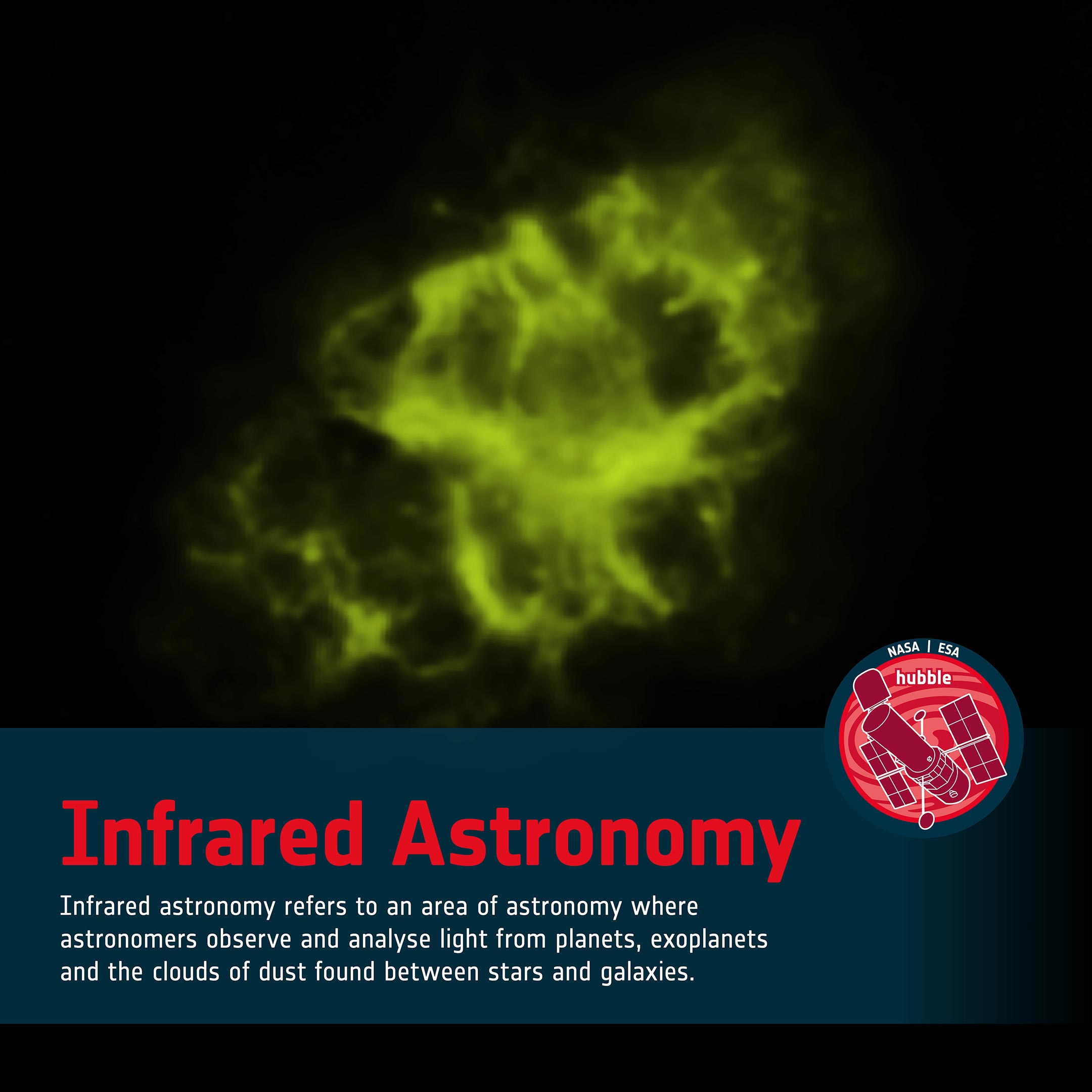
    Infrared astronomy refers to an area of astronomy where astronomers observe and analyze light from planets, exoplanets, and the clouds of dust found between stars and galaxies. Credit: ESA/Hubble, JPL/Caltech

    What Is Infrared Astronomy?

    Infrared astronomy is a branch of astronomy in which astronomers observe and analyze light from the Universe with wavelengths in the infrared range.

    Astronomers analyze light (electromagnetic radiation) in order to study the Universe. Telescopes collect light, and the data gathered by telescopes enables astronomers to learn about specific celestial objects and develop better theories about the Universe’s history, present, and future.

    The nature of the light that an object emits depends on its temperature. Whereas hot stars predominantly emit visible light, infrared radiation is emitted by slightly cooler objects, such as exoplanets and cool clouds of cosmic dust. Furthermore, infrared radiation passes more freely through cosmic dust than visible light does, because visible light is scattered by cosmic dust. This means that infrared astronomy allows astronomers to observe regions of space that are otherwise obscured by cosmic dust, and images captured in the infrared also typically reveal more stars than images taken in visible light (since stars radiate infrared as well as visible light).

    By combining observations at multiple wavelengths, we can construct a more complete picture of the structure, composition, and behavior of celestial objects than the visible wavelengths alone could ever show.


    Infrared astronomy refers to an area of astronomy where astronomers observe and analyze light from planets, exoplanets, and the clouds of dust found between stars and galaxies. Credit: ESA/Hubble, JPL/Caltech

    Hubble’s high resolving power has been crucial in the investigation of regions of star formation, both in the Milky Way and in other galaxies, and its infrared capabilities have allowed it to peer through the thick clouds of dust and gas present in those regions. To celebrate its 23rd anniversary, Hubble released a stunning new image of one of the most distinctive objects in our skies, the Horsehead Nebula. By capturing the object in infrared radiation, the image quite literally shows the nebula in a whole new light, capturing plumes of gas and revealing a beautiful, delicate structure that is normally obscured by dust.
    Space Telescopes Electromagnetic Spectrum
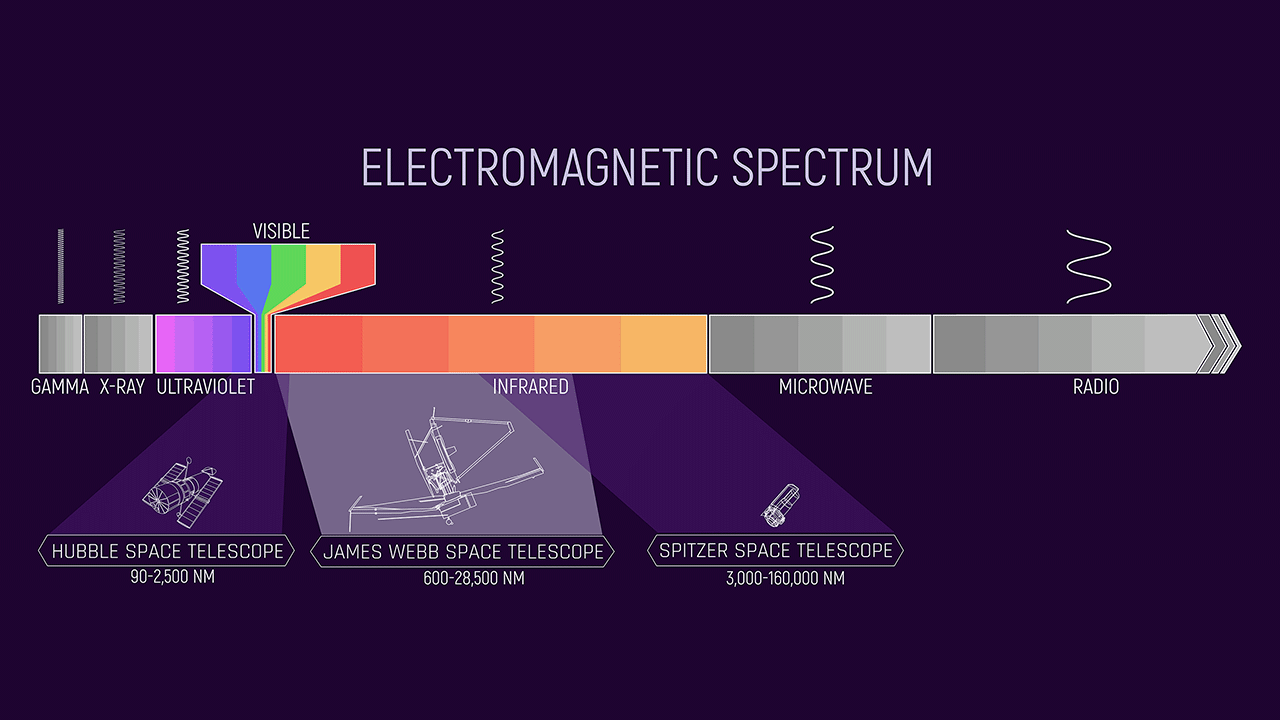
    NASA’s James Webb Space Telescope is designed to observe infrared light—wavelengths of light that are beyond the rainbow visible to human eyes. Infrared light’s longer wavelengths provide information that other wavelengths cannot, including star formation and other processes that take place behind thick veils of dust, which block the shorter wavelengths of visible light. Webb will detect a range of infrared light that overlaps with those observed by other NASA missions, but will also cover a significant portion of the infrared spectrum that they do not. This infographic highlights Webb’s overlapping and complementary spectrum coverage with two NASA missions: the Hubble Space Telescope and Spitzer Space Telescope. Webb features a combination of Hubble’s imaging power and sensitivity with Spitzer’s infrared coverage, and goes beyond both to provide a wealth of new infrared data on the universe that is hidden beyond visible red light. Credit: NASA and J. Olmstead (STScI)

    We also invite you to watch this Hubblecast video that explores how Hubble’s observations differ across different wavelengths of the electromagnetic spectrum, and how these observations will be complemented by those of the James Webb Space Telescope.

    Never miss a breakthrough: Join the SciTechDaily newsletter.
    Follow us on Google and Google News.

    Astronomy Astrophysics European Space Agency Hubble Space Telescope
    Share. Facebook Twitter Pinterest LinkedIn Email Reddit

    Related Articles

    Hubble Captures a Dangerous Dance Over 100 Million Light-Years From Earth

    Hubble Captures the Final Acts of a Monster Star

    Hubble Find Surprises Astronomers: White Dwarfs Can Still Undergo Stable Thermonuclear Activity

    First Evidence of Water Vapor at Jupiter’s Moon Ganymede – May Hold More Water Than All of Earth’s Oceans

    Our Giant Universe: Hubble Spots Massive Galaxy Cluster With a Wealth of Exciting Possibilities

    Tantrums of a Baby Star: Herbig-Haro Objects

    Unexpected Discovery: Hubble Space Telescope Uncovers Concentration of Small Black Holes

    “Unprecedented” – Unusual Planetary Nebula Fades Mere Decades After It Arrived

    Hubble Captures Unprecedented Fading of Stingray Nebula – “This Is Very, Very Dramatic, and Very Weird”

    Leave A Reply Cancel Reply

    • Facebook
    • Twitter
    • Pinterest
    • YouTube

    Don't Miss a Discovery

    Subscribe for the Latest in Science & Tech!

    Trending News

    The Universe Is Expanding Too Fast and Scientists Can’t Explain Why

    “Like Liquid Metal”: Scientists Create Strange Shape-Shifting Material

    Early Warning Signals of Esophageal Cancer May Be Hiding in Plain Sight

    Common Blood Pressure Drug Shows Surprising Power Against Deadly Antibiotic-Resistant Superbug

    Scientists Uncover Dangerous Connection Between Serotonin and Heart Valve Disease

    Scientists Discover a “Protector” Protein That Could Help Reverse Hair Loss

    Bone-Strengthening Discovery Could Reverse Osteoporosis

    Scientists Uncover Hidden Trigger Behind Stem Cell Aging

    Follow SciTechDaily
    • Facebook
    • Twitter
    • YouTube
    • Pinterest
    • Newsletter
    • RSS
    SciTech News
    • Biology News
    • Chemistry News
    • Earth News
    • Health News
    • Physics News
    • Science News
    • Space News
    • Technology News
    Recent Posts
    • Scientists Overcome Major Quantum Bottleneck, Potentially Transforming Teleportation and Computing
    • Quantum Physics’ Strangest Problem May Hold the Key to Time Itself
    • Scientists Create “Liquid Gears” That Spin Without Touching
    • The Simple Habit That Could Help Prevent Cancer
    • Forgotten Medicinal Plant Shows Promise in Fighting Dangerous Superbugs
    Copyright © 1998 - 2026 SciTechDaily. All Rights Reserved.
    • Science News
    • About
    • Contact
    • Editorial Board
    • Privacy Policy
    • Terms of Use

    Type above and press Enter to search. Press Esc to cancel.