
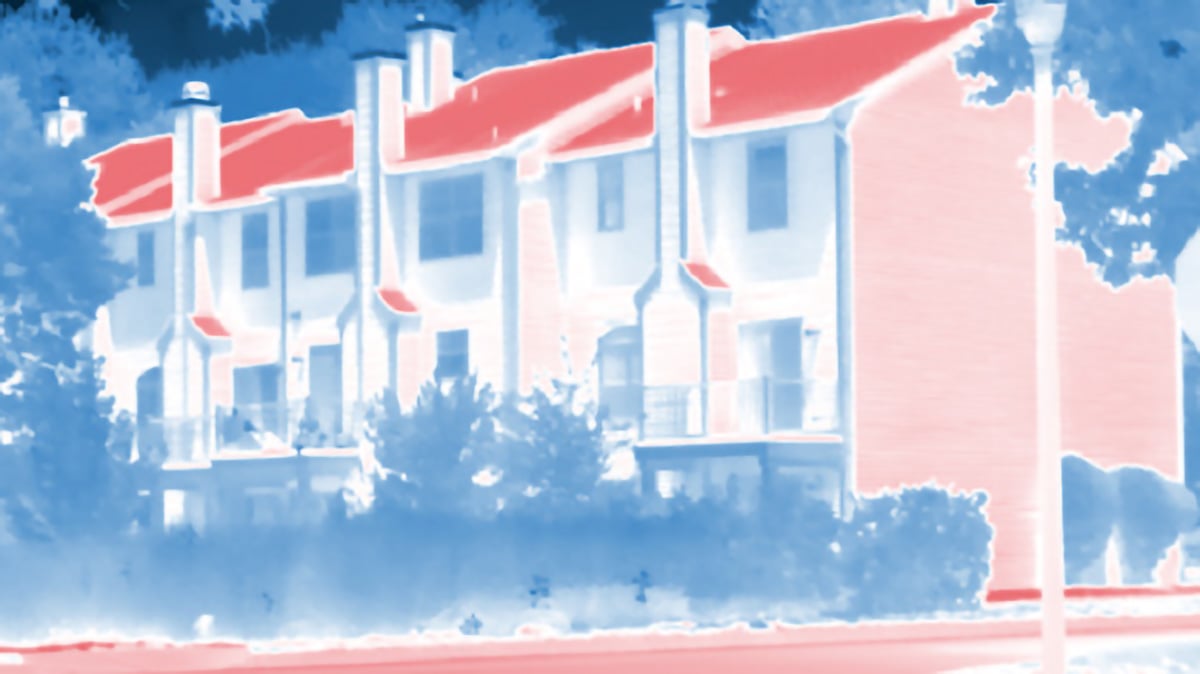
Researchers have devised a passive thermal regulation mechanism using common materials that selectively manage radiant heat, providing a sustainable way to significantly improve building energy efficiency and comfort.
Engineers at Princeton and UCLA have developed a passive mechanism to cool buildings in the summer and warm them in the winter.
In an article recently published in the journal Cell Reports Physical Science, they report that by restricting radiant heat flows between buildings and their environment to specific wavelengths, coatings engineered from common materials can achieve energy savings and thermal comfort that goes beyond what traditional building envelopes can achieve.
“With the increase in global temperatures, maintaining habitable buildings has become a global challenge,” said researcher Jyotirmoy Mandal, an assistant professor of Civil and Environmental Engineering at Princeton. “Buildings exchange a majority of heat with their environment as radiation, and by tailoring the optical properties of their envelopes to exploit how radiation behaves in our environment, we can control heat in buildings in new and impactful ways.”
Historical and Current Cooling Techniques
Radiant heat, carried by electromagnetic waves, is ubiquitous – we feel it when sunlight warms our skin, or when an electric coil heats up a room. Regulating building temperature by controlling radiant heat is a common practice. Most buildings use window shades to block sunlight, and many paint roofs and walls white to reflect the sun.
“If we look at historical cities like Santorini in Greece or Jodhpur in India, we find that cooling buildings by making roofs and walls reflect sunlight has been practiced for centuries,” said researcher Aaswath Raman, an associate professor of Materials Science and Engineering at UCLA. “In recent years there has been massive interest in cool roof coatings that reflect sunlight. But cooling walls and windows is a much more subtle and complex challenge.”
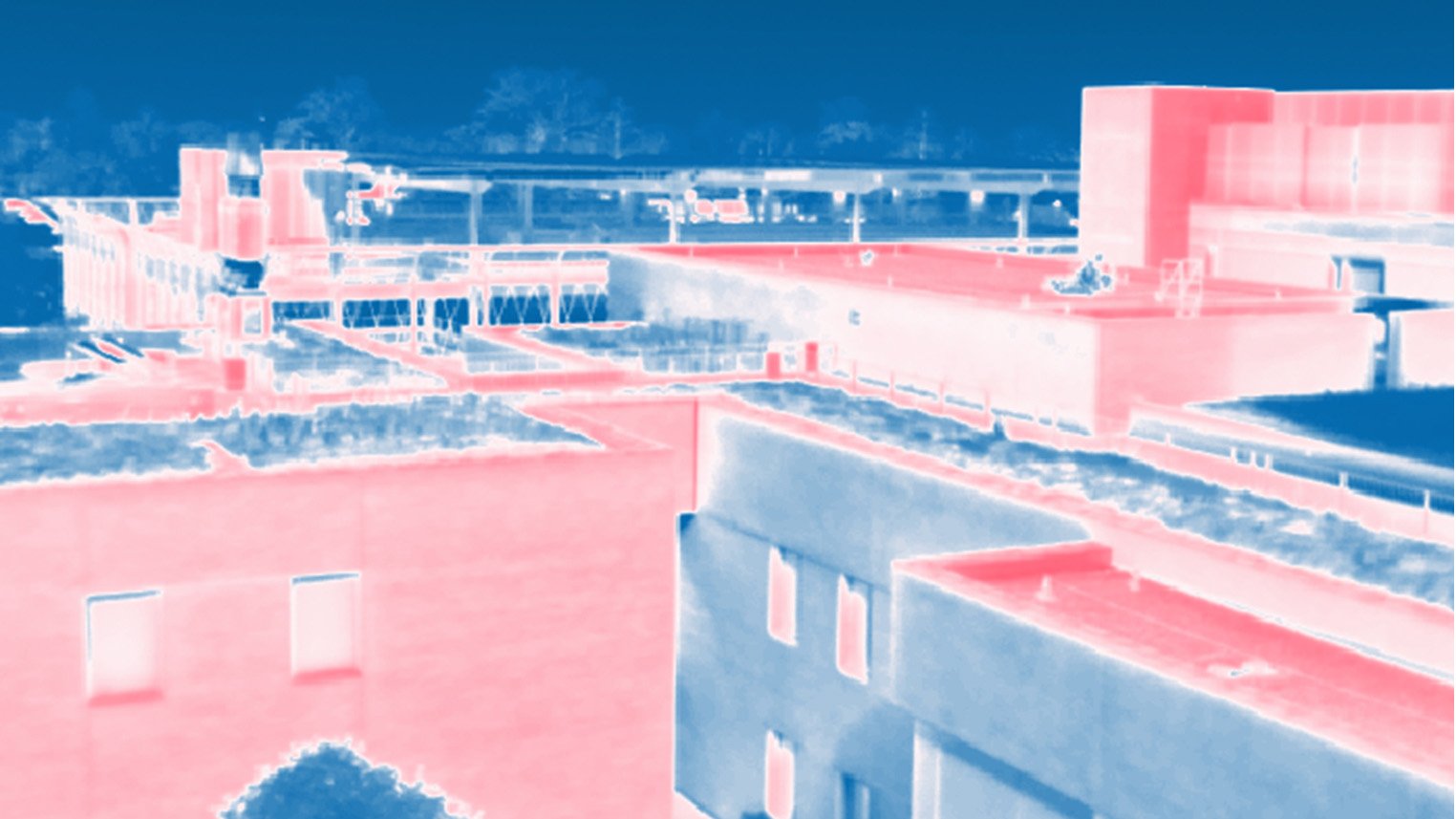
Roofs usually have an open view of the sky. This allows cool roof coatings to reflect sunlight and radiate long-wave heat skywards and eventually to space. Walls and windows, on the other hand, mostly have the ground and neighboring buildings in view. During hot weather, they are warmed by heat radiating from hot streets, pavements and nearby buildings in view. This means that even as walls and windows radiate heat to the sky, they are heated even more by the earth. During cold weather, the terrestrial environment becomes colder, draining heat from walls and windows.
The researchers realized the way around this problem lies in the different way heat moves between buildings and the area at ground level and the way it moves between buildings and the sky. Radiant heat moves from buildings to the sky in a narrow portion of the infrared spectrum known as the atmospheric transmission window, so the researchers call this narrowband. At ground level, radiant heat moves across the entire infrared spectrum, and the researchers call that broadband.
“By coating walls and windows with materials that only radiate or absorb heat in the atmospheric window, we can reduce broadband heat gain from the ground in the summer, and loss in the winter, while maintaining the cooling effect of the sky. We believe that this idea is unprecedented, and beyond what traditional roof and wall envelopes can achieve.” Mandal noted.
Material Innovations and Future Potential
The findings’ impact is significant for two important reasons. First, the researchers show in the article that many common and low-cost building materials radiate heat in the narrowband and block broadband heat. Material such as polyvinyl fluoride, already used as siding material, could be adapted for the purpose, as could even more common plastics.
“We were really excited when we found that materials like Polypropylene, which we sourced from household plastics, selectively radiate or absorb heat in the atmospheric window,” Raman noted. “These materials border on the mundane, but the same scalability that makes them common also means that we could see them thermoregulating buildings in the near future.”
The second reason for optimism is that the potential energy impacts at the building scale are substantial. The researchers noted that seasonal energy savings with their mechanism are comparable to the benefits of painting dark roofs white. This could be useful as air conditioning cost and heat-related casualties continue to soar worldwide. Mandal and Raman plan to continue this research further.
“The mechanism we proposed is completely passive, which makes it a sustainable way to cool and heat buildings with the seasons and yield untapped energy savings.” Mandal notes. “In fact, the benefits of the mechanisms and materials we show are highest for buildings in the global south. So, it could be a more equitable solution in resource-poor communities, even more as they see increasing cooling demands and heat-related mortalities.”
Reference: “Radiative cooling and thermoregulation in the earth’s glow” by Jyotirmoy Mandal, Jyothis Anand, Sagar Mandal, John Brewer, Arvind Ramachandran and Aaswath P. Raman, 27 June 2024, Cell Reports Physical Science.
DOI: 10.1016/j.xcrp.2024.102065
Support for the project was provided in part by the Schmidt Science Fellowship, the Alfred P. Sloan Foundation, and the National Science Foundation.
Never miss a breakthrough: Join the SciTechDaily newsletter.
Follow us on Google and Google News.