
Close Menu
    Facebook X (Twitter) Instagram
    SciTechDaily
    • Biology
    • Chemistry
    • Earth
    • Health
    • Physics
    • Science
    • Space
    • Technology
    Facebook X (Twitter) Pinterest YouTube RSS
    SciTechDaily
    Home»Space»Progress Underway on NASA Space Launch System (SLS) Moon Rockets for Artemis II, III, and IV
    Space

    Progress Underway on NASA Space Launch System (SLS) Moon Rockets for Artemis II, III, and IV

    By Alyssa Lee, NASA Marshall Space Flight CenterFebruary 16, 2023No Comments7 Mins Read
    Facebook Twitter Pinterest Telegram LinkedIn WhatsApp Email Reddit
    Share
    Facebook Twitter LinkedIn Pinterest Telegram Email Reddit
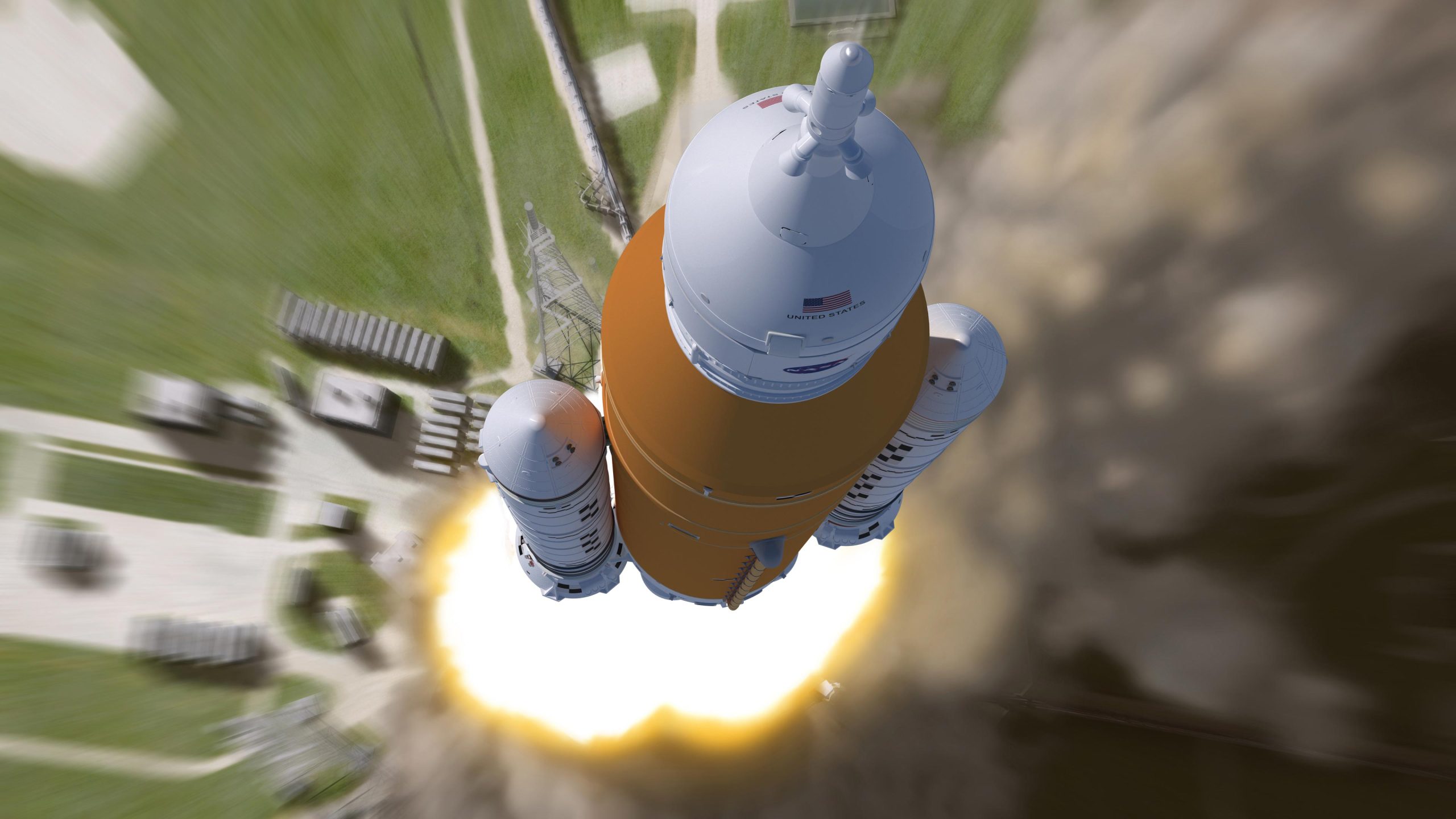
    Space Launch System (SLS) Rocket Liftoff
    This artist’s rendering shows an aerial view of the liftoff of NASA’s Space Launch System (SLS) rocket. This Block 1 crew configuration of the rocket will send the first three Artemis missions to the Moon. Credit: NASA/MSFC

    The Artemis program is advancing with SLS rocket production and upgrades for future missions.

    NASA and its partners across the country are continuing to make progress on the crewed Artemis missions with hardware for NASA’s Space Launch System (SLS) rockets for Artemis II, III, and IV already in various phases of production, assembly, and testing.

    SLS proved to be the world’s most powerful rocket, when its two solid rocket boosters and four RS-25 engines produced more than 8.8 million pounds (4 million kilograms) of thrust at liftoff to send NASA’s Orion spacecraft beyond the Moon and back on Artemis I. Data from the first flight of SLS is helping engineers build confidence in the rocket’s systems to safely fly crew on future lunar missions.
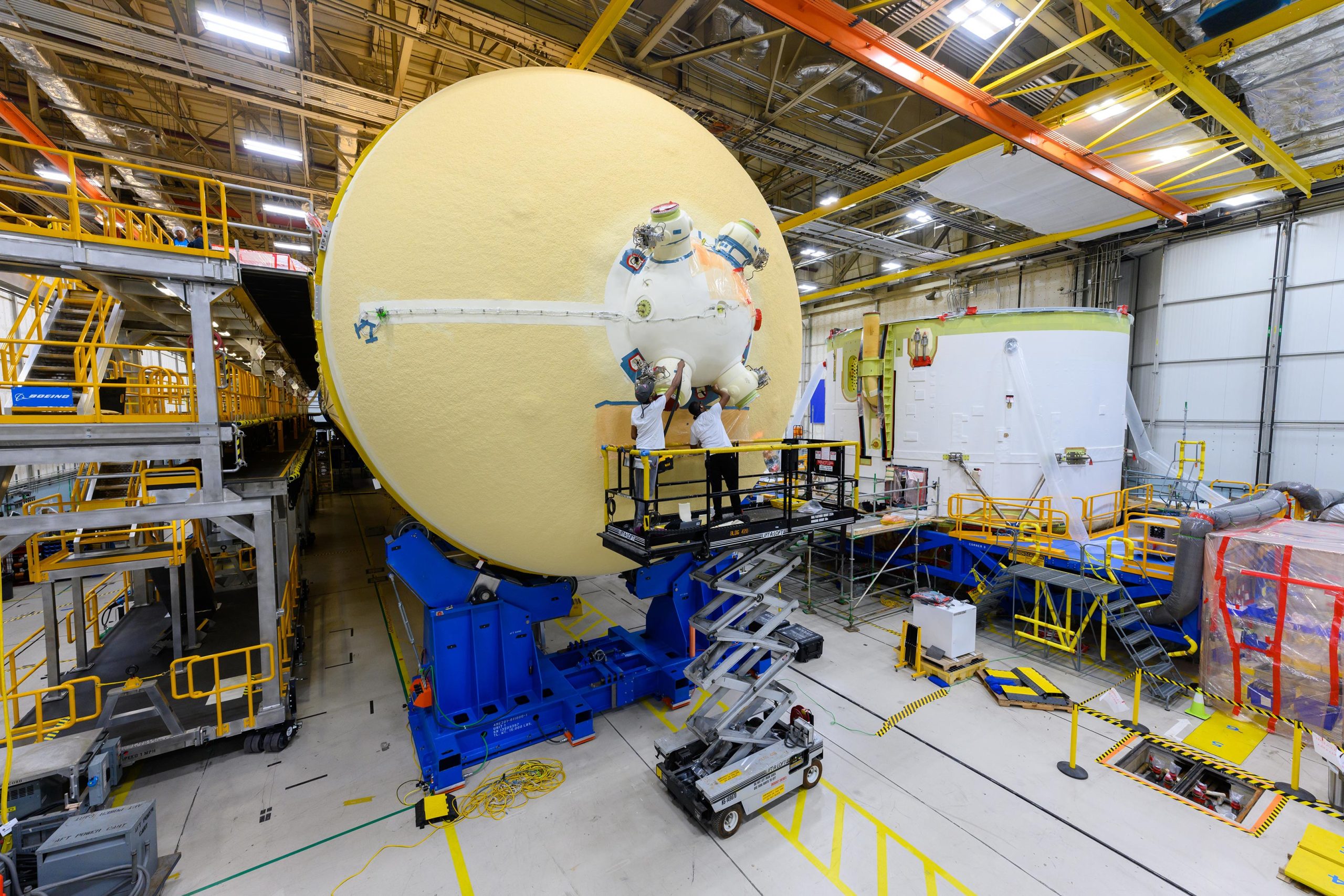
    SLS Core Stage Engine Section
    The engine section, right, is the last major structure that makes up the core stage of NASA’s Space Launch System rocket that will help power the Artemis II mission. Crews at NASA’s Michoud Assembly Facility in New Orleans will soon move the engine section to another part of the facility, rotate it to a horizontal position, and then integrate it to the rest of the rocket stage to join all five elements together. Credit: NASA/Eric Bordelon

    “The power that NASA’s Space Launch System rocket provides will enable astronauts to explore farther in our solar system than ever before and discover more about the Moon, Mars, and beyond,” said John Honeycutt, SLS program manager at NASA’s Marshall Space Flight Center in Huntsville, Alabama. “NASA is on the brink of new age of deep space discovery, and the SLS team and our partners are more focused than ever to manufacture and produce SLS rockets for Artemis missions that will put boots on the Moon for decades to come.”

    Like Artemis I, the SLS rockets that will power the Artemis II and III missions to the Moon will use the Block 1 configuration with the interim cryogenic propulsion stage (ICPS). Beginning with Artemis IV, the SLS rocket will evolve into a more powerful configuration called the Block 1B, which replaces the ICPS with the more dynamic Exploration Upper Stage (EUS) for in-space propulsion to send crew and large cargos to the Moon.
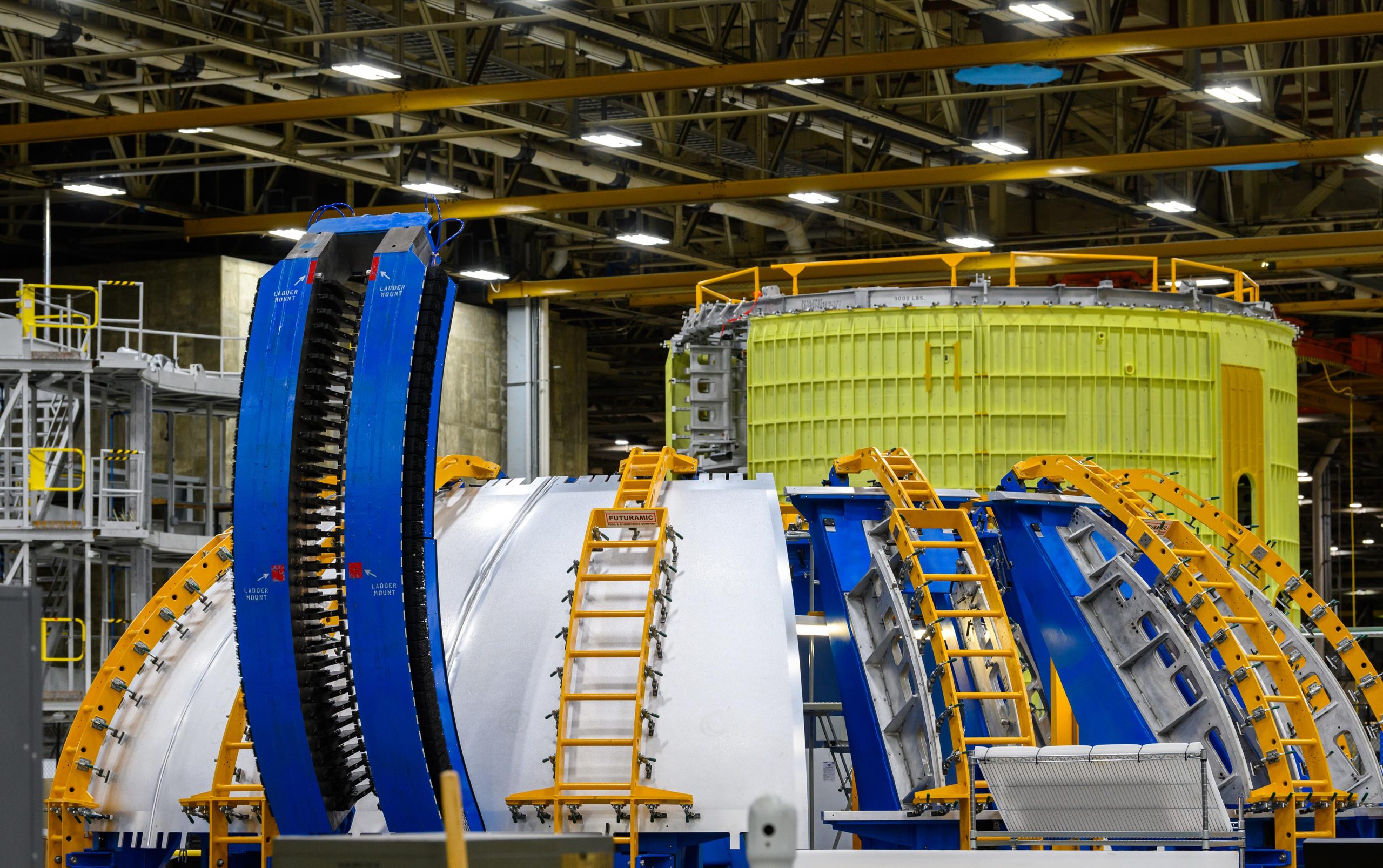
    SLS Manufacturing at Michoud Assembly Facility
    Technicians at Michoud Assembly Facility in New Orleans are manufacturing structures for multiple Space Launch System rockets that will power future Artemis flights. The dome of the liquid oxygen tank of the core stage for Artemis IV is currently in fabrication. Just behind the dome tool is the interank of the core stage for Artemis IV. Flight hardware of the SLS Exploration Upper Stage, a more powerful in-space propulsion stage beginning with Artemis IV, is in early production at Michoud. Credit: NASA/Eric Bordelon

    NASA and Boeing, lead contractor for the SLS core stage, are manufacturing the 212-foot-tall stages for Artemis II, III, and IV at NASA’s Michoud Assembly Facility in New Orleans. The Artemis II core stage is in final assembly. Once the engine section is joined to the other four elements for the Artemis II core stage at Michoud, teams will uncrate and install each of the four RS-25 engines to the stage and then ready it for delivery to NASA’s Kennedy Space Center in Florida. Technicians are simultaneously preparing for core stage assembly and outfitting activities for the Artemis III Moon rocket – the engine section for Artemis III was delivered to Kennedy in December 2022. In tandem, teams at Michoud are continuing all core stage manufacturing and production activities for the five major elements of the core stage for Artemis III and IV.
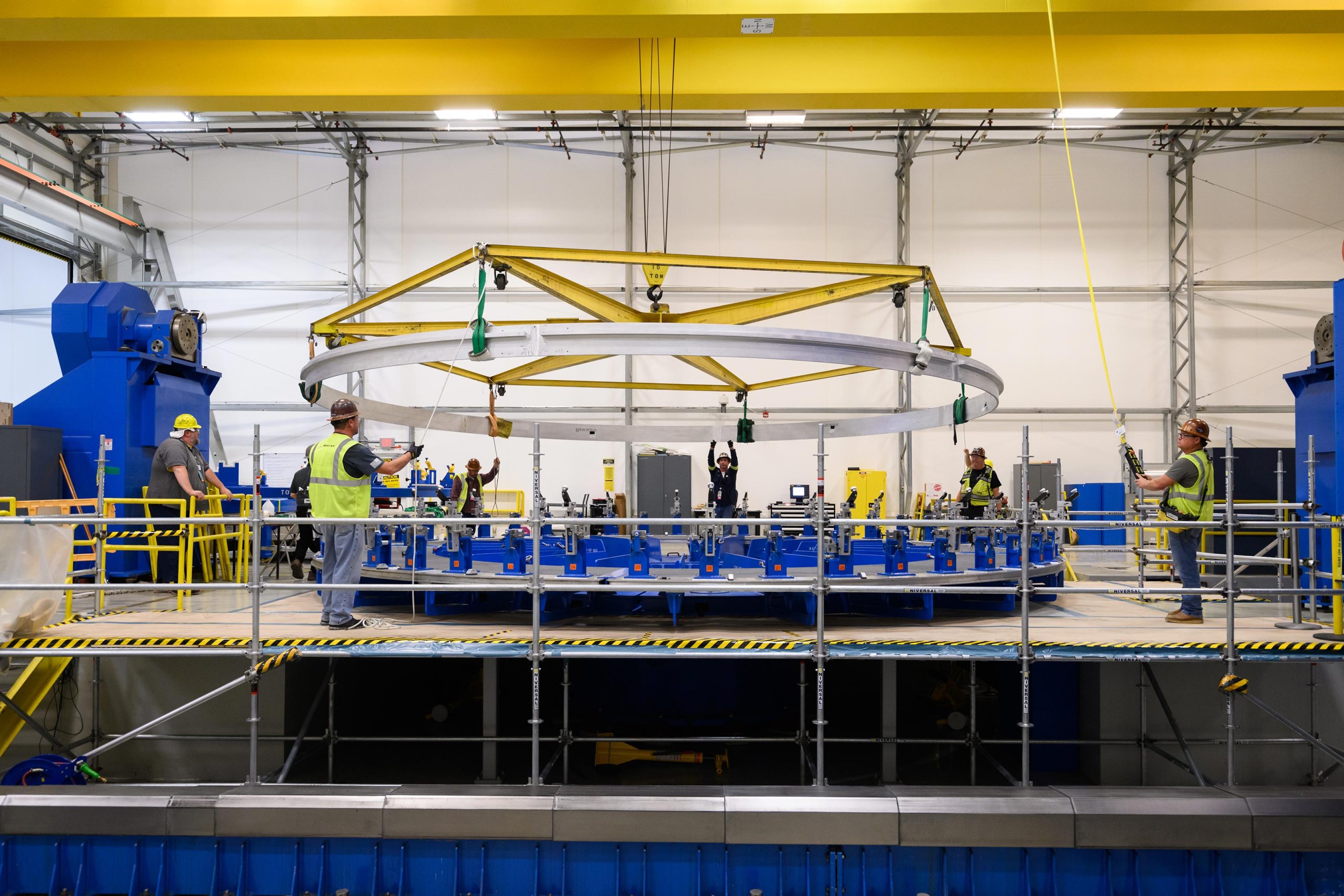
    SLS Ring Manufacturing at Michoud Assembly Facility
    Technicians at Michoud Assembly Facility in New Orleans are manufacturing structures for multiple Space Launch System rockets that will power future Artemis flights. Crews loaded the first flight L-ring onto the Ingersol High Speed Machining Center at Michoud Jan. 18. The ring, which has an “L” shape in its finished machine state, is part of the forward end of a barrel section for the flight hardware. Credit: NASA/Eric Bordelon

    “Michoud is humming with activity as teams work on multiple SLS core stages for three different Artemis missions as well as the initial welds for the Exploration Upper Stage (EUS) for the fourth SLS flight,” said Lonnie Dutreix, director of NASA’s Michoud Assembly Facility. “Everywhere you look, you see rocket hardware that will power missions to send the first woman and the first person of color to the Moon.”

    In Mississippi, at NASA’s Stennis Space Center near Bay St. Louis, Aerojet Rocketdyne, the RS-25 lead contractor, has completed work on the RS-25 engines for the third SLS flight and is working to complete the four RS-25 engines that will power the fourth flight of the rocket. Aerojet Rocketdyne is also preparing for a series of RS-25 engine tests for engines that will be used beginning with Artemis V.
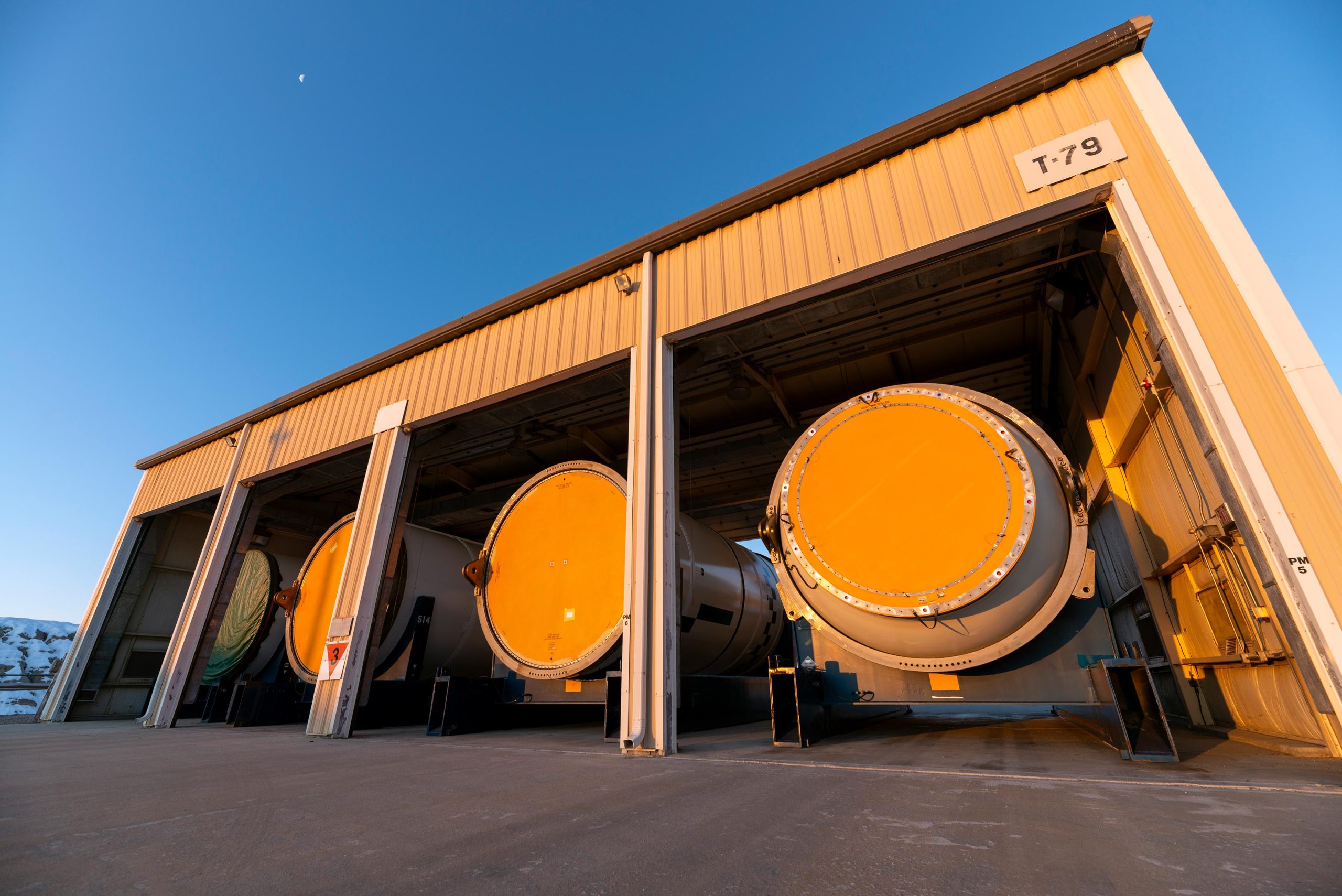
    SLS Solid Rocket Booster Motors
    All of the booster motors for the two solid rocket boosters on the SLS rocket for Artemis II are complete and will be readied for shipment from Northrop Grumman’s facilities in Utah to NASA’s Kennedy Space Center in Florida later this year. Credit: Northrop Grumman

    The ICPS, powered by a single RL10 engine, provides in-space propulsion to give Orion the big push it needs to fly beyond the Moon. Currently, the stage for Artemis II is in final assembly in the Horizontal Integration Facility at the contractors Boeing and United Launch Alliance’s (ULA) facilities in Florida. Meanwhile, ULA is wrapping up manufacturing operations on the ICPS for Artemis III in its facility in Decatur, Alabama, where it will undergo a high-pressure test check this spring.
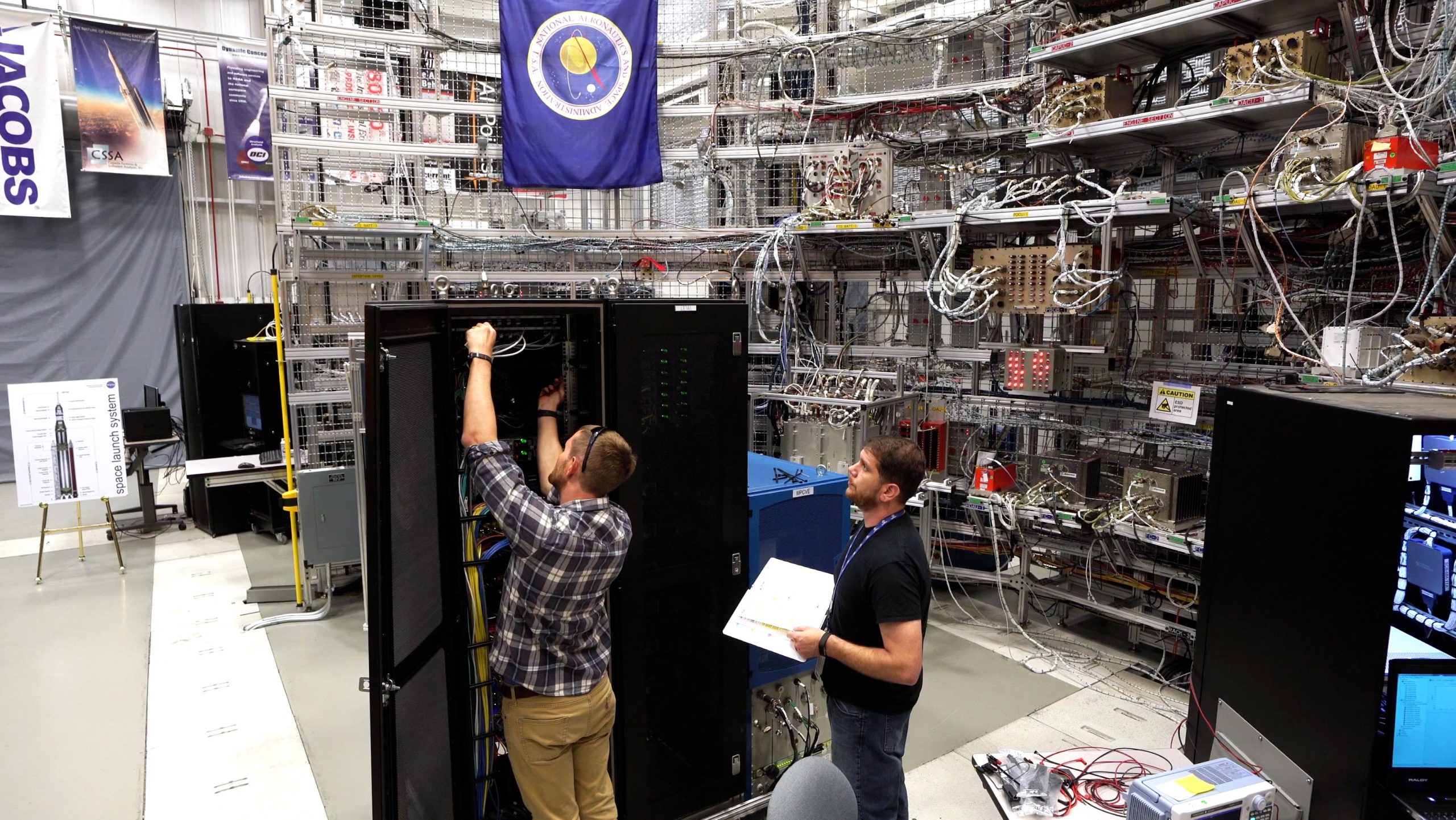
    Systems Integration Laboratory Engineers at Marshall Space Flight Center
    Engineers at Marshall Space Flight Center in Huntsville, Alabama, are in the process of configuring the Systems Integration Laboratory (SIL) to the flight software and avionics configuration to support Artemis II flight software development. The flight software, which acts as the “brains” of the Space Launch System rocket and controls it in flight, is set to begin testing this year. Credit: NASA/ Sam Lott

    The two five-segment solid rocket boosters provide more than 75% of the thrust at launch for SLS and are produced by lead booster contractor Northrop Grumman. All 10 booster motor segments for both Artemis II and Artemis III are completed and awaiting shipment to Kennedy, where work on the forward and aft assemblies is currently in progress. The booster manufacturing for the Artemis IV mission is underway at the Northrop Grumman facility in Utah.

    Both the SLS adapters – the cone-shaped launch vehicle stage adapter (LVSA) and the Orion stage adapter (OSA) – are fully built and produced at Marshall. The adapters serve as vital connection points on the SLS rocket. With the Artemis II LVSA complete, teams are focusing efforts on the LVSA for Artemis III. The OSAs for Artemis II and III have completed painting and are being readied for final hardware installation.
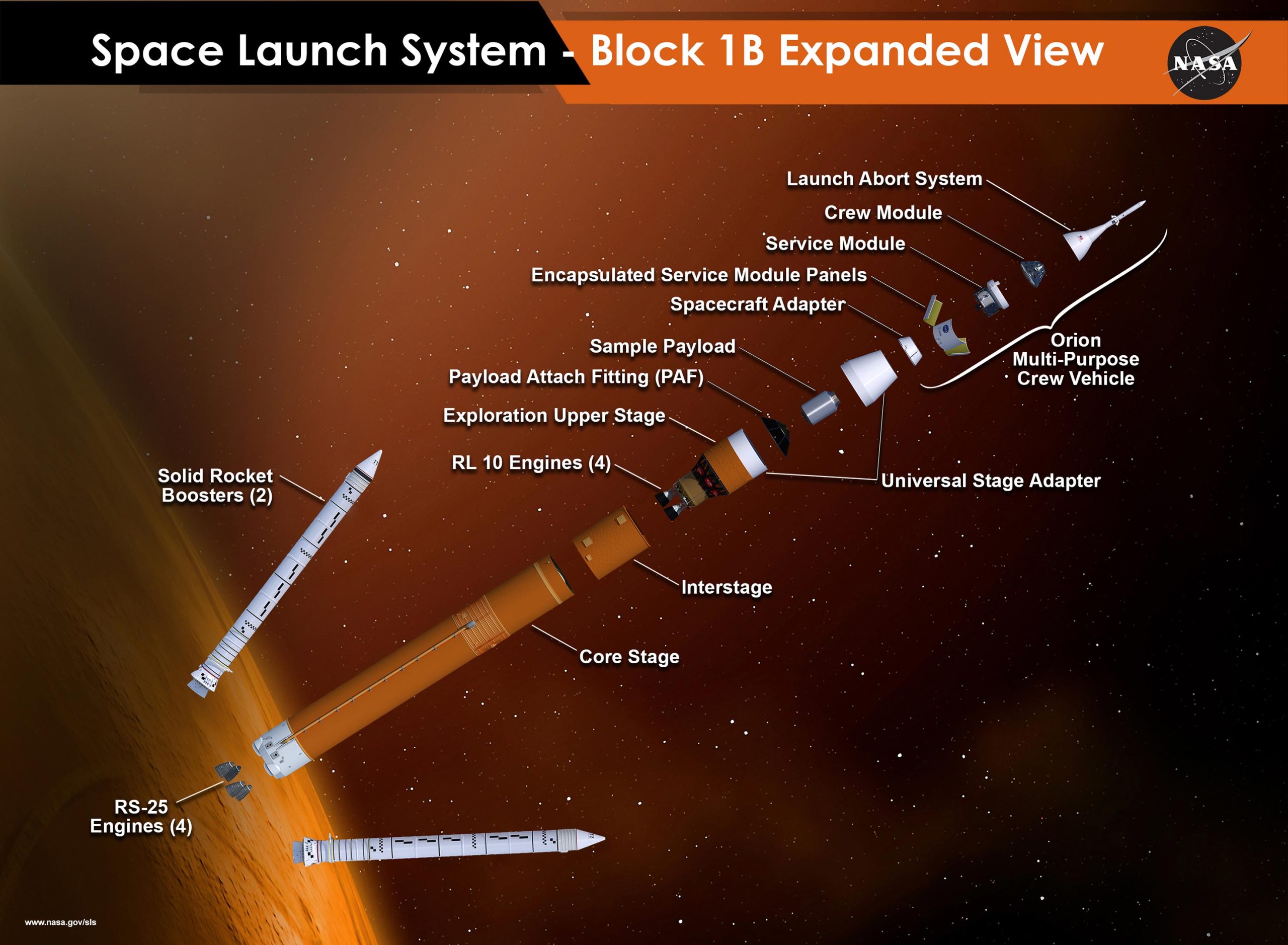
    Space Launch System Block IB Configuration
    An expanded view of the Block IB configuration of NASA’s Space Launch System rocket, including the four RL10 engines. Credit: NASA

    Beginning with the Block 1B configuration (see image above), the interim cryogenic propulsion stage, launch vehicle stage adapter, and Orion stage adapter are replaced by the Exploration Upper Stage and interstage, which includes the universal stage adapter (USA). Dynetics and Beyond Gravity, the prime contractors for the adapter, are finalizing a full-scale demonstration test article of the USA at facilities in Decatur, Alabama.

    NASA’s Artemis program will achieve several milestones, including landing the first woman and person of color on the lunar surface and establishing a long-term lunar exploration strategy as preparation for human missions to Mars. NASA’s Orion spacecraft, SLS, the human landing system, and the Gateway in lunar orbit constitute the foundation for deep space exploration.

    Never miss a breakthrough: Join the SciTechDaily newsletter.
    Follow us on Google and Google News.

    ARTEMIS Mission NASA NASA Marshall Space Flight Center Rocket Space Launch System
    Share. Facebook Twitter Pinterest LinkedIn Email Reddit

    Related Articles

    NASA’s Upgraded SLS Mega Rocket Design for Next-Gen Moon Missions

    NASA’s Engineering Marvel: Preparing the Gateway to the Moon

    Moonbound Majesty: Astronauts’ Inside Look at SLS, the Engine of Artemis Dreams

    NASA Upgrades Powerful SLS Rocket Engines – Production Restarted for Next Era of Space Exploration

    NASA Prepares for Future Artemis Missions Using Data From the First SLS Flight

    NASA’s Artemis SLS Moon Rocket Showed Excellent Performance – World’s Most Powerful Rocket

    Fired Up: A Look at the 55 Engines and Motors That Power NASA’s Artemis Mission

    NASA Prepares Massive SLS Moon Rockets for First Crewed Artemis Missions

    First Massive SLS Rocket Core Stage for NASA’s Artemis Completed and Loaded for Transport

    Leave A Reply Cancel Reply

    • Facebook
    • Twitter
    • Pinterest
    • YouTube

    Don't Miss a Discovery

    Subscribe for the Latest in Science & Tech!

    Trending News

    The Universe Is Expanding Too Fast and Scientists Can’t Explain Why

    “Like Liquid Metal”: Scientists Create Strange Shape-Shifting Material

    Early Warning Signals of Esophageal Cancer May Be Hiding in Plain Sight

    Common Blood Pressure Drug Shows Surprising Power Against Deadly Antibiotic-Resistant Superbug

    Scientists Uncover Dangerous Connection Between Serotonin and Heart Valve Disease

    Scientists Discover a “Protector” Protein That Could Help Reverse Hair Loss

    Bone-Strengthening Discovery Could Reverse Osteoporosis

    Scientists Uncover Hidden Trigger Behind Stem Cell Aging

    Follow SciTechDaily
    • Facebook
    • Twitter
    • YouTube
    • Pinterest
    • Newsletter
    • RSS
    SciTech News
    • Biology News
    • Chemistry News
    • Earth News
    • Health News
    • Physics News
    • Science News
    • Space News
    • Technology News
    Recent Posts
    • A Common Diabetes Drug May Hold the Key to Stopping HIV From Coming Back
    • Ancient “Syphilis-Like” Disease in Vietnam Challenges Key Scientific Assumptions
    • Drinking Alcohol To Cope in Your 20s Could Damage Your Brain for Life
    • Scientists Crack Alfalfa’s Chromosome Mystery After Decades of Debate
    • Ancient Ant-Plant Alliance Collapses As Predatory Wasps Move In
    Copyright © 1998 - 2026 SciTechDaily. All Rights Reserved.
    • Science News
    • About
    • Contact
    • Editorial Board
    • Privacy Policy
    • Terms of Use

    Type above and press Enter to search. Press Esc to cancel.