Close Menu
    Facebook X (Twitter) Instagram
    SciTechDaily
    • Biology
    • Chemistry
    • Earth
    • Health
    • Physics
    • Science
    • Space
    • Technology
    Facebook X (Twitter) Pinterest YouTube RSS
    SciTechDaily
    Home»Space»Public Names NASA’s “Moonikin” Flying on Artemis I Moon Mission – What Could Go Wrong?
    Space

    Public Names NASA’s “Moonikin” Flying on Artemis I Moon Mission – What Could Go Wrong?

    By NASAJuly 1, 2021No Comments4 Mins Read
    Facebook Twitter Pinterest Telegram LinkedIn WhatsApp Email Reddit
    Share
    Facebook Twitter LinkedIn Pinterest Telegram Email Reddit
    NASA Manikin
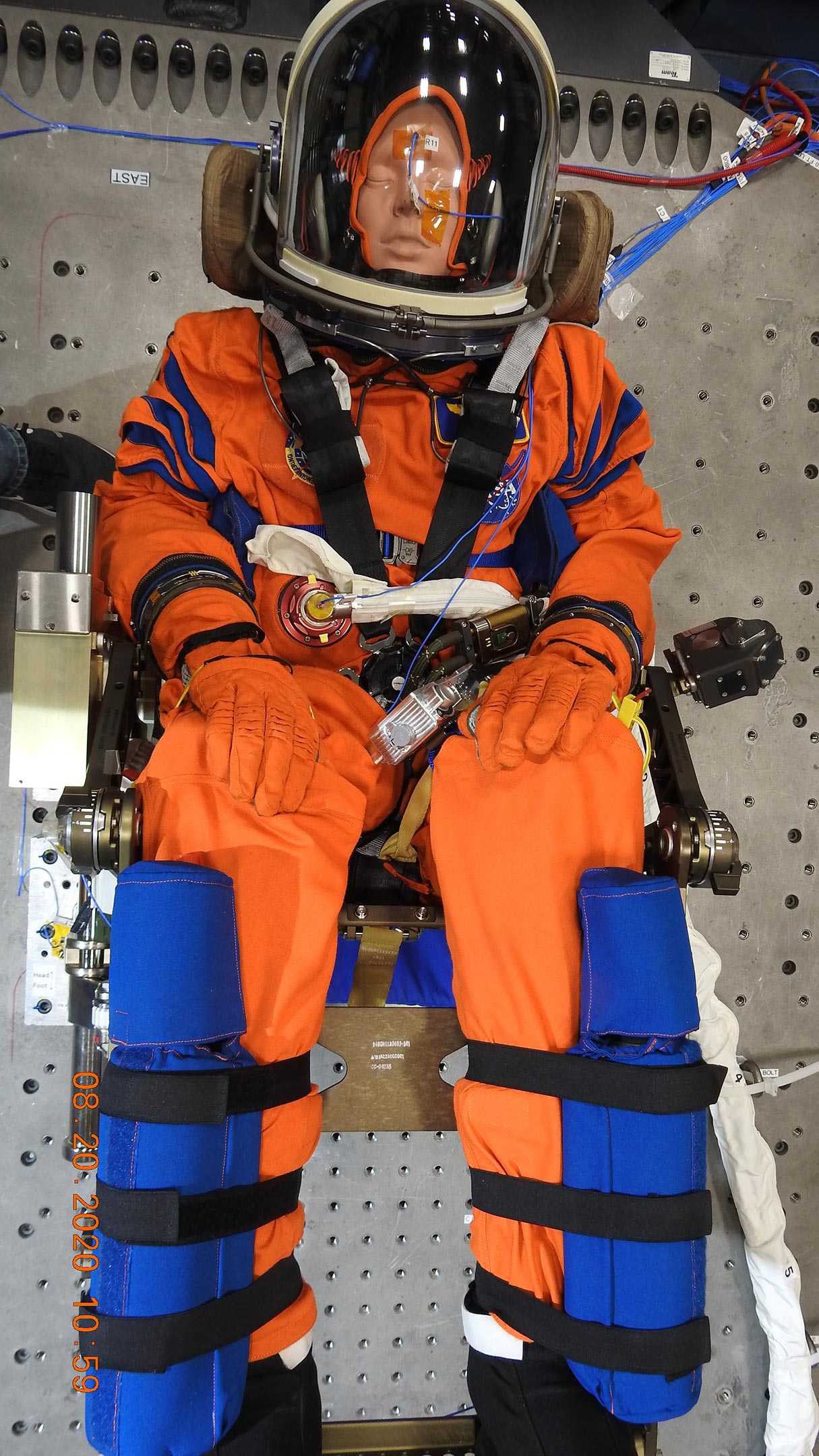
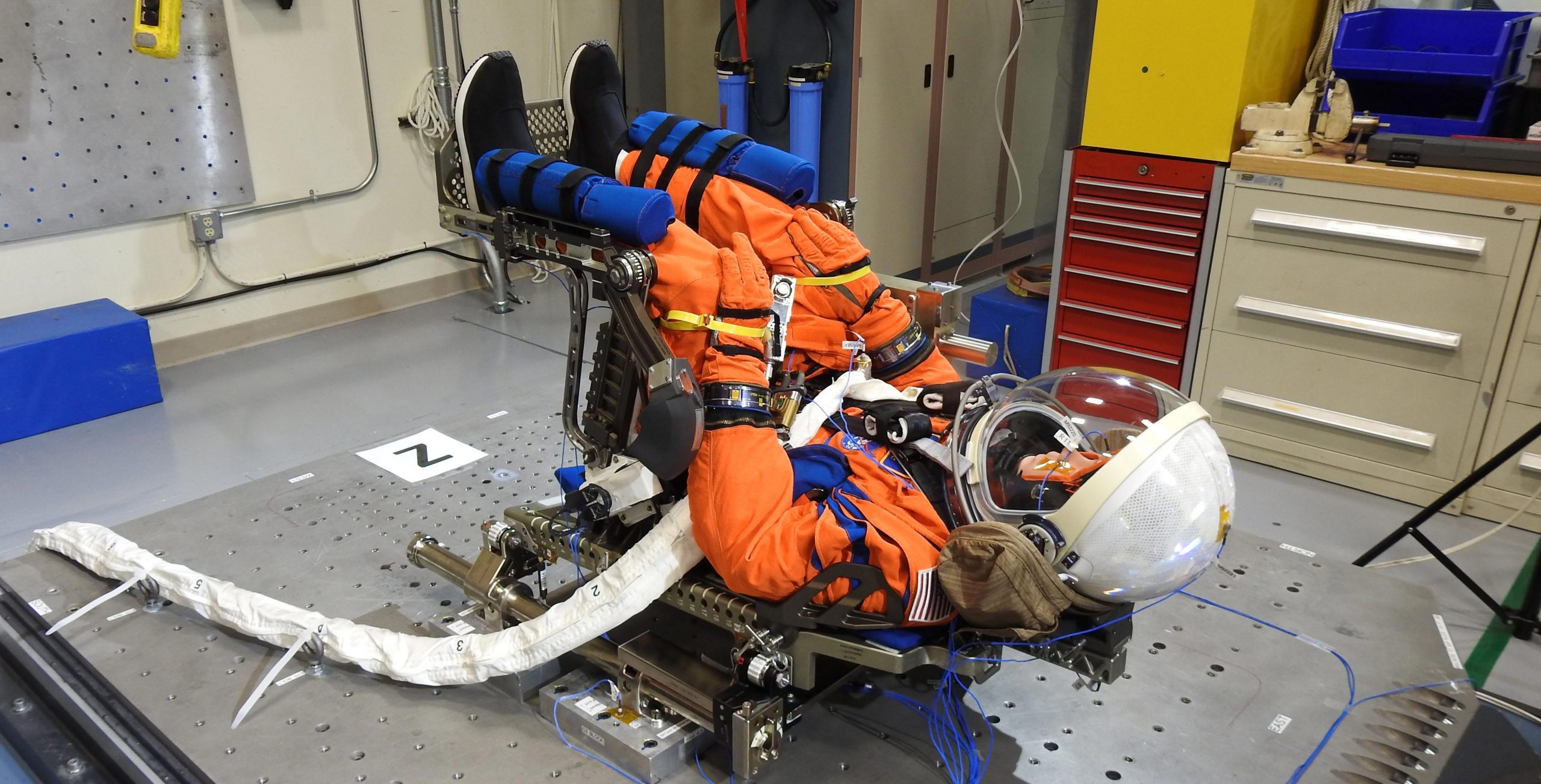
    In this image, engineers use a suited manikin that will fly on Artemis I to conduct vibration testing at Kennedy Space Center on Orion’s seat and energy dampening system – called the Crew Impact Attenuation System – for qualification ahead of Artemis II. Credit: NASA

    With a competitive bracket contest, there was no risk of “Mooni McMoonface” being the winner.

    “Commander Moonikin Campos” is the official name of the manikin launching on Artemis I, NASA’s uncrewed flight test of the Space Launch System (SLS) rocket and Orion spacecraft around the Moon later this year. The Moonikin received its name as the result of a competitive bracket contest honoring NASA figures, programs, or astronomical objects. NASA received more than 300,000 votes.

    The name Campos is a dedication to Arturo Campos, a key player in bringing Apollo 13 safely back to Earth. The final bracket challenge was between Campos and Delos, a reference to the island where Apollo and Artemis were born, according to Greek mythology.

    Arturo Campos
    Arturo Campos, electrical power subsystem manager for the Apollo 13 lunar module. Credit: Courtesy of the Campos Family

    “Our return to the Moon through Artemis is a global effort – and we’re always looking at new ways to engage the public in our missions. This contest, which is helping pave the way for a human return to the Moon, also honors an important individual in our NASA family – Arturo Campos,” said Brian Odom, NASA’s acting chief historian at Marshall Space Flight Center in Huntsville, Alabama. “It is a fitting tribute that the data gained from Artemis I will help us prepare to fly astronauts – including the first woman and first person of color – to the Moon, where we will get ready for Mars.”

    The other six names under consideration were:

    • ACE, for “Artemis Crew Explorer.”
    • DUHART, a dedication to Irene Duhart Long, chief medical officer at Kennedy Space Center from 2000 to 2010.
    • MONTGOMERY, dedication to Julius Montgomery, first African American to work as a technical professional at Cape Canaveral Air Force Station, now known as Cape Canaveral Space Force Station.
    • RIGEL, a giant superstar in the Orion constellation.
    • SHACKLETON, a crater on the Moon’s South Pole, which is named after famous Antarctic explorer Ernest Shackleton.
    • WARGO, a dedication to Michael Wargo, NASA’s first chief exploration scientist.
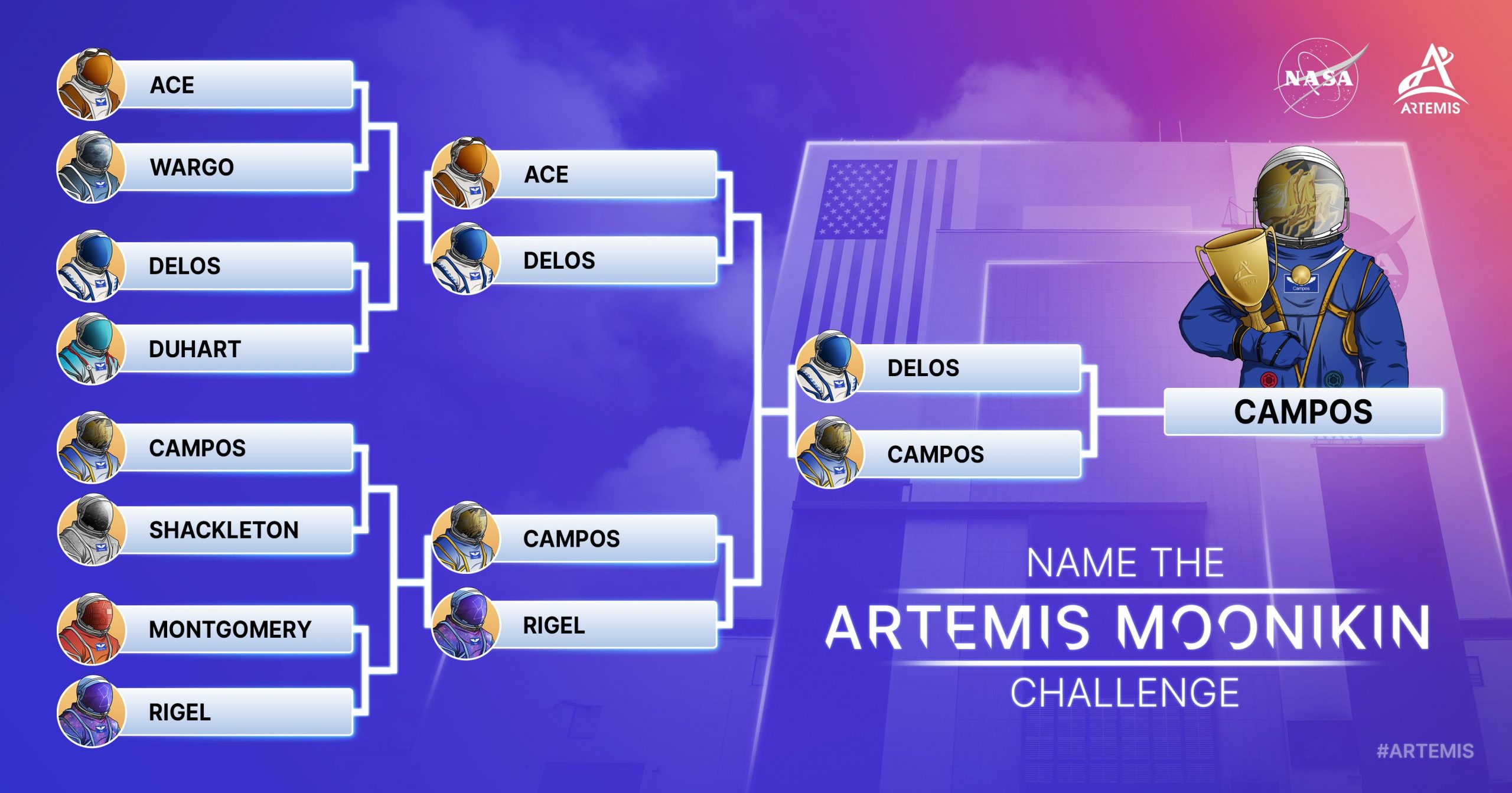
    NASA Moonikin Bracket Contest Results

    Moonikin Manikin
    Engineers use a suited manikin to conduct vibration testing at Kennedy Space Center on Orion’s seat and energy dampening system – called the Crew Impact Attenuation System – for qualification ahead of Artemis II. The manikin will fly aboard the Orion spacecraft during the Artemis I mission, an uncrewed flight test to launch the Space Launch System rocket and send Orion around the Moon and back to Earth. Credit: NASA

    The Moonikin is a male-bodied manikin previously used in Orion vibration tests. Campos will occupy the commander’s seat inside and wear an Orion Crew Survival System suit– the same spacesuit that Artemis astronauts will use during launch, entry, and other dynamic phases of their missions.

    Campos will be equipped with two radiation sensors and have additional sensors under its headrest and behind its seat to record acceleration and vibration data throughout the mission. Data from the Moonikin’s experience will help NASA protect astronauts during Artemis II, the first mission in more than 50 years that will send crew around the Moon.

    The Moonikin is one of three “passengers” flying aboard Orion to test the spacecraft’s systems. Two female-bodied model human torsos, called phantoms, also will be aboard. “Zohar” and “Helga,” named by the Israel Space Agency (ISA) and the German Aerospace Center (DLR) respectively, will support the Matroshka AstroRad Radiation Experiment (MARE), an experiment to provide data on radiation levels during lunar missions.

    NASA’s SLS rocket and Orion spacecraft, along with a commercial human landing system and Gateway in lunar orbit, are vital to the agency’s deep space exploration plans. Working with commercial and international partners, NASA is committed to establishing the first long-term presence on and around the Moon under Artemis. Using robots and humans to explore more than ever before, NASA also will use the Moon for humanity’s next giant leap – sending the first astronauts to Mars.

    Never miss a breakthrough: Join the SciTechDaily newsletter.
    Follow us on Google and Google News.

    ARTEMIS Mission NASA
    Share. Facebook Twitter Pinterest LinkedIn Email Reddit

    Related Articles

    Meet the Artemis III Astronauts Preparing for NASA’s Boldest Moon Mission Yet

    Artemis II Just Proved NASA Is Closer Than Ever to Returning to the Moon

    NASA’s Artemis II Is on the Launch Pad and the Moon Is Next

    NASA Powers Up a Massive Solar Engine for the Moon

    A Massive Rocket Is Rolling and NASA’s Return to the Moon Is Getting Real

    NASA’s Moon Rover Will Hunt for Ice, Map Minerals, and Reveal What Lies Beneath

    4K From the Moon: Artemis II to Trial High-Speed Laser Communications

    NASA Fires Up RS-25 at 111% Power for Artemis Moon Launches

    Exploration Extravehicular Mobility Unit – Next Generation Spacesuit for Artemis Astronauts

    Leave A Reply Cancel Reply

    • Facebook
    • Twitter
    • Pinterest
    • YouTube

    Don't Miss a Discovery

    Subscribe for the Latest in Science & Tech!

    Trending News

    The Secret to Healthy Aging May Be More Protein and More Exercise

    These 567-Million-Year-Old Fossils Are Rewriting the Story of Life on Earth

    The Spider-Like Creatures Helping Scientists Decode the Origins of Fatherhood

    Scientists Baffled by a Sudden Reversal Deep Inside Earth’s Core

    This Strange Sea Creature Can Survive Five Years Without Food – Scientists Finally Know Why

    New Quantum Sensor Opens a Window Into the Invisible Universe

    Stanford Scientists Reverse Age-Related Memory Loss by Targeting the Gut

    James Webb Uncovers the Atmosphere of a Hellish Lava World 41 Light-Years Away

    Follow SciTechDaily
    • Facebook
    • Twitter
    • YouTube
    • Pinterest
    • Newsletter
    • RSS
    SciTech News
    • Biology News
    • Chemistry News
    • Earth News
    • Health News
    • Physics News
    • Science News
    • Space News
    • Technology News
    Recent Posts
    • New Research Could Help Break China’s Rare Earth Magnet Monopoly
    • The Milky Way’s Black Hole Isn’t Tearing Everything Apart – New Observations Reveal a Surprise
    • Black Hole Shredded a Massive Star in the Most Powerful Stellar Explosion Ever Seen
    • Building the Brain Requires Millions of Dangerous DNA Breaks
    • The Future of Obesity Care Goes Far Beyond Ozempic, Wegovy, and Zepbound
    Copyright © 1998 - 2026 SciTechDaily. All Rights Reserved.
    • Science News
    • About
    • Contact
    • Editorial Board
    • Privacy Policy
    • Terms of Use

    Type above and press Enter to search. Press Esc to cancel.