
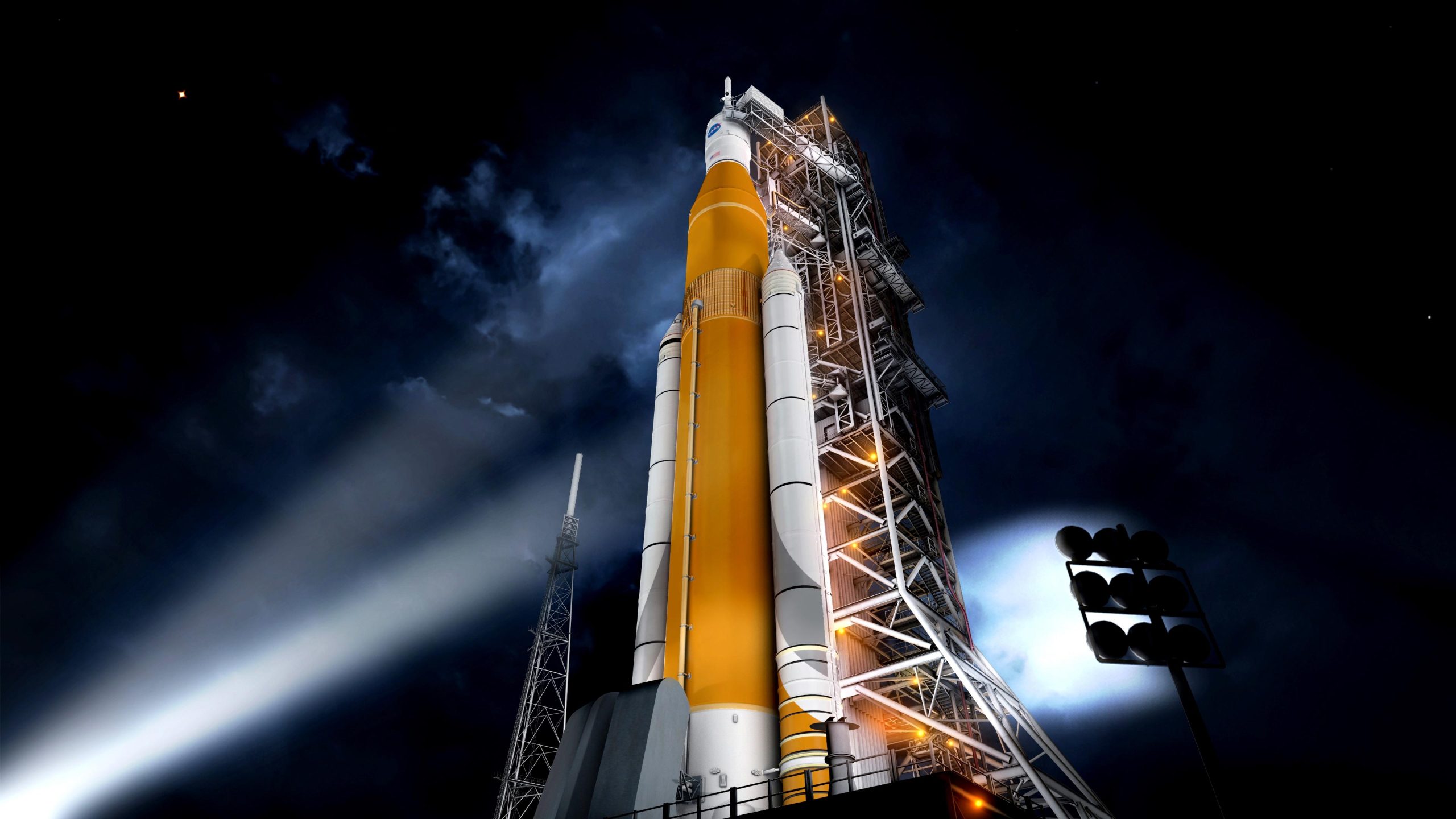
NASA’s Artemis II mission is rolling toward the launch pad, marking a major step toward humanity’s next journey around the Moon.
NASA is entering a crucial phase on the road to its Artemis II test flight. In the coming days, the agency plans to move its SLS (Space Launch System) rocket and Orion spacecraft to the launch pad at Kennedy Space Center in Florida for the first time. This rollout will mark the start of final integration work, system testing, and launch rehearsals ahead of the mission.
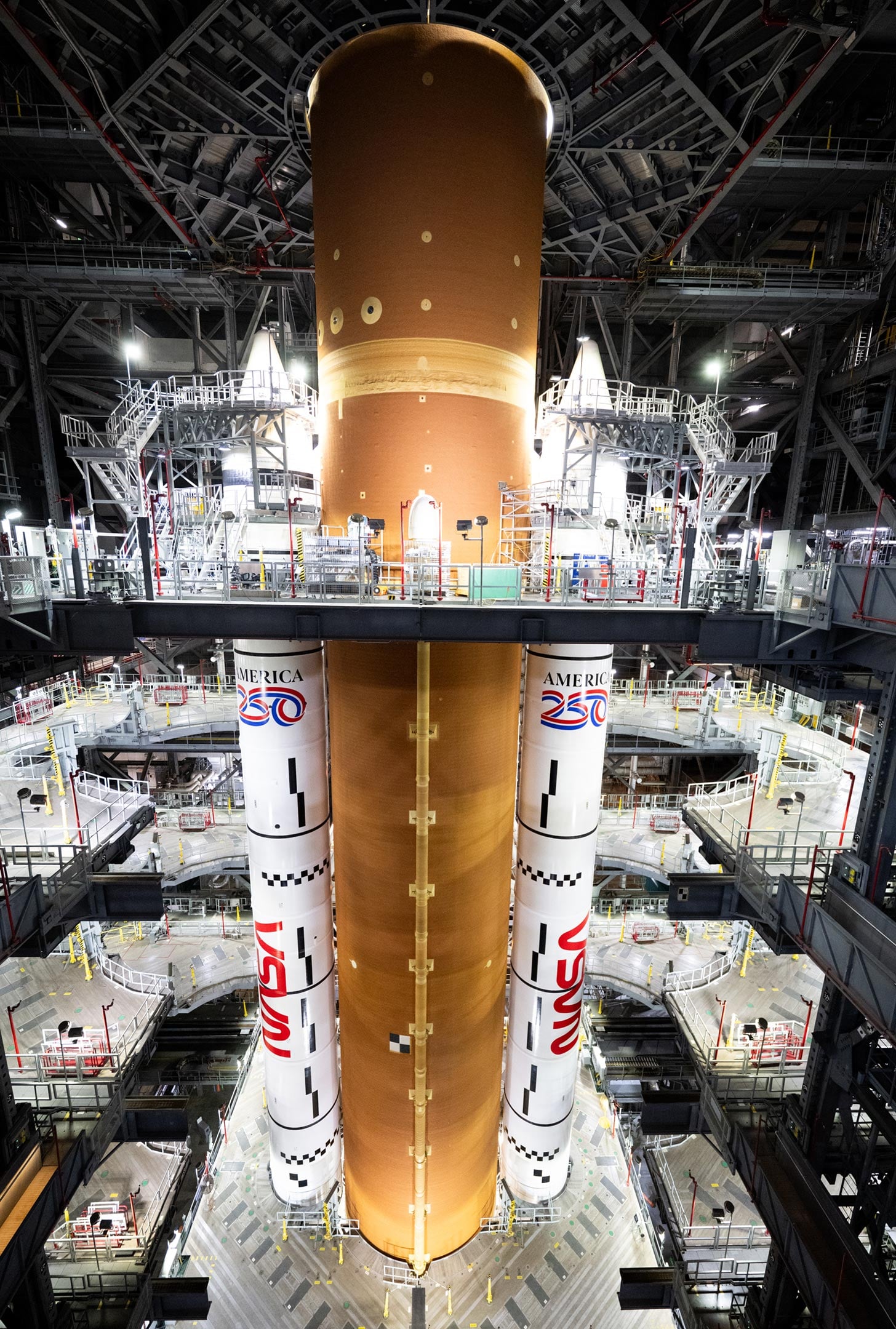
NASA is aiming to begin the move no earlier than Saturday, January 17. The journey from the Vehicle Assembly Building to Launch Pad 39B spans about four miles and will be carried out by the crawler-transporter-2, a process expected to take as long as 12 hours. Teams are working continuously to complete remaining tasks before rollout, though the date could shift if additional technical work or weather conditions require more time.
“We are moving closer to Artemis II, with rollout just around the corner,” said Lori Glaze, acting associate administrator for NASA’s Exploration Systems Development Mission Directorate. “We have important steps remaining on our path to launch and crew safety will remain our top priority at every turn, as we near humanity’s return to the Moon.”
Final Technical Work Before Rollout
As is typical with complex new systems, engineers have spent recent weeks addressing a number of technical issues. During final inspections, technicians discovered that a cable used in the flight termination system did not meet specifications due to a bend. The cable is now being replaced, with testing planned over the weekend.
Engineers also identified a problem with a valve tied to Orion’s hatch pressurization system during preparations for a Dec. 20 countdown demonstration test. That valve was successfully replaced and tested on Jan. 5. In addition, teams worked to fix leaks in ground support equipment needed to supply Orion with gaseous oxygen for breathing air.
What Happens After Rollout
Once SLS and Orion arrive at the launch pad, NASA will begin an extensive series of pad operations. These include hooking up ground support equipment such as electrical connections, environmental control system ducts, and cryogenic propellant lines. For the first time, teams will power on the fully integrated systems at the pad to verify that the spacecraft, rocket, mobile launcher, and ground infrastructure all operate together as expected.
After these steps are complete, the Artemis II crew will visit the pad for a final walkdown. The astronauts include NASA’s Reid Wiseman, Victor Glover, and Christina Koch, along with CSA (Canadian Space Agency) astronaut Jeremy Hansen.
Wet Dress Rehearsal and Fueling Tests
Toward the end of January, NASA plans to carry out a wet dress rehearsal. This major prelaunch test involves fully fueling the rocket, running through a launch countdown, and practicing propellant removal procedures without astronauts onboard. During the test, teams will load more than 700,000 gallons of cryogenic propellants into the rocket.
The rehearsal will also allow the closeout crew to practice securing astronauts inside Orion and closing the spacecraft’s hatches. These steps will be rehearsed without the crew present to ensure procedures can be carried out safely and smoothly.
The wet dress rehearsal includes multiple countdown practice runs designed to test how well the launch team can pause, resume, and recycle the countdown during the final 10 minutes before liftoff, known as terminal count.
The first run begins about 49 hours before launch, continues to 1 minute 30 seconds before liftoff, and includes a planned three-minute hold before resuming the countdown to 33 seconds. At that point, the rocket’s automatic launch sequencer takes control of the final countdown steps. Teams will then recycle the clock back to T-10 minutes, pause again, and resume to 30 seconds before launch as part of a second run.
Applying Lessons From Artemis I
NASA has updated its countdown procedures using lessons learned from Artemis I, but teams are prepared to pause testing if any issues arise. Engineers will closely monitor the loading of liquid hydrogen and liquid oxygen, following challenges with hydrogen fueling during earlier Artemis I rehearsals.
Teams will also evaluate new procedures designed to limit the buildup of gaseous nitrogen between Orion’s crew module and launch abort system hatches, which could otherwise create hazards for the closeout crew.
If necessary, NASA may conduct additional wet dress rehearsals to fully verify the vehicle. The agency could also decide to move SLS and Orion back to the Vehicle Assembly Building for further work after the rehearsal.
Reviewing Readiness and Choosing a Launch Date
After a successful wet dress rehearsal, NASA will hold a flight readiness review. During this review, mission managers will evaluate the readiness of the rocket, spacecraft, ground systems, and launch, flight, and recovery teams before approving a launch date.
Although the Artemis II launch window could open as early as Friday, Feb. 6, NASA will select a date only after reviewing results from the wet dress rehearsal and assessing overall mission readiness.
Why Launch Windows Are Limited
Engineers determine possible launch dates by analyzing constraints needed to meet mission goals and protect the crew aboard Orion. These constraints define specific launch periods lasting days or weeks when the mission can be safely flown.
Launch timing is influenced by complex orbital mechanics. Engineers must account for Earth’s rotation, the Moon’s orbit, and the precise trajectory required to reach the Moon. As a result, launch opportunities typically occur during a one-week window, followed by about three weeks with no viable options.
The Artemis II test flight has unique requirements that differ from later lunar landing missions. These include placing Orion into a high Earth orbit so the crew and ground teams can evaluate life support systems before heading toward the Moon.
The timing must also align Orion correctly with both Earth and the Moon for the trans-lunar injection burn. This maneuver sends Orion on a lunar flyby and places it on a free return trajectory, allowing the Moon’s gravity to guide the spacecraft back to Earth without major additional propulsion.
Engineers also rule out dates that would expose Orion to darkness for more than 90 minutes at a time, ensuring the solar arrays can generate power and maintain safe temperatures. Finally, the launch must support the planned entry conditions for Orion’s return to Earth.
Artemis II Launch Opportunities Through 2026
NASA has identified several launch periods extending through April 2026, though these windows may be refined as updated analyses are completed.
Launch Period January 31 – February 14
- Launch opportunities February 6, 7, 8, 10, and 11
Launch Period February 28 – March 13
- Launch opportunities March 6, 7, 8, 9, 11
Launch Period March 27 – April 10
- Launch opportunities April 1, 3, 4, 5, 6
In addition to the launch opportunities based on orbital mechanics and performance requirements, there are also limitations on which days within a launch period can be viable based on commodity replenishment, weather, and other users on the Eastern Range schedule. As a general rule, up to four launch attempts may be attempted within the approximate week of opportunities that exist within a launch period.
A Historic Crewed Mission Ahead
As the agency prepares for its first crewed mission beyond Earth orbit in more than 50 years, NASA expects to learn along the way, both on the ground and in flight, and will let the readiness and performance of its systems dictate when the agency is ready to launch.
As part of a Golden Age of innovation and exploration, the approximately 10-day Artemis II test flight is the first crewed flight under NASA’s Artemis campaign. It is another step toward new U.S.-crewed missions to the Moon’s surface, leading to a sustained presence on the Moon that will help the agency prepare to send the first astronauts – Americans – to Mars.
Never miss a breakthrough: Join the SciTechDaily newsletter.
Follow us on Google and Google News.