
NASA’s new TRIDENT drill will search for water ice beneath the lunar surface, a vital step for future Moon bases.
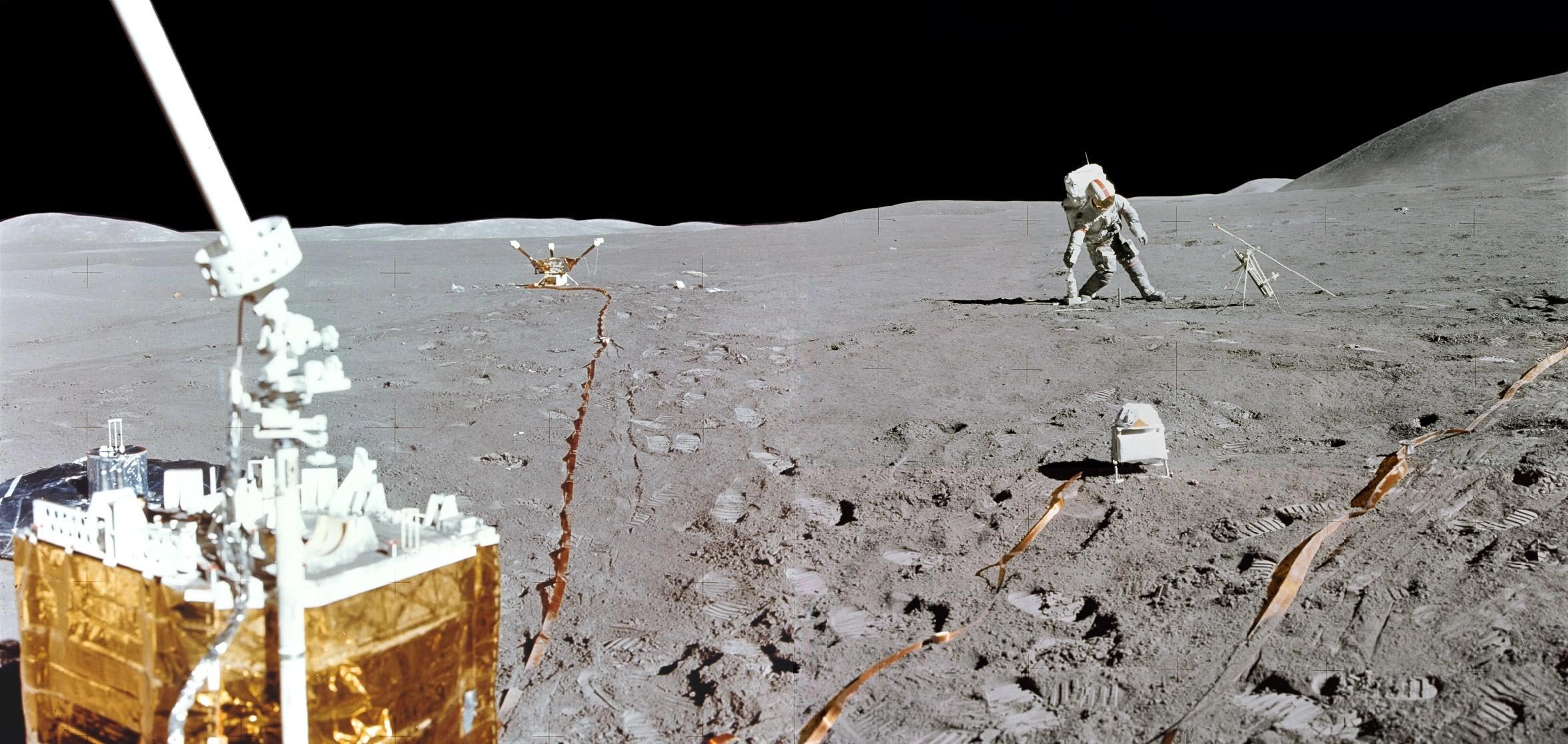
Fifty years ago, Apollo 15 lifted off from Kennedy Space Center, sending Commander David R. Scott, Command Module Pilot Alfred M. Worden, and Lunar Module Pilot James B. Irwin on the first of three Apollo “J” missions. These missions gave astronauts the opportunity to explore the Moon for longer periods using upgraded and more plentiful scientific instruments than ever before. Apollo 15 was the first mission where astronauts used the Apollo Lunar Surface Drill (ALSD) and the Lunar Roving Vehicle (LRV).
Scott and Irwin would land on the Moon and use the ALSD at the site where they set up several scientific instruments during the nearly 67 hours they were on the surface of the Moon. The tool was a rotary-percussive drill that used a combined motion that hammered a rotating drill bit into the surface to make a hole. The overall purpose of gathering core samples was part of NASA’s lunar geology studies to learn more about the composition of the Moon and discover more about its history by looking at different kinds of rocks, including some from below the surface.
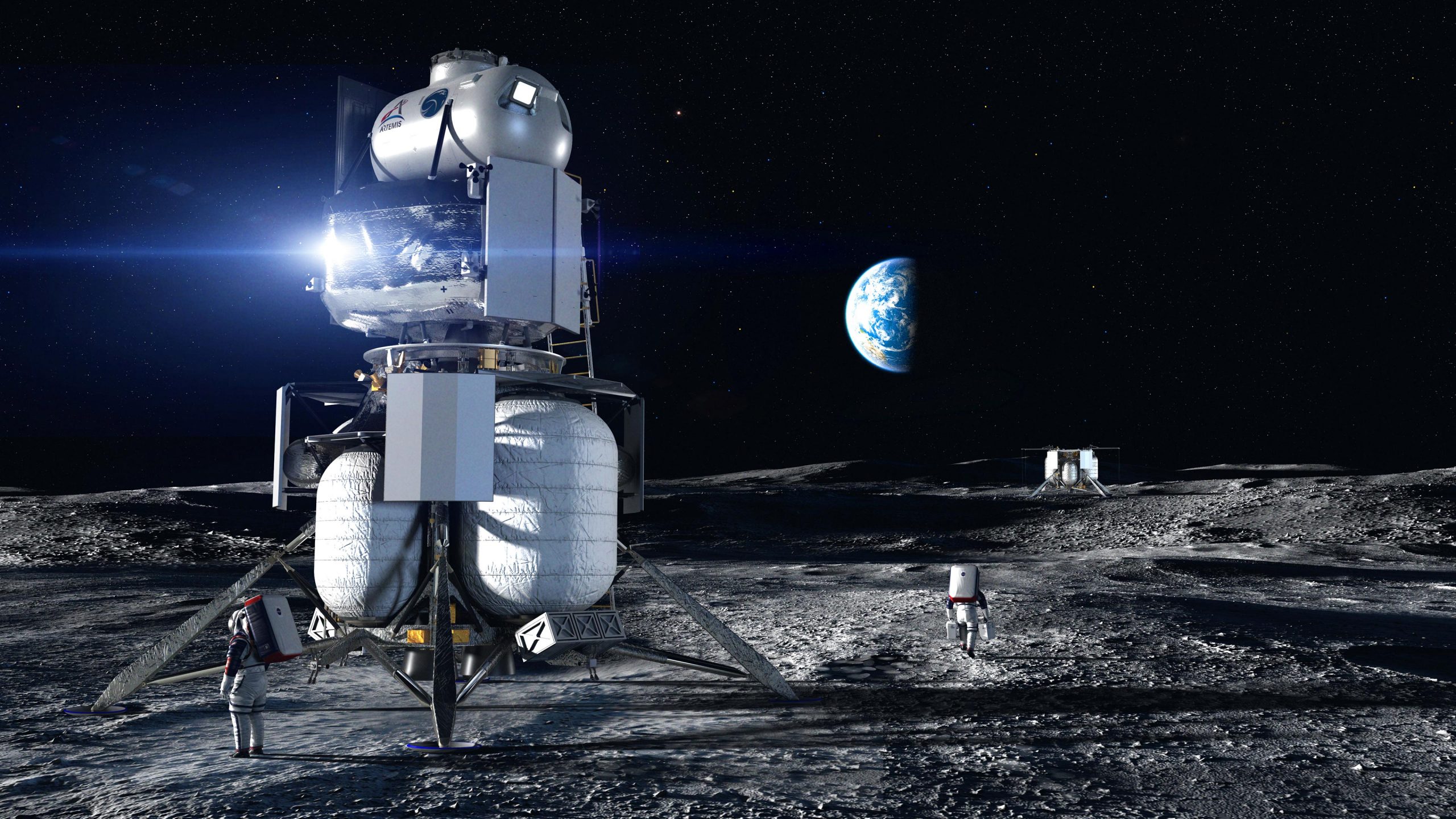
Now, NASA is going back to the Moon as part of the agency’s Artemis missions and has a new drill headed to the lunar surface as a commercially delivered payload via the Commercial Lunar Payload Services initiative. The Regolith and Ice Drill for Exploring New Terrain (TRIDENT) is key to locating ice and other resources on the Moon.
The Polar Resources Ice Mining Experiment-1 (PRIME-1) will be the first in-situ resource utilization demonstration on the Moon. PRIME-1 is led by NASA’s Kennedy Space Center. Credit: NASA Langley Research Center
“Honeybee Robotics designed the TRIDENT drill for NASA to sample lunar regolith,” said Amy Eichenbaum, the Polar Resources Ice Mining Experiment-1 (PRIME-1) deputy project manager. “TRIDENT will help understand the physical properties of the lunar regolith while also allowing analysis of the resources present in samples taken from various depths.”
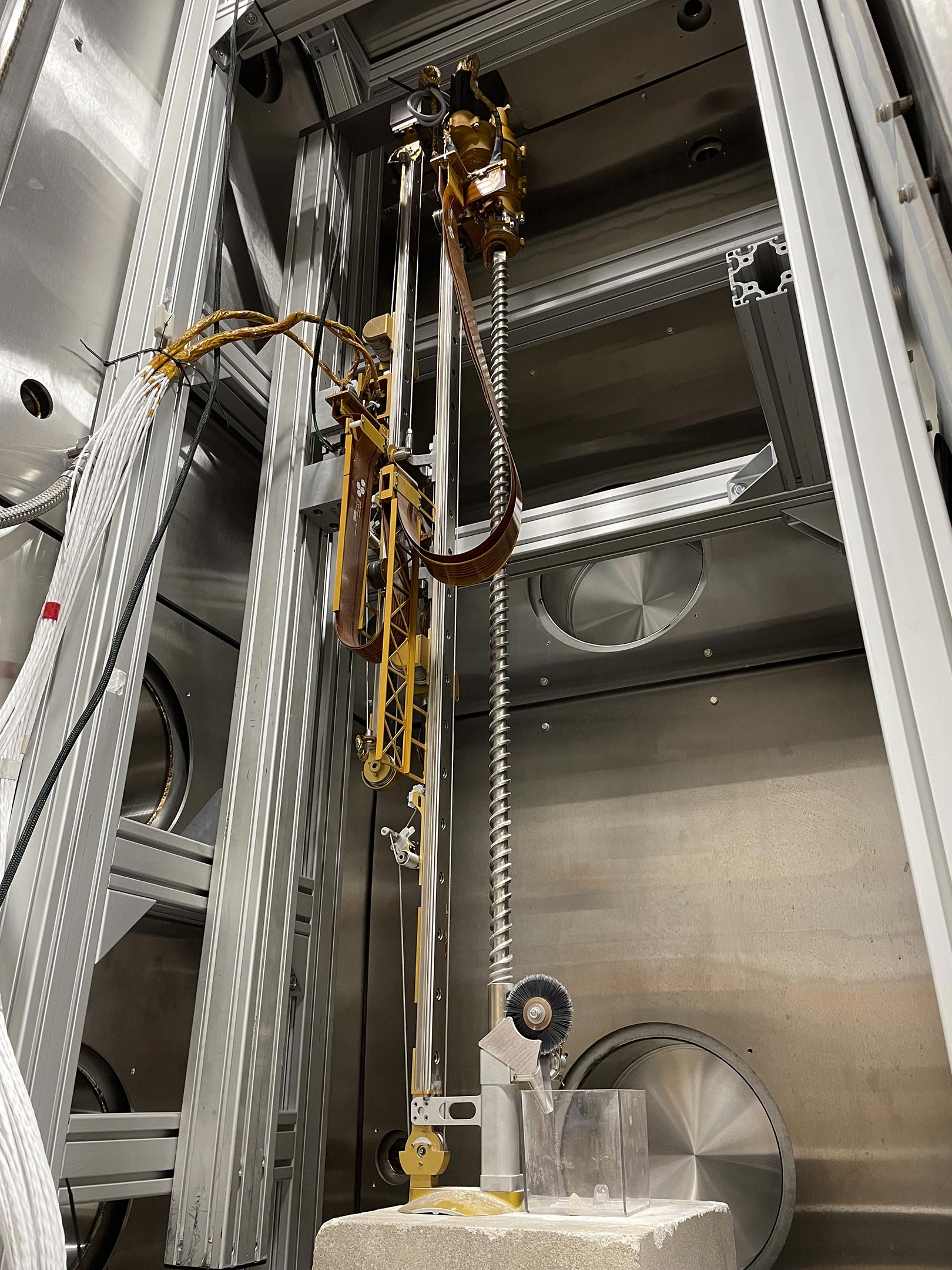
TRIDENT is also a rotary-percussive drill, but one major difference between it and its Apollo counterpart is that TRIDENT does not need astronauts to operate it manually. Honeybee Robotics originally partnered with NASA through the Small Business Innovation Research program, a highly competitive program that encourages small businesses to engage in federal research.
First Robotic Ice Mining Experiment on the Moon
Polar Resources Ice Mining Experiment-1 (PRIME-1) will be the first in-situ resource utilization demonstration on the Moon. For the first time, NASA will robotically sample and analyze for ice from below the surface. PRIME-1 will use TRIDENT to drill in a single location at a site with a high likelihood of having water – whether in liquid or ice form. It will drill down about 3 feet (1 meter) below the surface, each time bringing up samples that NASA will analyze with a scientific instrument – the Mass Spectrometer observing lunar operations (MSolo).
“MSolo will measure water ice and other volatiles released from the sample brought to the surface by the TRIDENT drill,” said Dr. Janine Captain, the principal investigator for MSolo. “These measurements will help us start to understand the distribution of resources on the lunar surface, a key to enabling a long-term presence on the Moon.”
Apollo 15 landed near the Hadley Rille, a long, deep channel-like gorge in the Moon’s surface, which was at the base of the Apennines Mountains to the north of the Moon’s equator. PRIME-1’s destination is the Moon’s South Pole – new territory far from all the Apollo landing sites – a location very interesting because NASA has previously detected water there from space. However, gathering more accurate data requires PRIME-1, like ALSD, to land and drill into the surface to examine what is there.
Building a Sustainable Lunar Presence
What PRIME-1 discovers will help to update resource models for where explorers are most likely to find water on the Moon. About a year after the PRIME-1 mission, NASA will send an exploratory rover – Volatiles Investigating Polar Exploration Rover, or VIPER – to the surface. VIPER is NASA’s first mobile robotic mission to the Moon, and will carry a TRIDENT drill and scientific instruments that enable it to directly analyze water ice on the surface and subsurface of the Moon at varying depths and temperature conditions. VIPER will explore multiple sites on the lunar South Pole for about 100 days.

PRIME-1 and VIPER will build upon the legacy of Apollo 15 by using drills and rovers, allowing NASA the chance to look below the surface and detect what is there. Much like Apollo 15, NASA is preparing to send new capabilities to the Moon that will enable people to stay there for longer than ever before, because learning how to find and use water is a key to living and working on the Moon and other deep space destinations.
“The Apollo missions first introduced the concept of drilling to provide subsurface understanding of a foreign world,” said Dan Andrews, VIPER Project Manager. “PRIME-1 and VIPER will expand the state of the art as we look to a future of sustainable exploration and learning how to live off the land.”
Never miss a breakthrough: Join the SciTechDaily newsletter.
Follow us on Google and Google News.