
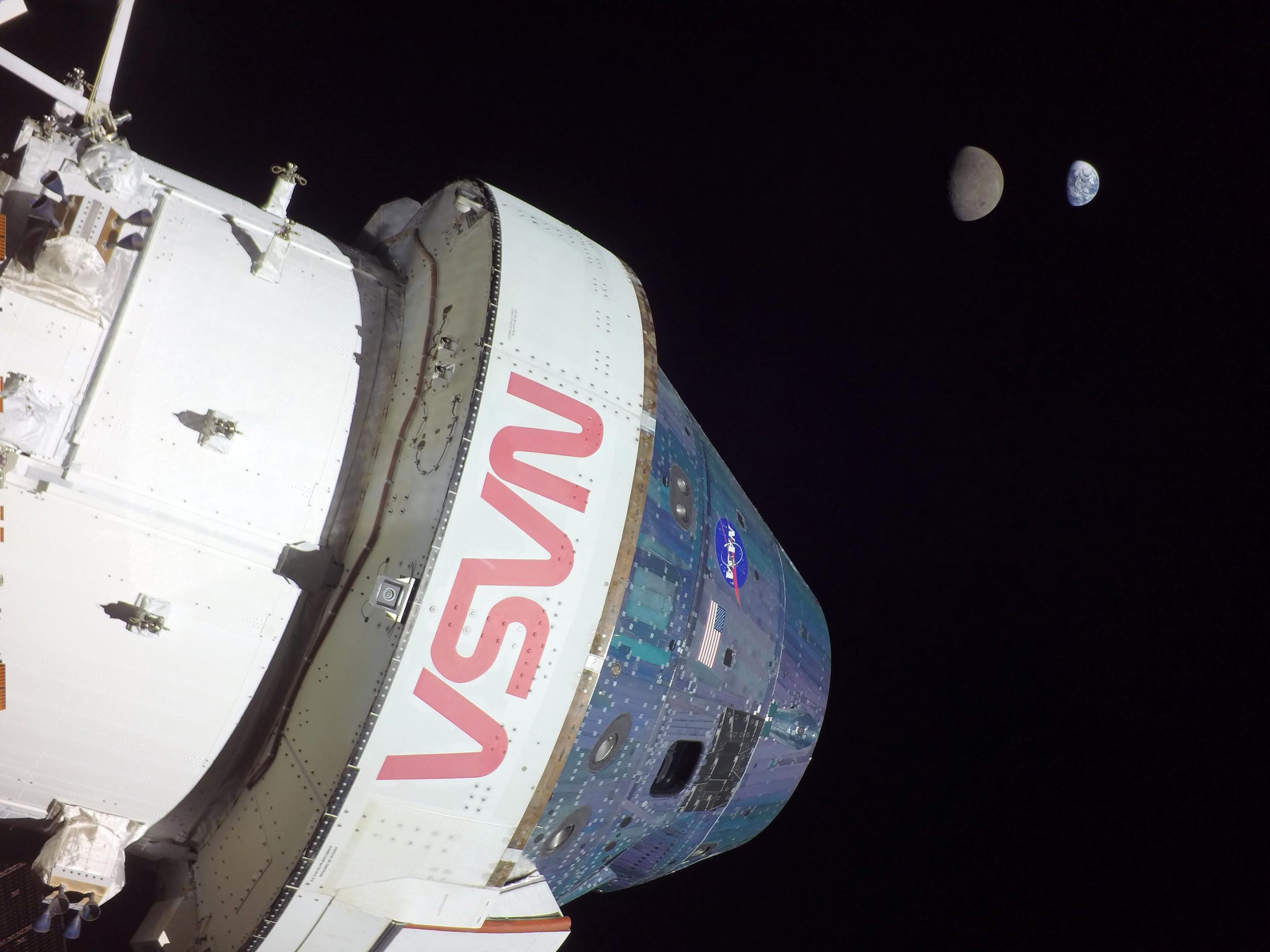
After a comprehensive 11-month testing stint in Ohio, the Artemis I Orion crew module, now the Orion ETA, is back at Kennedy Space Center for further testing and modifications.
These tests aim to refine the spacecraft’s reaction control system and acoustic properties, paving the way for more robust lunar and Mars missions.
Orion’s Return to Kennedy
The Artemis I Orion crew module, now known as the Orion Environmental Test Article (ETA), returned to NASA’s Kennedy Space Center in Florida on December 21, 2024, following an 11-month test campaign at the agency’s Neil Armstrong Test Facility in Sandusky, Ohio.
This is not the first time the ETA has been at Kennedy. After splashing down in the Pacific Ocean on Dec. 11, 2022, following its journey around the Moon during the Artemis I mission, the spacecraft was transported by truck from Naval Base San Diego in California to Kennedy’s Multi Payload Processing Facility (MPPF) to be reconfigured from spacecraft to test article and complete a series of crew module functional tests.

Propulsion and Control Testing
Now returned to the spaceport after testing at the Armstrong Test Facility, engineers will begin testing on the ETA in Kennedy’s MPPF to undergo propulsion functional testing, which includes putting the crew module’s twelve reaction control system (RCS) thrusters through a simulated hot fire. RCS thrusters provide control of rotation while in orbit, during re-entry, and certain abort scenarios.
Once testing is complete, the ETA will travel down the road to Kennedy’s Space Systems Processing Facility for an acoustic noise demonstration test that will help improve future acoustic testing for NASA and Lockheed Martin, the agency’s primary contractor for Orion.
Watch timelapse footage of the ETA arriving at NASA Kennedy’s Multi Payload Processing Facility (MPPF).
Enhancing Future Missions
In addition to undergoing further testing at Kennedy, teams will remove hardware from the ETA for reusability studies that could impact future Artemis missions. With NASA’s Artemis campaign, we are exploring the Moon for scientific discovery, technology advancement, and to learn how to live and work on another world as we prepare for human missions to Mars.
Never miss a breakthrough: Join the SciTechDaily newsletter.
Follow us on Google and Google News.