
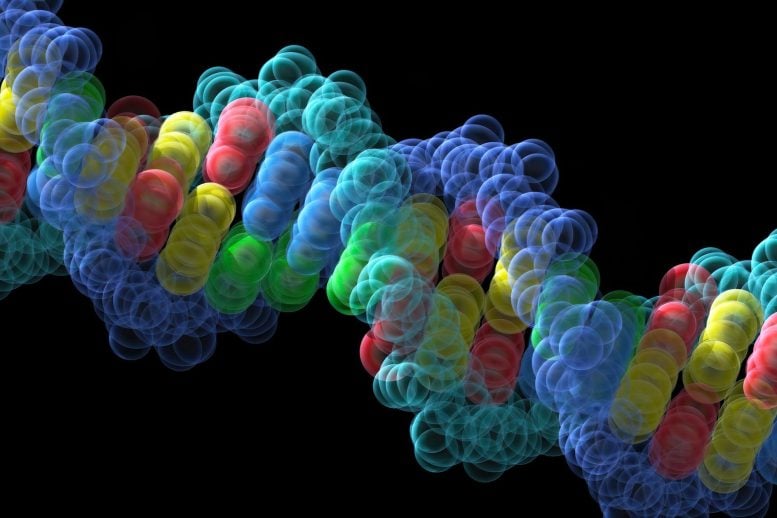
Quantum biology explores how quantum effects influence biological processes, potentially leading to breakthroughs in medicine and biotechnology. Despite the assumption that quantum effects rapidly disappear in biological systems, research suggests these effects play a key role in physiological processes. This opens up the possibility of manipulating these processes to create non-invasive, remote-controlled therapeutic devices. However, achieving this requires a new, interdisciplinary approach to scientific research.
Imagine using your cell phone to control the activity of your own cells to treat injuries and diseases. It sounds like something from the imagination of an overly optimistic science fiction writer. But this may one day be a possibility through the emerging field of quantum biology.
Over the past few decades, scientists have made incredible progress in understanding and manipulating biological systems at increasingly small scales, from protein folding to genetic engineering. And yet, the extent to which quantum effects influence living systems remains barely understood.
Quantum effects are phenomena that occur between atoms and molecules that can’t be explained by classical physics. It has been known for more than a century that the rules of classical mechanics, like Newton’s laws of motion, break down at atomic scales. Instead, tiny objects behave according to a different set of laws known as quantum mechanics.
Quantum mechanics describes the properties of atoms and molecules.
For humans, who can only perceive the macroscopic world, or what’s visible to the naked eye, quantum mechanics can seem counterintuitive and somewhat magical. Things you might not expect happen in the quantum world, like electrons “tunneling” through tiny energy barriers and appearing on the other side unscathed, or being in two different places at the same time in a phenomenon called superposition.
I am trained as a quantum engineer. Research in quantum mechanics is usually geared toward technology. However, and somewhat surprisingly, there is increasing evidence that nature – an engineer with billions of years of practice – has learned how to use quantum mechanics to function optimally. If this is indeed true, it means that our understanding of biology is radically incomplete. It also means that we could possibly control physiological processes by using the quantum properties of biological matter.
Quantumness in Biology Is Probably Real
Researchers can manipulate quantum phenomena to build better technology. In fact, you already live in a quantum-powered world: from laser pointers to GPS, magnetic resonance imaging and the transistors in your computer – all these technologies rely on quantum effects.
In general, quantum effects only manifest at very small length and mass scales, or when temperatures approach absolute zero. This is because quantum objects like atoms and molecules lose their “quantumness” when they uncontrollably interact with each other and their environment. In other words, a macroscopic collection of quantum objects is better described by the laws of classical mechanics. Everything that starts quantum dies classical. For example, an electron can be manipulated to be in two places at the same time, but it will end up in only one place after a short while – exactly what would be expected classically.
Electrons can be in two places at the same time, but will end up in one location eventually.
In a complicated, noisy biological system, it is thus expected that most quantum effects will rapidly disappear, washed out in what the physicist Erwin Schrödinger called the “warm, wet environment of the cell.” To most physicists, the fact that the living world operates at elevated temperatures and in complex environments implies that biology can be adequately and fully described by classical physics: no funky barrier crossing, no being in multiple locations simultaneously.
Chemists, however, have for a long time begged to differ. Research on basic chemical reactions at room temperature unambiguously shows that processes occurring within biomolecules like proteins and genetic material are the result of quantum effects. Importantly, such nanoscopic, short-lived quantum effects are consistent with driving some macroscopic physiological processes that biologists have measured in living cells and organisms. Research suggests that quantum effects influence biological functions, including regulating enzyme activity, sensing magnetic fields, cell metabolism and electron transport in biomolecules.
How to Study Quantum Biology
The tantalizing possibility that subtle quantum effects can tweak biological processes presents both an exciting frontier and a challenge to scientists. Studying quantum mechanical effects in biology requires tools that can measure the short time scales, small length scales and subtle differences in quantum states that give rise to physiological changes – all integrated within a traditional wet lab environment.
In my work, I build instruments to study and control the quantum properties of small things like electrons. In the same way that electrons have mass and charge, they also have a quantum property called spin. Spin defines how the electrons interact with a magnetic field, in the same way that charge defines how electrons interact with an electric field. The quantum experiments I have been building since graduate school, and now in my own lab, aim to apply tailored magnetic fields to change the spins of particular electrons.
Research has demonstrated that many physiological processes are influenced by weak magnetic fields. These processes include stem cell development and maturation, cell proliferation rates, genetic material repair and countless others. These physiological responses to magnetic fields are consistent with chemical reactions that depend on the spin of particular electrons within molecules. Applying a weak magnetic field to change electron spins can thus effectively control a chemical reaction’s final products, with important physiological consequences.
Birds use quantum effects in navigation.
Currently, a lack of understanding of how such processes work at the nanoscale level prevents researchers from determining exactly what strength and frequency of magnetic fields cause specific chemical reactions in cells. Current cellphone, wearable and miniaturization technologies are already sufficient to produce tailored, weak magnetic fields that change physiology, both for good and for bad. The missing piece of the puzzle is, hence, a “deterministic codebook” of how to map quantum causes to physiological outcomes.
In the future, fine-tuning nature’s quantum properties could enable researchers to develop therapeutic devices that are noninvasive, remotely controlled and accessible with a mobile phone. Electromagnetic treatments could potentially be used to prevent and treat disease, such as brain tumors, as well as in biomanufacturing, such as increasing lab-grown meat production.
A Whole New Way of Doing Science
Quantum biology is one of the most interdisciplinary fields to ever emerge. How do you build community and train scientists to work in this area?
Since the pandemic, my lab at the University of California, Los Angeles and the University of Surrey’s Quantum Biology Doctoral Training Centre have organized Big Quantum Biology meetings to provide an informal weekly forum for researchers to meet and share their expertise in fields like mainstream quantum physics, biophysics, medicine, chemistry and biology.
Research with potentially transformative implications for biology, medicine and the physical sciences will require working within an equally transformative model of collaboration. Working in one unified lab would allow scientists from disciplines that take very different approaches to research to conduct experiments that meet the breadth of quantum biology from the quantum to the molecular, the cellular and the organismal.
The existence of quantum biology as a discipline implies that traditional understanding of life processes is incomplete. Further research will lead to new insights into the age-old question of what life is, how it can be controlled and how to learn with nature to build better quantum technologies.
Written by Clarice D. Aiello, Quantum Biology Tech (QuBiT) Lab, Assistant Professor of Electrical and Computer Engineering, University of California, Los Angeles.
This article was first published in The Conversation.
Never miss a breakthrough: Join the SciTechDaily newsletter.
Follow us on Google and Google News.
2 Comments
If researchers in this new area were to open up to the possibility that when the conception of the egg has begun the electrical magnetic field that is produced within the Mothers’ body sending a very weak frequency to the egg with instructions for Physiological bonds at the nanoscale arranging cell production in the DNA.
Any nano scale electron transfer in somatic cell induce quantum wave to regenerate induced pluripotent stem cell. I predict that natural chemical have this quantum wave in diseases and reversal of pathological process.