
Close Menu
    Facebook X (Twitter) Instagram
    SciTechDaily
    • Biology
    • Chemistry
    • Earth
    • Health
    • Physics
    • Science
    • Space
    • Technology
    Facebook X (Twitter) Pinterest YouTube RSS
    SciTechDaily
    Home»Health»Radical New System Lights Up Cancer Therapy
    Health

    Radical New System Lights Up Cancer Therapy

    By Institute of Industrial Science, The University of TokyoNovember 13, 2022No Comments3 Mins Read
    Facebook Twitter Pinterest Telegram LinkedIn WhatsApp Email Reddit
    Share
    Facebook Twitter LinkedIn Pinterest Telegram Email Reddit
    Photodynamic Cancer Therapy
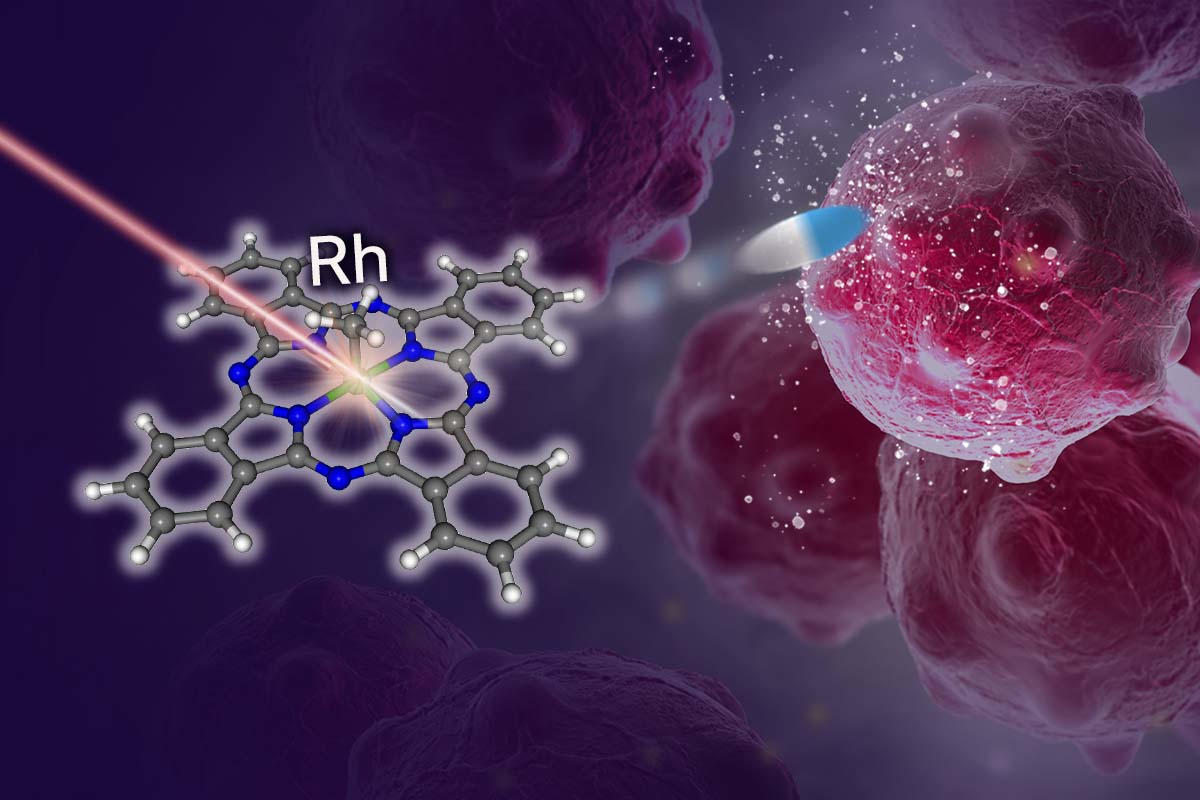
    Researchers from The Institute of Industrial Science, The University of Tokyo have developed a streamlined photo-uncaging system for photodynamic cancer therapy, using a pulse of light for tumor-specific activation of a cancer-fighting agent. Credit: Institute of Industrial Science, The University of Tokyo

    A Novel Red Light-Activated Cancer Therapy Shows Potential for Treating Low-Oxygen Tumors

    Photodynamic therapy, which uses photo-uncaging systems to activate a cancer-fighting agent in situ at the tumor, is one method of treating cancer. However, suitable agents must be visible light stable, have an anti-tumor effect in low-oxygen settings, and be triggered by low-energy tissue-penetrative red light – a tough combination of properties to obtain. A team from The Institute of Industrial Science at The University of Tokyo has now created a new platform that employs organorhodium(III) phthalocyanine complexes for the first time to achieve this combination of properties.

    Conventional photodynamic methods rely on the production of reactive oxygen species to kill tumor cells, however, many cancers have environments lacking oxygen. This problem is addressed by photo-uncaging systems, in which the agent is administered in an inactive form and subsequently activated, or “uncaged,” at the location of the tumor.

    They uncage alkyl radicals, which are known to be capable of inducing cell death both with and without the presence of oxygen. Alkyl radicals are converted into terminal aldehydes in the presence of oxygen, and these terminal aldehydes can also induce cell death. The team used molecules called “organorhodium(III) phthalocyanine (Pc) complexes” to develop, for the first time, a novel platform for photo-uncaging therapy.

    Activation by Red Light for Targeted Cancer Cell Toxicity

    “The organorhodium(III) phthalocyanine (Pc) complexes we developed are highly stable under ambient light during the processes of synthesis, purification, and measurement, but can be activated by a laser that gives out nanosecond pulses of red light,” explains lead author Kei Murata. These nanosecond-pulsing lasers (pulsing for a billionth of a second) are relatively easy for medical staff to handle.

    They went on to show that the compounds that were released after the organorhodium(III) phthalocyanine (Pc) complexes were activated showed toxicity to HeLa cells, a cell line developed from cancer, indicating that these compounds would have the ability to fight cancer if released inside a tumor.

    “Our new technology could allow the photochemical generation of a wide variety of alkyl radicals and aldehydes, making possible the site-selective release of various bioactive molecules,” says senior author Kazuyuki Ishii. As an improvement on other photo-uncaging systems, it opens an exciting new avenue for the treatment of cancer by phototherapy.

    Reference: “Two-photon, red light uncaging of alkyl radicals from organorhodium(iii) phthalocyanine complexes” by Kei Murata, Yuki Saibe, Mayu Uchida, Mizuki Aono, Ryuji Misawa, Yoshiho Ikeuchi and Kazuyuki Ishii, 20 September 2022, Chemical Communications. 
    DOI: 10.1039/D2CC03672J

    Never miss a breakthrough: Join the SciTechDaily newsletter.
    Follow us on Google and Google News.

    Cancer Lasers University of Tokyo
    Share. Facebook Twitter Pinterest LinkedIn Email Reddit

    Related Articles

    Gray Hair May Be Your Body’s Secret Cancer Defense

    The Surprising Ingredient Revolutionizing Cancer Treatment

    New Ultrafast Laser Technology Could Improve Cancer Treatment

    Revolutionizing Disease Detection: Breathalyzer Sniffs Out COVID-19 and More

    A Completely New Way To Kill Cancer: Artificial DNA

    Scientists Have Discovered Unique Peptides With Anti-Cancer Potential

    A Stanford-Developed Device May Open Up Promising New Possibilities for the Treatment of Cancer

    Timing the Life of Antimatter Particles – Less Than 1/50,000,000 Second – May Lead to Better Cancer Treatment

    First Volume of the Cancer Cell Line Encyclopedia

    Leave A Reply Cancel Reply

    • Facebook
    • Twitter
    • Pinterest
    • YouTube

    Don't Miss a Discovery

    Subscribe for the Latest in Science & Tech!

    Trending News

    Collapsing Plasma May Hold the Key to Cosmic Magnetism

    This Breakthrough Solar Panel Generates Power From Both Sunlight and Raindrops

    Scientists Uncover New Metabolic Effects Beyond Weight Loss of Mounjaro

    Scientists Discover Cancer Tumors Are “Addicted” to This Common Antioxidant

    1,800 Miles Down: Scientists Uncover Mysterious Movements at the Edge of Earth’s Core

    Scientists Discover Hidden “Good Fats” in Green Rice That Could Transform Nutrition

    Your Child’s Clothes Could Contain Toxic Lead, Study Finds

    Researchers Break a 150-Year-Old Math Law With a Surprising Donut Discovery

    Follow SciTechDaily
    • Facebook
    • Twitter
    • YouTube
    • Pinterest
    • Newsletter
    • RSS
    SciTech News
    • Biology News
    • Chemistry News
    • Earth News
    • Health News
    • Physics News
    • Science News
    • Space News
    • Technology News
    Recent Posts
    • The Mystery of the Notes: Why No One Knows How This 120-Year-Old Song Should Sound
    • Scientists Discover 132-Million-Year-Old Dinosaur Tracks on South Africa’s Coast
    • Scientists Uncover the Secret Ingredient Behind the Spark That May Have Started Life on Earth
    • Natural Oils vs. Antibiotics: The Swine Study That Could Change Farming
    • The Biggest Volcanic Event in Earth’s History Transformed an Entire Oceanic Plate
    Copyright © 1998 - 2026 SciTechDaily. All Rights Reserved.
    • Science News
    • About
    • Contact
    • Editorial Board
    • Privacy Policy
    • Terms of Use

    Type above and press Enter to search. Press Esc to cancel.