
Close Menu
    Facebook X (Twitter) Instagram
    SciTechDaily
    • Biology
    • Chemistry
    • Earth
    • Health
    • Physics
    • Science
    • Space
    • Technology
    Facebook X (Twitter) Pinterest YouTube RSS
    SciTechDaily
    Home»Health»Researchers Discover How Cancer Cells Remain Dormant for Years Before Metastasis Occurs
    Health

    Researchers Discover How Cancer Cells Remain Dormant for Years Before Metastasis Occurs

    By The Mount Sinai Hospital / Mount Sinai School of MedicineFebruary 9, 2022No Comments4 Mins Read
    Facebook Twitter Pinterest Telegram LinkedIn WhatsApp Email Reddit
    Share
    Facebook Twitter LinkedIn Pinterest Telegram Email Reddit
    Jose Javier Bravo Cordero
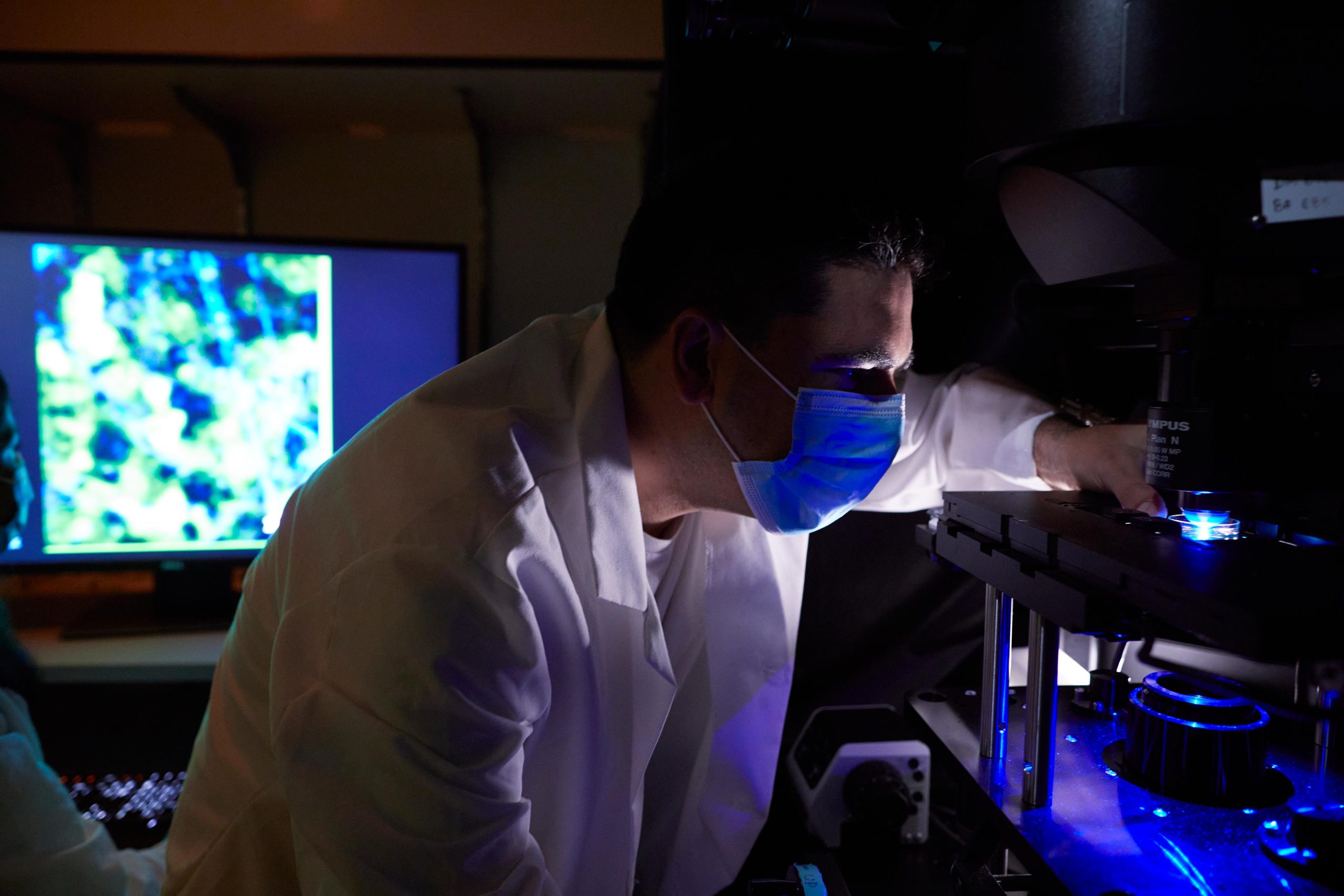
    Jose Javier Bravo-Cordero microscopy research. Credit: Bravo-Cordero / Annenberg

    Cells secrete a type of collagen to stay dormant and wake up when collagen levels decrease.

    Mount Sinai researchers have solved a major mystery in cancer research: How cancer cells remain dormant for years after they leave a tumor and travel to other parts of the body, before awakening to create metastatic cancer.

    According to findings reported in Nature Cancer in December, the cells remain quiet by secreting a type of collagen, called type III collagen, in the environment around themselves, and only turn malignant once the level of collagen tapers off. The researchers found that by enriching the environment around the cells with this collagen, they could force the cells to remain in a dormant state and prevent tumor recurrence.
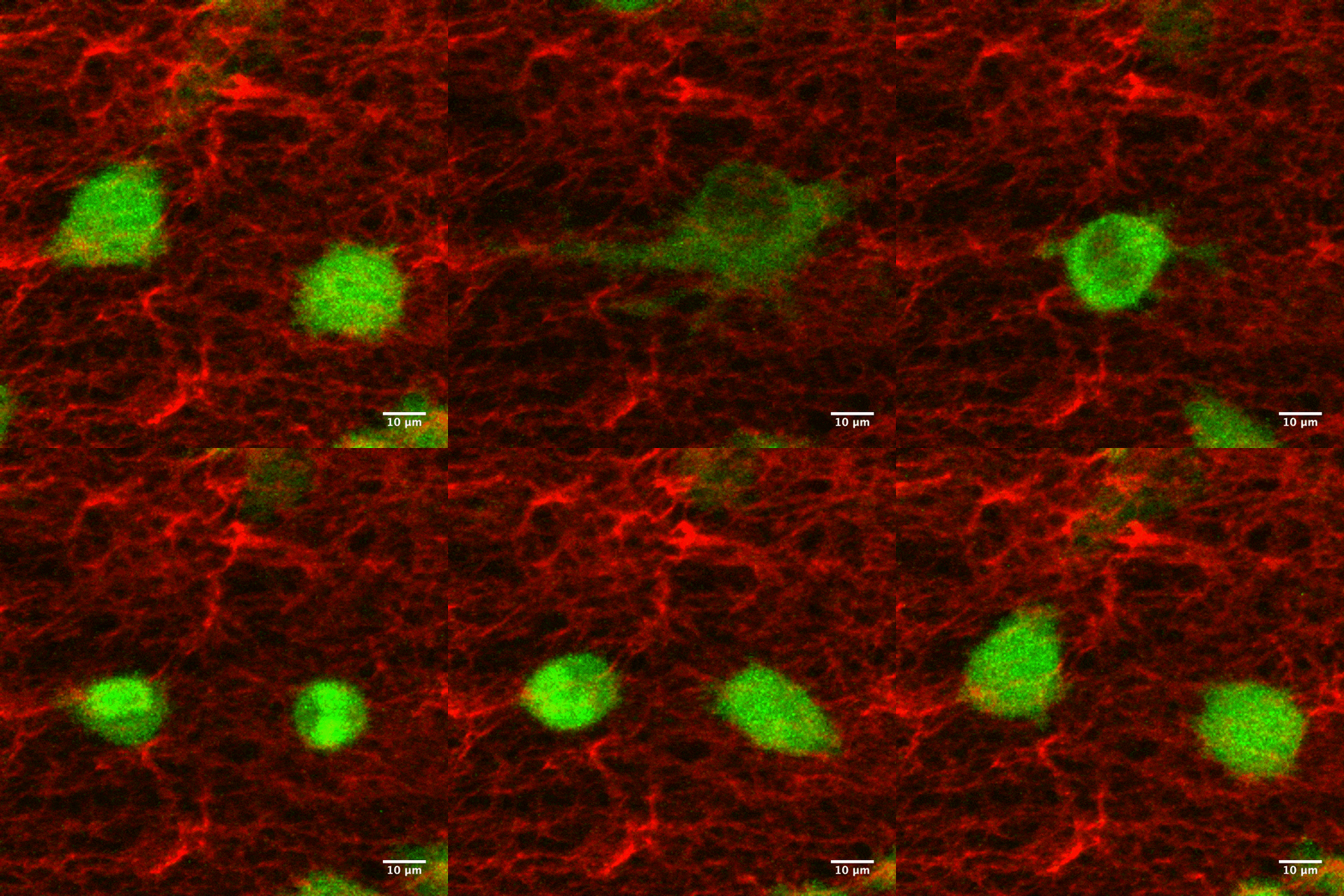
    Tumor Cells in Collagen I Matrix Actively Proliferating
    Tumor cells in a Collagen I matrix and cells are actively proliferating. In green we see the cell expressing a sensor to monitor cell cycle. Credit: Bravo-Cordero / Annenberg

    “Our findings have potential clinical implications and may lead to a novel biomarker to predict tumor recurrences, as well as a therapeutic intervention to reduce local and distant relapses,” said senior author Jose Javier Bravo-Cordero, PhD, Associate Professor of Medicine (Hematology and Medical Oncology) at The Tisch Cancer Institute at Mount Sinai. “This intervention aimed at preventing the awakening of dormant cells has been suggested as a therapeutic strategy to prevent metastatic outgrowth. As the biology of tumor dormancy gets uncovered and new specific drugs are developed, a combination of dormancy-inducing treatments with therapies that specifically target dormant cells will ultimately prevent local recurrence and metastasis and pave the way to cancer remission.”
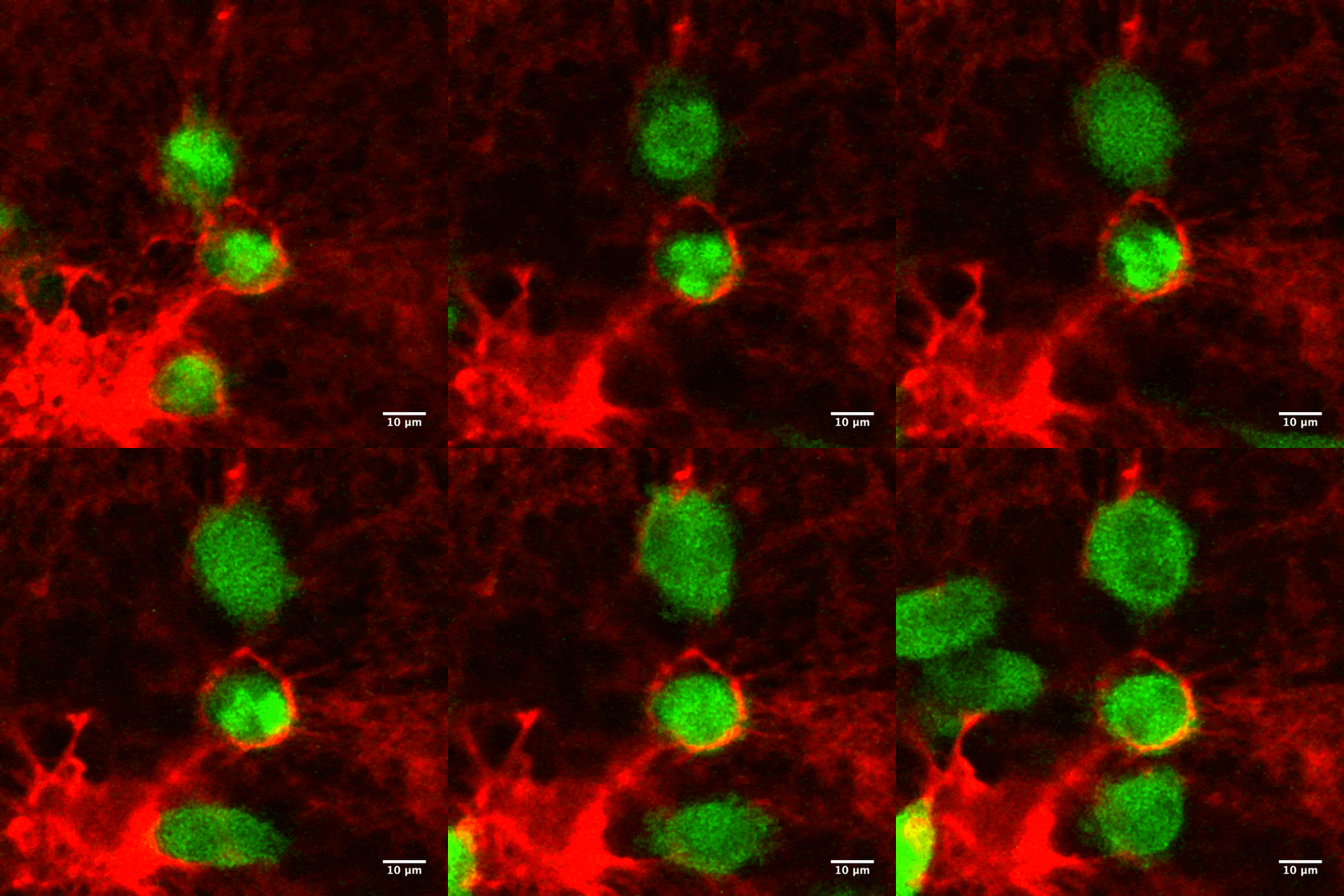
    Collagen III Triggers Dormancy
    When cells are in Collagen III, the other type of collagen we found in our study, it triggers dormancy. Cells stop dividing and they remodel the matrix around them. Credit: Bravo-Cordero / Annenberg

    Metastasis and Cell Dormancy

    Most cancer deaths are due to metastases, which can occur several years after a tumor is removed. Previous research has studied how dispersed tumor cells come out of dormancy; this new work showed how the cells remain dormant.

    The study used high-resolution imaging techniques, including intravital two-photon microscopy, a technology that allows the visualization of dormant cells in their environment in real time in a living animal. This technology allowed the researchers to track dormant tumor cells in mouse models using breast and head and neck cancer cell lines. By using this technology, the researchers were able to visualize the changes in the architecture of the extracellular matrix as tumor cells became dormant and how it changed when these cells awoke.

    In patient samples, the researchers showed that an abundance of the collagen could be used as a potential measurement to predict tumor recurrence and metastasis. In the mouse models, when scientists increased the amount of type III collagen around cancer cells that had left a tumor, cancer progression was interrupted and the disseminated cells were forced into a dormant state. Similar to wound treatment, in which collagen scaffolds have been proposed as a therapeutic alternative for complex skin wounds, this study suggests that by using strategies that aim to enrich the tumor microenvironment in type III collagen, metastasis may be prevented by activating tumor cell dormancy.

    Reference: “A tumor-derived type III collagen-rich ECM niche regulates tumor cell dormancy” by Julie S. Di Martino, Ana Rita Nobre, Chandrani Mondal, Isra Taha, Eduardo F. Farias, Elana J. Fertig, Alexandra Naba, Julio A. Aguirre-Ghiso and Jose Javier Bravo-Cordero, 13 December 2021, Nature Cancer.
    DOI: 10.1038/s43018-021-00291-9

    Funding was provided by the National Cancer Institute, The Tisch Cancer Institute, and the Susan G. Komen Foundation.

    Never miss a breakthrough: Join the SciTechDaily newsletter.
    Follow us on Google and Google News.

    Breast Cancer Cancer Metastisis Mount Sinai Health System Mount Sinai School of Medicine
    Share. Facebook Twitter Pinterest LinkedIn Email Reddit

    Related Articles

    Aspartate Sparks Cancer’s Leap to the Lungs

    Mount Sinai Lung Cancer Breakthrough: Allergy Medicine’s Unexpected Role in Treatment

    “Paradoxical” – Metastatic Breast Cancer’s Trojan Horse

    Most “Pathogenic” Genetic Variants Have a Low Risk of Actually Causing Disease

    New Gene Therapy Developed That Could Be Effective Against Many Types of Cancer

    MRI May Lead to Overdiagnosis of Cancer

    Cavity Shaving Reduces the Risk of a Second Mastectomy

    Ultrasound Can Detect Cancers Missed by Mammography

    New Drug Combination Delays Breast Cancer Progression

    Leave A Reply Cancel Reply

    • Facebook
    • Twitter
    • Pinterest
    • YouTube

    Don't Miss a Discovery

    Subscribe for the Latest in Science & Tech!

    Trending News

    Enormous Prehistoric Insects Puzzle Scientists

    Scientists Develop Bioengineered Chewing Gum That Could Help Fight Oral Cancer

    After 37 Years, the World’s Longest-Running Soil Warming Experiment Uncovers a Startling Climate Secret

    NASA Satellite Captures First-Ever High-Res View of Massive Pacific Tsunami

    ADHD Isn’t Just a Deficit: Study Reveals Powerful Hidden Strengths

    Scientists Discover Stem Cells That Could Regrow Teeth and Bone

    Early Cannabis Use May Stall Key Brain Skills in Teens

    Popular Vitamin D Supplement Has “Previously Unknown” Negative Effect, Study Finds

    Follow SciTechDaily
    • Facebook
    • Twitter
    • YouTube
    • Pinterest
    • Newsletter
    • RSS
    SciTech News
    • Biology News
    • Chemistry News
    • Earth News
    • Health News
    • Physics News
    • Science News
    • Space News
    • Technology News
    Recent Posts
    • Darwin’s Islands Still Evolving: Giant Daisies Rewrite the Rules of Evolution
    • Ancient Document Confirms “Legendary” African King Actually Existed
    • First-of-Its-Kind Discovery: Homer’s Iliad Found Embedded in a 1,600-Year-Old Egyptian Mummy
    • Beyond Inflammation: Scientists Uncover New Cause of Persistent Rheumatoid Arthritis
    • Cancer-Like Mutations Found in the Brain May Be Driving Alzheimer’s Disease
    Copyright © 1998 - 2026 SciTechDaily. All Rights Reserved.
    • Science News
    • About
    • Contact
    • Editorial Board
    • Privacy Policy
    • Terms of Use

    Type above and press Enter to search. Press Esc to cancel.