
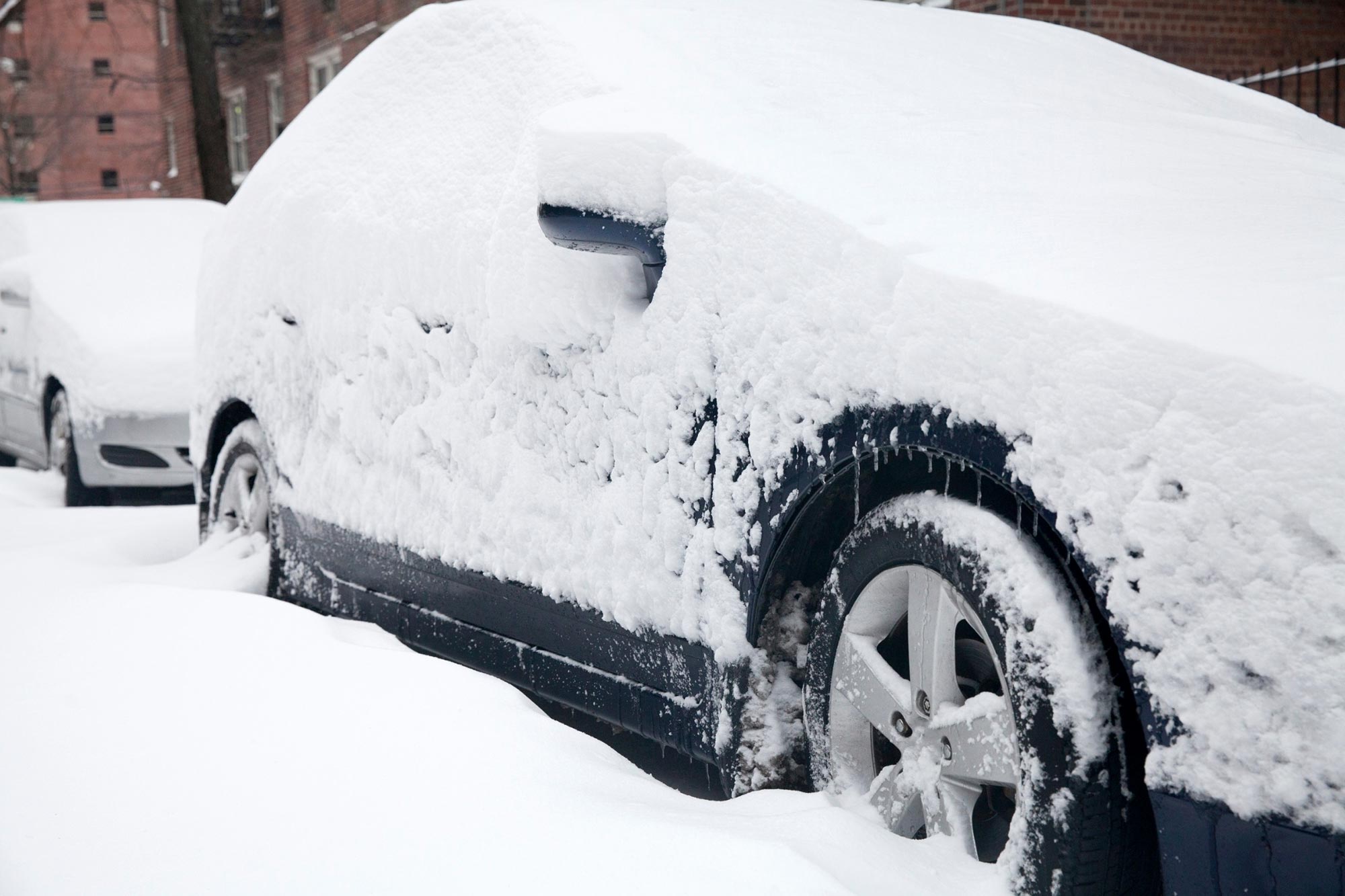
Arctic warming and polar vortex disruptions fueled record cold spells, despite global warming.
The highest temperature ever verifiably recorded on Earth — 54.4 degrees Celsius (130 degrees Fahrenheit) in Death Valley, California, on July 9, 2021 — comes just months after record-low temperatures were recorded across Asia and the United States. In sweltering heat, the results of a rapidly warming Earth are clear. In a blizzard, it can be more difficult to understand how global warming can cause such freezing cold. An international research team examined three extreme events from the past winter to elucidate the mechanisms underlying such swings in temperature and weather.
They published their results today (August 9, 2021) in Advances in Atmospheric Sciences.
“The overarching problem to solve is why extreme weather events have more frequently occurred in a warming climate during recent decades and if the Arctic warming amplification plays a leading driving role,” said first author Xiangdong Zhang, professor of climate and atmospheric sciences at the University of Alaska Fairbanks. “The extreme events of the 2020-21 winter provide a unique opportunity to examine what physical processes or mechanisms drive these events.”
The researchers examined two record-setting cold air outbreaks in China from late December 2020 to mid-January 2021, during which both Beijing and Tianjin experienced their lowest temperatures in 54 years (-19.7°C or -3.46°F and -19.9°C or-3.82°F, respectively). They also considered the historic cold that struck North America’s mid-west and deep south in February 2021, resulting in the coldest recorded temperatures in almost a century in Texas (-13.3°C or 8°F and -8.3°C or 17°F in Austin and Houston, respectively).
Comparing the 2020-21 winter to the last 42 winters, researchers used available observational data and simulated models to parse out how sea and atmospheric events may underlie extreme weather.“Even though global warming and loss of Arctic Sea ice occurs every year, such extreme weather events that we investigate are intermittent — they do not occur every year,” said co-author James Overland, research oceanographer at the National Oceanic and Atmospheric Administration (NOAA) Pacific Marine Environmental Laboratory in the U.S. “This is because they are caused by a combination of new global warming and extreme, but naturally occurring, precursor weather conditions in the jet stream and polar vortex.”
How the Polar Vortex and Jet Stream Drive Cold Waves
The polar vortex — low pressure, cold air in the atmosphere centered over Earth’s poles — causes cooler temperatures to cascade over the Northern Hemisphere during winter with the help of Earth’s jet stream, which comprises air currents flowing from west to east. Abrupt temperature increases in an upper layer of the atmosphere, called sudden stratospheric warming, can drastically alter how the polar vortex and jet stream behave and interact, according to Zhang. The resulting weather can become even more extreme when complicated by changeable ocean temperatures and Arctic Ocean sea ice.
“The simultaneous occurrence of anomalous ocean thermal conditions in three ocean basins and the interaction of atmospheric dynamics drove hemispheric-scale, systematic changes in the atmospheric circulation, or weather pattern, to an extremely anomalous state,”
Although all three events were linked to a sudden stratospheric warming event, the downstream effects were different in each one. In the first East Asia event, cold polar air modulated the midlatitude jet stream to steer cold air southward; in the second event, the polar vortex split, deepening a region of low pressure and circulating with cooler Arctic air; and in the North America event, the polar vortex was also split, but in this case drove the lower atmosphere to settle in deeper over the south, applying pressure to intensely cold air.
Seeing the Big Picture of Extreme Events
“When attributing the factors responsible for an extreme event, we should have a broad point of view to catch the big picture,” said co-author Timo Vihma, a research professor at the Finnish Meteorological Institute in Finland. “It may consist of complex interactions of several factors acting far from each other in the hemispherical scale.”
Co-author Annette Rinke, senior scientist at the Alfred Wegener Institute, Helmholtz Center for Polar and Marine Research in Germany, further explained that extreme winter weather events are often driven by ‘remote’ factors.
“The study shows that anomalies in ocean temperatures in addition to the large-scale atmospheric circulation can play a key role in extreme weather events,” Rinke said.
The researchers plan to continue researching how atmospheric events may preempt and influence extreme weather.
“Within cold air activities, clouds and precipitation, and their associated latent heat, can change, but there is a lack of observations for this,” said co-author Yunfei Fu, professor in the School of Earth and Space Science, University of Science and Technology of China. “Satellite remote sensing can help with this, including validating model simulations, which can help predict how precursor events may influence such things as monsoon season in East Asia.”
“By studying these record-breaking cold spells, we can see the ’big picture‘ of extreme weather events.” said co-author, Zhe Han, scientist in the Institute of Atmospheric Physics, Chinese Academy of Sciences. “Though the events can be different, they might share similar underlying mechanisms, that is related to the global warming. Along with the warming, the Arctic amplification and intensified ocean thermal anomalies may interact with the atmospheric circulation, such as the polar vortex and sudden stratospheric warming, to cause the occurrence of extreme cold or hot events.”
Reference: “Extreme cold events from East Asia to North America in winter 2020/21: Comparisons, causes, and future implications” by Xiangdong Zhang, Yunfei Fu, Zhe Han, James E. Overland, Annette Rinke, Han Tang, Timo Vihma and Muyin Wang, 9 August 2021, Advances in Atmospheric Sciences.
DOI: 10.1007/s00376-021-1229-1
Other contributors include Han Tang, University of Alaska Fairbanks, and Muyin Wang, NOAA Pacific Marine Environmental Laboratory and the University of Washington.
The U.S. Department of Energy, National Natural Science Foundation of China, the Arctic Research Program of the NOAA Global Ocean Monitoring and Observing Office, the Deutsche Forschungsgemeinschaft project, the Academy of Finland and the Cooperative Institute for Climate, Ocean, & Ecosystem Studies supported this work.
Never miss a breakthrough: Join the SciTechDaily newsletter.
Follow us on Google and Google News.
2 Comments
Thank you for very informative report covering extreme weather in high latitudes. What are the chances that this could also occur in low latitudes and impacts particularly Africa.
This is science of the variety called “Heads I win, tails you lose.”