
Close Menu
    Facebook X (Twitter) Instagram
    SciTechDaily
    • Biology
    • Chemistry
    • Earth
    • Health
    • Physics
    • Science
    • Space
    • Technology
    Facebook X (Twitter) Pinterest YouTube RSS
    SciTechDaily
    Home»Space»Red Novae Help Explain the Secret Life of Binary Stars
    Space

    Red Novae Help Explain the Secret Life of Binary Stars

    By Brian Murphy, University of AlbertaJanuary 25, 2013No Comments2 Mins Read
    Facebook Twitter Pinterest Telegram LinkedIn WhatsApp Email Reddit
    Share
    Facebook Twitter LinkedIn Pinterest Telegram Email Reddit
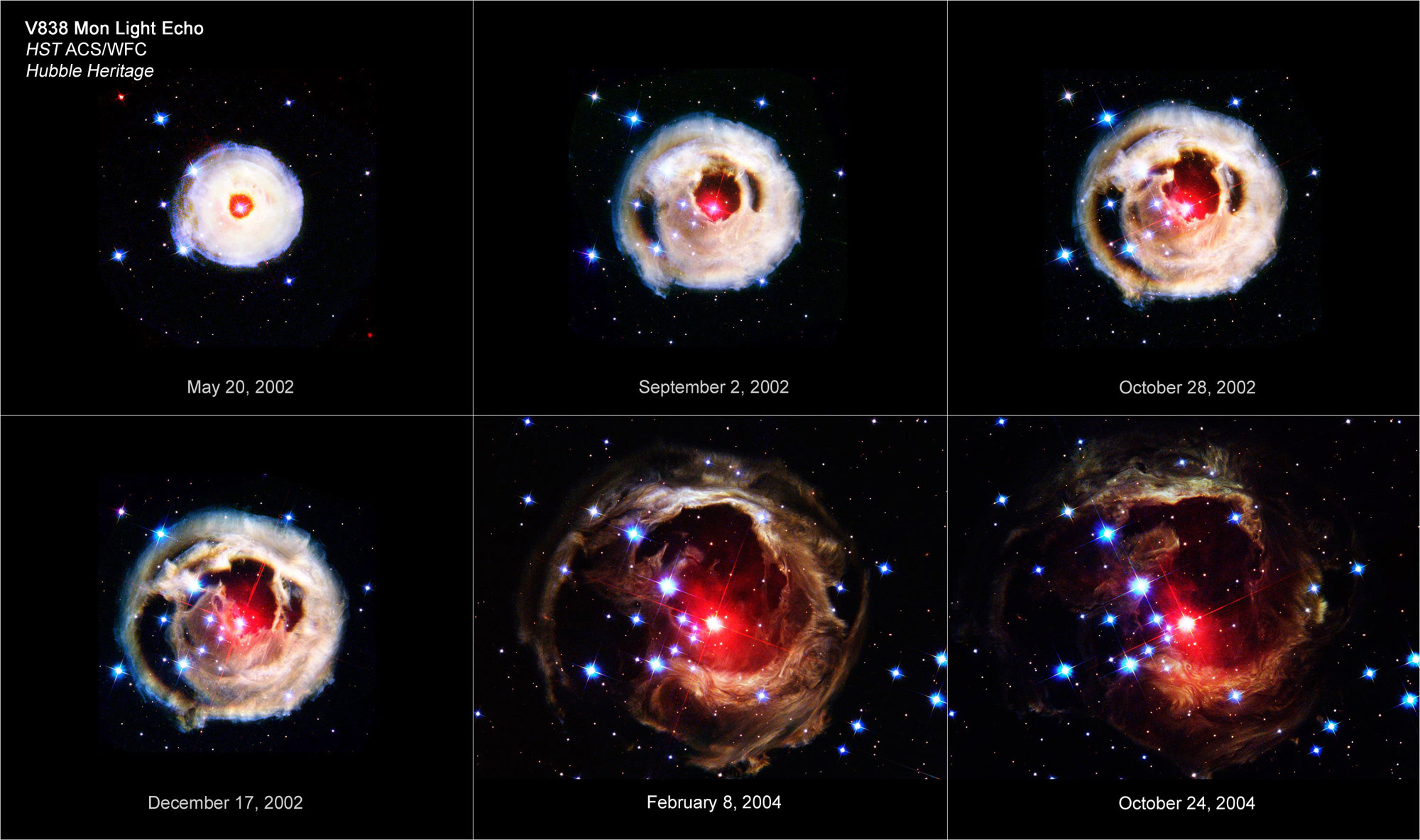
    Hubble Space Telescope Images Show an Expanding Burst of Light from a Red Supergiant Star
    Hubble space telescope images show an expanding burst of light from a red supergiant star. Credit: NASA/ESA

    A newly published study from the University of Alberta examines what happens when binary stars come together in a common envelope, provides a way to identify common envelope events (CEEs) and explains the luminosity generated during the common envelope event.

    A University of Alberta professor has revealed the workings of a celestial event involving binary stars that produce an explosion so powerful its luminosity ranks close to that of a supernova, an exploding star.

    Theoretical astrophysicist Natalia Ivanova says researchers have long debated about what happens when binary stars, two stars that orbit one another, come together in a “common envelope.”

    “When this dramatic cannibalizing event ends there are two possible outcomes: the two stars merge into a single star or an initial binary transforms into an exotic short-period one,” said Ivanova.

    The event is believed to take anywhere from a dozen days to a few hundred years to complete—an extremely fast time frame in terms of celestial events, Ivanova says.

    More than half of all stars in the universe are binary stars, but Ivanova says it was not known what a common envelope event would look like until now.

    After analyzing the physics of what happens in the outer layers of a common envelope, the University of Alberta researchers found that hot and ionized material in the common envelope cools and expands, then releases energy in the form of a bright red outburst of light.

    Ivanova linked these theoretically anticipated common envelope outbursts with recently discovered luminous red novae, mysterious transients that are brighter than novae and just a bit less luminous than supernovae.

    “Our research both provides a way to identify common envelope events and explains the luminosity generated during the common envelope event,” said Ivanova.

    Reference: “Identification of the Long-Sought Common-Envelope Events” by N. Ivanova, S. Justham, J. L. A. Nandez and J. C. Lombardi, 25 January 2013, Science.
    DOI: 10.1126/science.1225540

    Ivanova is a Canada Research Chair in Astronomy and Astrophysics and was the lead researcher on the paper. She was assisted by PhD student Jose Luis Avendano Nandez. The research was published in the journal Science.

    Never miss a breakthrough: Join the SciTechDaily newsletter.
    Follow us on Google and Google News.

    Astronomy Astrophysics Binary Star University of Alberta
    Share. Facebook Twitter Pinterest LinkedIn Email Reddit

    Related Articles

    Astronomical Anomaly: Decoding the Mystery of Blue Supergiant Stars

    New Habitable Zone Planet Found in Unusual Star System

    Unprecedented Discovery: Astronomers Discover Primordial Differences in Binary Stars

    Unveiling the Magnetic Mysteries of Black Holes: How Does “MAD” Accretion Form Around a Black Hole?

    Spider Pulsars’ Missing Link Found – Astronomers Validate Longstanding Theory

    Breathtaking Early Stages of Star Formation Captured With James Webb Space Telescope

    The Seven-Year Photobomb: Astronomers Discover Source of Distant Star’s Unusual Dimming

    New Research Shows That Something Strange Is Going On in the Butterfly Nebula

    The Black Hole Puzzle: Piecing Together the Origins of Invisible Giants

    Leave A Reply Cancel Reply

    • Facebook
    • Twitter
    • Pinterest
    • YouTube

    Don't Miss a Discovery

    Subscribe for the Latest in Science & Tech!

    Trending News

    Even Occasional Binge Drinking May Triple Liver Damage Risk

    Liftoff! NASA’s Artemis II Launch Sends Astronauts Around the Moon for First Time in 50 Years

    Scientists Discover New Way To Eliminate “Zombie Cells” Driving Aging

    This New Quantum Theory Could Change Everything We Know About the Big Bang

    This One Vitamin May Help Protect Your Brain From Dementia Years Later

    Stopping Weight-Loss Drugs Like Ozempic Can Quickly Erase Heart Benefits

    A 500-Million-Year-Old Surprise Is Forcing Scientists to Rethink Spider Evolution

    Coffee and Blood Pressure: What You Need To Know Before Your Next Cup

    Follow SciTechDaily
    • Facebook
    • Twitter
    • YouTube
    • Pinterest
    • Newsletter
    • RSS
    SciTech News
    • Biology News
    • Chemistry News
    • Earth News
    • Health News
    • Physics News
    • Science News
    • Space News
    • Technology News
    Recent Posts
    • Atomic Chains Turn Electric Fields into Measurable Quantum Signals
    • 12,000-Year-Old Native American Dice Rewrite the History of Gambling
    • Researchers Break a 150-Year-Old Math Law With a Surprising Donut Discovery
    • Are You Adding Too Much Salt? New Study Identifies Who’s Most at Risk
    • Scientists Finally Crack Decades-Old Mystery Behind Statins’ Painful Side Effects
    Copyright © 1998 - 2026 SciTechDaily. All Rights Reserved.
    • Science News
    • About
    • Contact
    • Editorial Board
    • Privacy Policy
    • Terms of Use

    Type above and press Enter to search. Press Esc to cancel.