
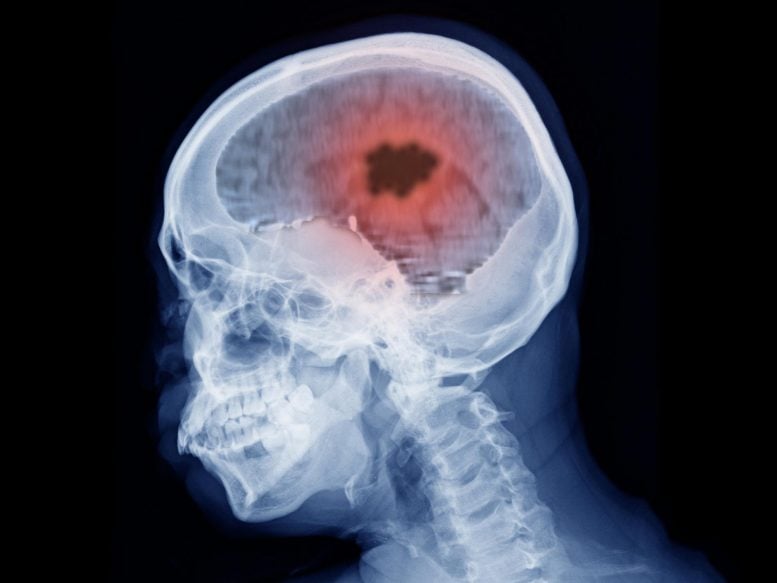
Scientists have discovered a new way to study glioblastoma by comparing patient-specific healthy and diseased brain cells. The approach revealed novel epigenetic changes that could guide individualized therapies and drug repurposing.
Scientists studying the most common and aggressive type of brain tumor in adults have discovered a new way of analyzing diseased and healthy cells from the same patient.
Crucially, the work which has been funded by the charity Brain Tumour Research could pave the way for truly personalized treatment for patients diagnosed with glioblastoma multiforme (GBM). Only 25% of patients with this type of brain tumor survive for more than one year and just 5% live for more than five years.
A team at the Brain Tumour Research Centre of Excellence at Queen Mary University of London has established an entirely new experimental research pipeline which, in a trial involving ten patients, has revealed new insights into how GBM develops, identifying potential new targets for individualized treatments. It could also help predict a patient’s response to drugs currently in clinical use for other diseases which would be extremely valuable as the average survival time for this type of brain tumor is just 12 to 18 months.
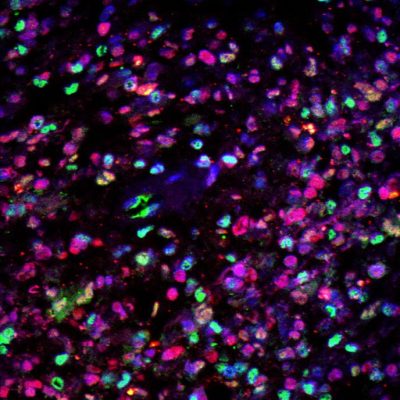
Epigenetics: Uncovering Hidden Changes in GBM
Their paper, Comparative epigenetic analysis of tumor-initiating cells and syngeneic EPSC-derived neural stem cells (SYNGN) in glioblastoma, is published in the high impact journal Nature Communications today (Thursday, October 21). Professor Silvia Marino, who leads the team, said: “We have used this powerful technique to identify changes in the function of genes that occur in GBM that do not entail a change in the genetic code (epigenetics). This has revealed new insights for how GBM develops and identified potential new targets for individualized treatments.”
By using a combination of laboratory work and sophisticated analytical computer programs, the team at Queen Mary has identified significant molecular differences which could be exploited to develop new treatments. It is an innovative approach enabling the comparison of normal and malignant cells from the same patient, helping to identify genes that play a role in growth of the tumor.
The research is particularly significant as GBM is the most common malignant brain tumor in adults. Its aggressive nature means it spreads extensively into surrounding brain tissue making complete removal by surgery almost impossible. It is extremely resistant to radiotherapy and chemotherapy meaning it is very likely to recur following treatment.
Hugh Adams, spokesman for Brain Tumour Research, said: “The complex nature of this particular tumor type means that the standard of care for these patients has not changed in a generation so this research brings much-needed hope for the future. One of the main challenges in developing effective treatments for GBM is that the tumor exhibits significant variation between patients and there can even be significant variation within a single patient’s tumor. These variations can arise from change to the cell’s genetic code – known as mutations – combined with changes to how specific genes are controlled.
“There is strong evidence that GBM cells develop from neural stem cells but previous studies have not been able to compare tumor cells and their putative cell of origin from the same person. Prof Marino and her team have now harnessed state-of-the-art stem cell technologies and next-generation DNA sequencing methods to compare diseased and healthy cells from the same patient. Their results have shown how this approach can reveal novel molecular events that appear to go awry when GBM develops, thereby identifying targets for potential new treatments.”
New Targets for Personalized Therapies
The results of the team’s work have shown how this approach can reveal novel molecular targets for potential new treatments. For example, the results reveal how some GBM tumors can control the movement of regulatory T cells, a type of immune cell and has also revealed epigenetic changes that could be used to predict the response to drugs currently in clinical use.
Brain tumors kill more children and adults under the age of 40 than any other cancer, yet historically just 1% of the national spent on cancer research has been allocated to this devastating disease.
Brain Tumour Research funds sustainable research at dedicated centers in the UK. It also campaigns for the Government and the larger cancer charities to invest more in research into brain tumors in order to speed up new treatments for patients and, ultimately, to find a cure. The charity is calling for a national annual spend of £35 million in order to improve survival rates and patient outcomes in line with other cancers, such as breast cancer and leukemia and is also campaigning for greater repurposing of drugs.
Reference: “Comparative epigenetic analysis of tumour initiating cells and syngeneic EPSC-derived neural stem cells in glioblastoma” by Claire Vinel, Gabriel Rosser, Loredana Guglielmi, Myrianni Constantinou, Nicola Pomella, Xinyu Zhang, James R. Boot, Tania A. Jones, Thomas O. Millner, Anaelle A. Dumas, Vardhman Rakyan, Jeremy Rees, Jamie L. Thompson, Juho Vuononvirta, Suchita Nadkarni, Tedani El Assan, Natasha Aley, Yung-Yao Lin, Pentao Liu, Sven Nelander, Denise Sheer, Catherine L. R. Merry, Federica Marelli-Berg, Sebastian Brandner and Silvia Marino, 21 October 2021, Nature Communications.
DOI: 10.1038/s41467-021-26297-6
Never miss a breakthrough: Join the SciTechDaily newsletter.
Follow us on Google and Google News.
1 Comment
… if one could use scorpion poison and stick the gold to it and then use microwaves…