
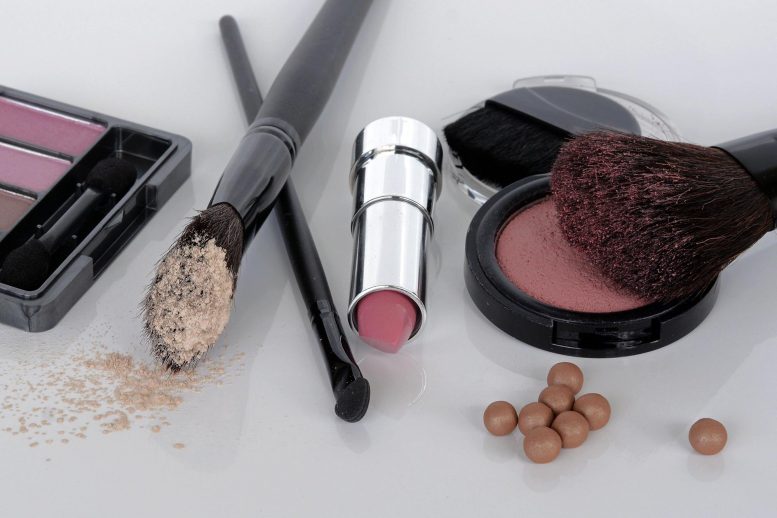
Laboratory tests of talc-based cosmetics products, commissioned by the Environmental Working Group, found asbestos — a deadly human carcinogen for which there is no safe level of exposure — in almost 15 percent of samples.
The analysis, published today in the journal Environmental Health Insights, calls attention to the outdated methods used for screening this potential hazard in talc-based cosmetics. The methods used by the cosmetics industry to screen talc supplies are inadequate.
“Many well-known brands use talc in body and facial powders that can be inhaled,” said Nneka Leiba, EWG vice president for Healthy Living Science. “In our Skin Deep® online database we have identified more than 2,000 personal care products that contain talc, including over 1,000 loose or pressed powders that could pose an inhalation risk. It’s troubling to think how many Americans have been using talc-based cosmetics products potentially contaminated with asbestos.”
Cosmetics companies have known since the 1950s that talc could be contaminated with asbestos, and the public was alerted in the early 1970s. But the cosmetics industry persuaded the Food and Drug Administration that it could be trusted to regulate its own products — and that cosmetics companies should be allowed to rely on an asbestos detection method that could see some but not all asbestos fibers.
In May, Johnson & Johnson announced it would end the sale of its talc-based baby powder in the United States and Canada. Thousands of people, mostly women, filed lawsuits against the company, claiming the product caused cancer.
“Inhaling even the tiniest amount of asbestos in talc can cause mesothelioma and other deadly diseases, many years after exposure,” said Tasha Stoiber, Ph.D., a senior scientist at EWG. “How much talc is inhaled — and how much is contaminated with asbestos — is hard to know, but it only takes one asbestos fiber, lodged in the lungs, to cause mesothelioma decades later.”
Exposure to asbestos is linked to asbestosis, mesothelioma, and lung and ovarian cancer. Even exposures as short as a few days can cause mesothelioma, an incurable cancer, many years later. Studies have found more than 60 percent of mesothelioma cases in women are likely attributable to non-occupational exposure to asbestos.
Despite asbestos’ declining use in the U.S., mesothelioma deaths remain substantial, especially among younger people. From an analysis of federal mortality data, EWG Action Fund estimated that up to 15,000 Americans die each year from asbestos-triggered diseases.
Geologically, talc and asbestos can be formed from the same parent rock, which is mined for both cosmetics use and industrial use. Talc is often used to improve the texture and feel of cosmetics, to absorb moisture, or as an inexpensive filler.
The Scientific Analytical Institute, of Greensboro, N.C., conducted the tests. The institute is one of the world’s leading laboratories testing consumer products for the presence of asbestos. Samples were analyzed using electron microscopy, following test procedures described by the Environmental Protection Agency.
The FDA does not require mandatory testing of talc supplies. The voluntary testing method developed by industry is not sensitive enough to screen for asbestos when compared to electron microscopy.
“It is critical that the FDA develop a rigorous screening method for talc used in personal care products,” said Sean Fitzgerald, the head of Scientific Analytical Institute. “The lab repeatedly finds asbestos in products made with talc, including cosmetics marketed to children. It’s outrageous that a precise method for testing personal care products for the presence of asbestos exists, but the cosmetics industry isn’t required to use it.”
Fitzgerald is a nationally recognized expert who has conducted tests for asbestos in numerous consumer products. His lab tested 21 samples of cosmetics, in powder form, including eye shadow, foundation, blush, face, and body powders.
“While consumers should be alarmed and outraged, it’s hardly a surprise, considering the federal law regulating the cosmetics industry has not been updated since 1938,” said Scott Faber, EWG’s senior vice president for government affairs. “It’s long past time for Congress to pass legislation mandating that all talc-based personal care products be rigorously tested and the cosmetics industry be required to put the public’s safety first. The current system, which has allowed the cosmetics industry to operate beyond the reach of FDA’s authority, must end.”
The federal government agrees there is no safe level of asbestos exposure, yet it does not require that cosmetics be tested for safety before they go on the market. Instead, the FDA encourages companies to select talc mines carefully to avoid asbestos contamination, but it does not have the power to regulate products that contain talc.
In March 2019, Rep. Debbie Dingell (D-Mich.) introduced legislation that would require warning labels on cosmetics that could contain asbestos and are marketed to children. Under the Dingell bill, companies would be required to use rigorous and updated testing methods to test cosmetics for asbestos. If manufacturers could not prove the products were asbestos-free, the products would have to carry a warning label.
Reference: “Asbestos Contamination in Talc-Based Cosmetics: An Invisible Cancer Risk” by Tasha Stoiber, Sean Fitzgerald and Nneka S Leiba, 24 November 2020, Environmental Health Insights.
DOI: 10.1177/1178630220976558
Rep. Frank Pallone (D-N.J.), chairman of the House Committee on Energy and Commerce, also introduced legislation that would give the FDA the power to review controversial chemicals used in cosmetics and determine whether those ingredients are safe, safe at certain levels or unsafe. The bill also gives the FDA the ability to recall and stop production of products that pose serious health risks to consumers, including those where asbestos has been found.
Never miss a breakthrough: Join the SciTechDaily newsletter.
Follow us on Google and Google News.
3 Comments
It would be nice if the article stated where we could have a product tested for this. I have COPD and use perfumed powder because I cannot handle perfumes from a bottle any longer. Now I am wondering if they are even safe to use! (or perhaps if any of them may have caused it.)
There are some lab places that will test pretty much anything you bring in. Anylabtestnow.com and labdoor.com are two options. You might have to request a custom quote, but there’s no price for your health and peace of mind.
Who is marketing cosmetics to children? It’s bad enough people of all gender identities are now covering themselves in dehydrating (“moisture absorbing”=dehydrating ipso facto) and toxic chemicals and parents are allowed to dress their children up and exploit them for profit but now some are apparently being marketed directly for children?