

Research from the Sant Pau Research Institute (IR Sant Pau) has discovered a gene linked to amyotrophic lateral sclerosis (ALS).
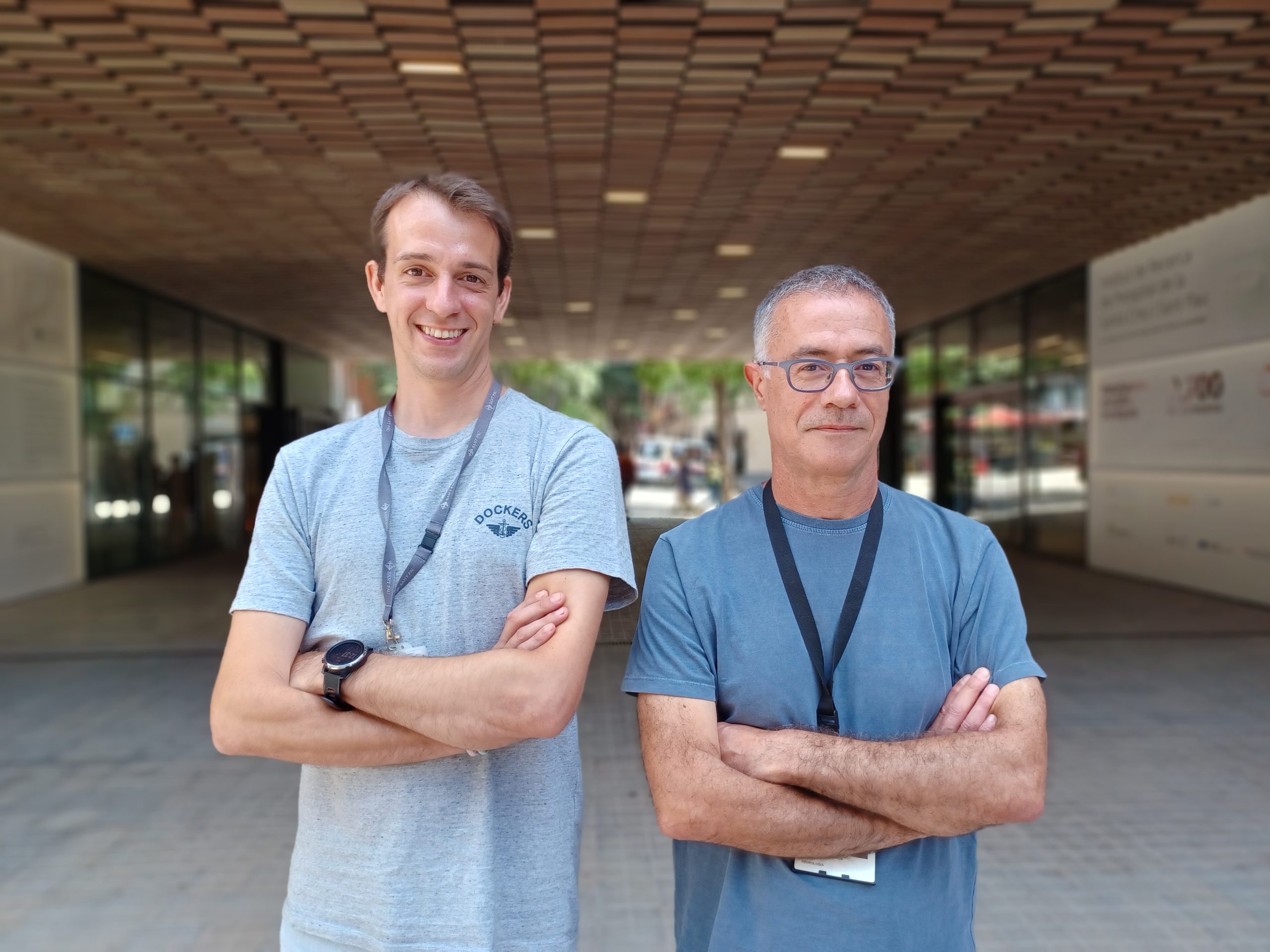
Researchers led by neurologist Dr. Ricard Rojas-García from the Neuromuscular Diseases Group and the Dementia Neurobiology Group of the Sant Pau Research Institute (IR Sant Pau), alongside the Memory Unit of the Sant Pau Hospital, have identified a new mutation in the ARPP21 gene that could be the cause of Amyotrophic Lateral Sclerosis (ALS), a devastating neurodegenerative disease.
Specifically, it is a shared mutation (c.1586C>T; p.Pro529Leu) in the ARPP21 gene that codes for an RNA-binding protein and has been found in a total of 10 ALS patients from 7 unrelated families in a region in the southeast of the autonomous community of La Rioja.
The investigation was initiated after detecting an unusually high number of ALS cases in La Rioja, specifically in the southeast region of the autonomous community. The number of cases identified in the area, particularly familial, and the calculated minimum incidence considerably exceeded the number of cases expected during the study period given the usual incidence data, which are usually between two and three cases per 100,000 inhabitants annually.
“We noticed that there were many patients from this area, from very close towns, which attracted a lot of attention,” explains Dr. Ricard Rojas-García, researcher in the Neuromuscular Diseases Group of the IR and one of the main authors of the study.
Genetic Research Methodology
Between 5% and 10% of ALS cases have a family history of the disease, and in 30% of these cases, an underlying genetic cause could not be identified after extensive study of known related genes to this day with ALS. The aim of the Sant Pau researchers was to identify new genes related to ALS in cases where the genetic tests were negative, motivated by a significantly increased incidence of ALS in this small geographical region of Spain.
The scientists performed whole-genome sequencing on a group of 12 ALS patients (5 of them with a family history) from this unique area. The study was expanded to include members of affected families and additional cases from a wider surrounding region. The mutation identified in ARPP21 had not been found in other ALS-causing genes. This finding strongly suggests that ARPP21 is a novel ALS-causing gene.
The southeastern region of the community of La Rioja is an area of 1219.42 km². Between 2009 and 2022, it had an average population of 43,433, of which 31,324 were over 18 years of age. The population density was 35.62 inhabitants/km². This is an area with a high rate of emigration, so there may be cases in the rest of the State.
Given an average incidence of ALS of 1.4–2.47 cases/100,000 people/year, we calculated an expected number of cases of 0.44–0.77 per year in this area, equivalent to 5-10 patients during the study period (2009-2022). With reference to familial ALS cases, assuming a frequency of 5-10%, the expected number of cases in the area would be 0.02-0.08 cases/year or one new case every 12.5- 50 years
Despite this, between 2009 and 2022, 15 patients from the study area who met the diagnostic criteria for ALS were visited in Sant Pau. 7 of 15 (46.6%) had a family history of ALS and were considered as possible familial cases. Known disease-causing mutations were ruled out by exome sequencing analysis or a custom gene panel.
“This mutation will not only help diagnose ALS more precisely but also opens the door to researching new personalized therapies and studying the function of this protein in the disease,” adds Dr. Oriol Dols-Icardo, a researcher in the Neurobiology of Dementia group and the Memory Unit at IR Sant Pau and first signatory of the study.
Dr. Dols-Icardo believes that these findings could open new avenues for the diagnosis and treatment of ALS. The identification of ARPP21 as a causative gene underscores the importance of continued research in specific geographic areas to discover new genetic factors.
Global implications
Although this discovery has been made in a specific region of Spain, the researchers believe that it could have global implications. “This opens the door for other research teams worldwide to review their databases and patients to see if this mutation is also present elsewhere,” they explain.
The discovery of the new gene associated with ALS will not only allow for better diagnosis and genetic counseling for affected families but also opens up new avenues of research into the functioning of this specific protein and its relationship to the disease.
This advance highlights the importance of genetic research in the understanding and treatment of rare diseases and highlights the need to continue exploring the genetic causes of ALS to be able to develop more effective treatments in the future.
Reference: “Identification of a pathogenic mutation in ARPP21 in patients with amyotrophic lateral sclerosis” by Oriol Dols-Icardo, Álvaro Carbayo, Ivonne Jericó, Olga Blasco-Martínez, Esther Álvarez-Sánchez, Maria Angeles López Pérez, Sara Bernal, Benjamín Rodríguez-Santiago, Ivon Cusco, Janina Turon-Sans, Manuel Cabezas-Torres, Marta Caballero-Ávila, Ana Vesperinas, Laura Llansó, Inmaculada Pagola-Lorz, Laura Torné, Natalia Valle-Tamayo, Laia Muñoz, Sara Rubio-Guerra, Ignacio Illán-Gala, Elena Cortés-Vicente, Ellen Gelpi and Ricard Rojas-García, 2 July 2024, Journal of Neurology, Neurosurgery & Psychiatry.
DOI: 10.1136/jnnp-2024-333834
Never miss a breakthrough: Join the SciTechDaily newsletter.
Follow us on Google and Google News.
1 Comment
Searching for “disease causing genes” is such a barbaric activity. The genes don’t work like that, they don’t have a “specialty” like that.
So, better be safe and remove the entire DNA, am I right?