
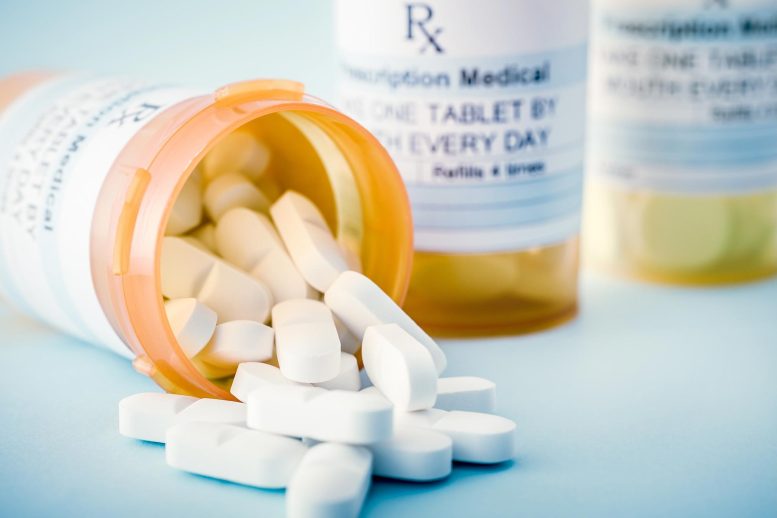
According to recent research, the safety issues surrounding the commonly used pain reliever, diclofenac, may be linked to a poorly understood drug-metabolizing enzyme. The expression of this enzyme can vary as much as 3,000 times from one individual to the next.
The findings of a study, published in Clinical Pharmacology & Therapeutics, have the potential to be used for developing methods of identifying individuals who are vulnerable to severe side effects from diclofenac. These methods could also aid in determining safe dosing guidelines for specific demographic groups, including women, young children, and individuals from certain ethnic backgrounds.
Used to combat pain and inflammation associated with arthritis, diclofenac was available in the U.S. as an over-the-counter drug until 2013, when the Food and Drug Administration restricted it to prescription-only use following reports of the drug causing heart damage. More than 10 million prescriptions per year are written for it in the U.S. It is also one of the most widely used non-steroidal anti-inflammatory drugs worldwide. This includes many countries in Asia, Africa, and the Middle East that still allow over-the-counter use of diclofenac.
“Most patients who are using diclofenac have arthritis, and many of them are at risk of heart disease,” senior author Bhagwat Prasad, an associate professor in the Washington State University College of Pharmacy and Pharmaceutical Sciences. “So there is a concern that taking diclofenac may be putting them at even greater risk of cardiovascular events such as heart attack and stroke.”
UGT2B17 in Diclofenac Metabolism
Previous findings by the WSU team had found a high degree of variability in the expression of UGT2B17, an enzyme that is a known player in diclofenac metabolism. That study showed that the enzyme is present at much lower levels in women than in men, which the researchers thought could explain the increased risk of heart damage seen in women taking diclofenac. They also found that the enzyme is mostly absent in children under the age of nine and discovered large ethnicity-based differences in the number of people who lack the gene for the enzyme altogether, which ranges from around 20% of Caucasians up to around 90% of Japanese people.
In this new study, the WSU researchers used human liver and intestinal samples along with computer-based modeling to quantify the degree to which this enzyme contributes to diclofenac metabolism relative to other related enzymes. They found it to be a major player, supporting the idea that low levels of the UGT2B17 enzyme may be the cause of heart damage tied to diclofenac use.
“No one knew why this heart toxicity is happening in some individuals,” said first author Deepak Ahire, a graduate student in the WSU College of Pharmacy and Pharmaceutical Sciences. “Our study showed, for the first time, that UGT2B17 is important in diclofenac metabolism and suggests that differences in UGT2B17 expression are what makes people’s response to diclofenac so variable, leading to toxicity in some whereas for others the drug simply does not work.”
Ahire said that their study found that this enzyme metabolizes diclofenac mainly in the intestine, unlike other related enzymes that are active mostly in the liver. As a result, the effect the researchers are seeing is specific to diclofenac tablets taken by mouth, which provide the quickest absorption and pain relief. Just under half of prescriptions written for the drug in the U.S. are for oral diclofenac, Prasad said.
The Potential of Genetic Testing for Safer Prescriptions
The researchers’ findings suggest that it may be feasible to use genetic testing to help healthcare providers evaluate safety risks before prescribing diclofenac. Prasad also noted that drug regulatory authorities in countries where diclofenac is still available over the counter should consider doing efficacy testing to determine the optimal dose of the drug for their local market.
The WSU researchers are currently in the process of confirming their findings in a pilot clinical trial. Their next step would be to pursue collaborations with large hospitals to study the connection between diclofenac and heart damage in patients’ electronic medical records.
Reference: “Intestinal metabolism of diclofenac by polymorphic UGT2B17 correlates with its highly variable pharmacokinetics and safety across populations” by Deepak Ahire, Scott Heyward and Bhagwat Prasad, 12 April 2023, Clinical Pharmacology & Therapeutics.
DOI: 10.1002/cpt.2907
The study was funded by the Eunice Kennedy Shriver National Institute of Child Health and Human Development, a component of the National Institutes of Health.
Never miss a breakthrough: Join the SciTechDaily newsletter.
Follow us on Google and Google News.
4 Comments
“…, diclofenac was available in the U.S. as an over-the-counter drug until 2013, when the Food and Drug Administration restricted it to prescription-only use following reports of the drug causing heart damage.”
It is still available OTC, at least as a 1% gel, in my local chain grocery store. What is the rest of the story?
Great idea to restrict it to prescription-only, so only people who pay a doctor can enjoy mysterious heart failure. A doctor can’t pick out the lucky 10% of people in Japan, or the unlucky 20% of people in the Caucasus. The story a decade ago was diclofenac was becoming more available, with no mention of random hearts failing. I just looked at my tube, and there’s no mention of the death risk. Don’t disempower the public by hiding the drug, but let the public know the risks; at the end of the day, I’m responsible for my health, but if they advertise the benefits without mentioning known risks, they’re responsible in civil court.
The article mentions it’s by oral tablet. “Systemic bioavailability of topical diclofenac sodium gel 1% versus oral diclofenac sodium in healthy volunteers” (J Clin Pharmacol. 2010 Jan;50(1):50-61. doi: 10.1177/0091270009336234. Epub 2009 Oct 19.) found that “Systemic exposure with diclofenac sodium gel 1% was 5- to 17-fold lower than with oral diclofenac. Systemic effects with topical diclofenac were less pronounced”. Is a 5-fold decrease sufficient in the unlucky population to avoid acute crapheart? Mr. Spencer is right, we’re going to need a lot more information.
I love diclofenac gel! It’s great for all kinds of body aches and pains.