
Close Menu
    Facebook X (Twitter) Instagram
    SciTechDaily
    • Biology
    • Chemistry
    • Earth
    • Health
    • Physics
    • Science
    • Space
    • Technology
    Facebook X (Twitter) Pinterest YouTube RSS
    SciTechDaily
    Home»Biology»Researchers Reveal a Hidden Biological Clock in Insects
    Biology

    Researchers Reveal a Hidden Biological Clock in Insects

    By Michael Miller, University of CincinnatiJuly 20, 2026No Comments3 Mins Read
    Facebook Twitter Pinterest Telegram LinkedIn WhatsApp Email Reddit
    Share
    Facebook Twitter LinkedIn Pinterest Telegram Email Reddit
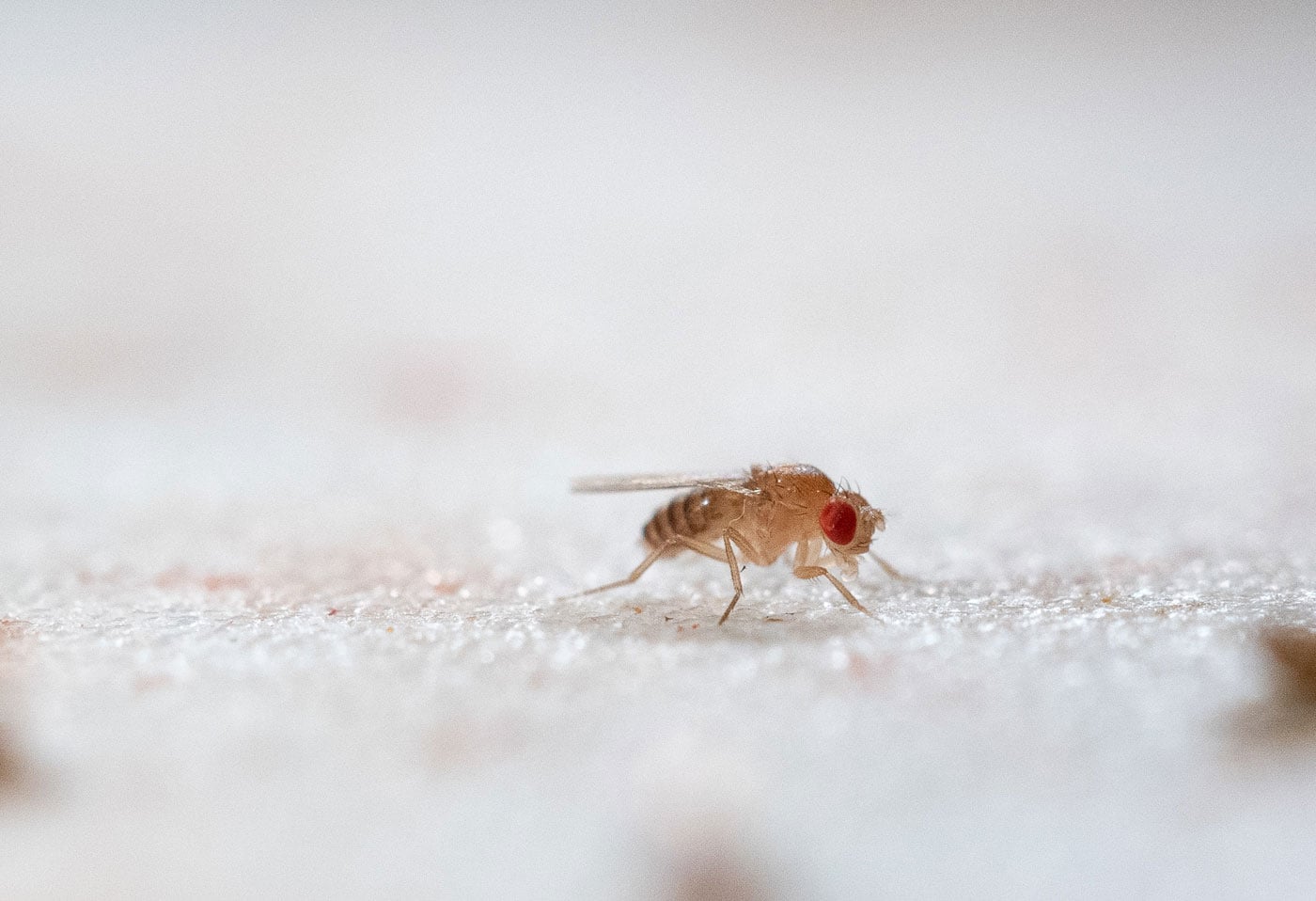
    Fruit Fly Humidity Circadian Rhythm
    Researchers at the University of Cincinnati found that fruit flies and other insects have a daily body clock tied to humidity. Credit: Andrew Higley

    Humidity governs the daily rhythms of some insects, raising the question of whether it affects humans too.

    Inside a tightly controlled chamber, kissing bugs, fruit flies, mosquitoes, and spider beetles adjusted their behavior to repeating changes in humidity. Even after researchers removed the humidity cycle, the insects continued following the established rhythm of moist and dry conditions.

    “They take humidity cues as a biological clock,” UC Professor Joshua Benoit said.

    Researchers at the University of Cincinnati conducted the experiment in an environment where both climate and light could be controlled. The study, supported by grants from the National Institute of Allergy and Infectious Diseases, was published in the Nature journal Biological Timing and Sleep.

    Humidity can reset insects’ clocks

    Circadian rhythms are internal cycles that help regulate processes ranging from body temperature to hormone activity. Light and temperature are known to synchronize these biological clocks, but humidity has received far less attention, said lead author Shyh-Chi Chen, formerly a researcher in Benoit’s laboratory.

    “Light and temperature are well-known environmental factors that can entrain the circadian clocks,” said Chen, now an assistant professor at Georgia College & State University. “Humidity, like light and temperature, fluctuates daily.”

    Mosquitoes in a Chamber
    Researchers at the University of Cincinnati found that mosquitoes and other insects have a daily body clock tied to humidity. Credit: Andrew Higley

    Extreme humidity may be uncomfortable for people, but insects can face much higher stakes because their survival depends on maintaining enough water without becoming dehydrated, Chen said.

    “This could be critical for terrestrial organisms, as their survival depends on staying hydrated or avoiding dehydration,” Chen said.

    Anticipating daily humidity changes could therefore help insects choose safer times to search for food or perform other activities that require energy, he said.

    The signal is weaker than light

    Although the results were statistically significant, humidity influenced the insects less strongly than daylight or temperature. Mosquitoes showed the weakest behavioral response to changing moisture levels.

    Animals commonly use predictable environmental cycles to organize their behavior. Lunar cycles correspond with tides, while solar cycles determine changing hours of daylight. Previous UC research found that monarch butterflies use sunlight as a compass during their long continental migrations.

    Joshua Benoit
    UC Professor Joshua Benoit studies disease vectors such as ticks and mosquitoes in his biology lab. Credit: Joseph Fuqua II/UC

    Humans may sense it subtly

    Could recurring humidity patterns also influence biological timing in mammals, including humans?

    The researchers said that the possibility cannot be excluded, although any effect would probably be too small for people to notice.

    “While our current study focuses on animal models, it opens a fascinating door to human biology,” Chen said. “Although mammalian circadian biology is heavily dominated by the light-dark cycle, the potential for subtle, multisensory integration — including humidity — cannot be ruled out.”

    Reference: “Humidity as a potential zeitgeber for circadian entrainment of insect systems” by Shyh-Chi Chen, Grace Goodhart, Daniel Eaton, Nathan Catlett, Tabitha Cady, Hannah Tran, Luke E. Lutz, Lyn Wang, Ella Girard, Jaida Savino, Jodi Perry, Libby Coen, Leo Walker, Amena Bidiwala, Emma Tarter, Joshua Tompkin, Nina Greene, Aiden Yang and Joshua B. Benoit, 22 June 2026, npj Biological Timing and Sleep.
    DOI: 10.1038/s44323-026-00082-4

    Supported by grants from the National Institute of Allergy and Infectious Diseases

    Never miss a breakthrough: Join the SciTechDaily newsletter.
    Follow us on Google and Google News.

    Animal Behavior Circadian Rhythm Entomology Fruit Flies Insect University of Cincinnati
    Share. Facebook Twitter Pinterest LinkedIn Email Reddit

    Related Articles

    Zoologist Solves the Bizarre 100-Year-Old Mystery of the Floating Phantom Midge

    Giant Hornet Attacks Cause Honeybee Alarm Buzz in Hives – “I Literally Could Not Believe What I Was Hearing”

    “Insect Apocalypse” – Study Reveals Drastic Decline of Aquatic Insect Population in Paraná River Basin

    Without Evolutionary Genetic Variation, Asexual Invasive Species Find New Methods of Adapting to Their Environment

    Aphid-Like Insects Stole DNA From Plants – Gene Shields Them From Leaf Toxins

    Animals Fake Death for Long Periods of Time to Escape Predators

    New Species of Flea Beetle Discovered, Burumoseria Yuae

    Katydid Ears Have Structures Similar to Mammalian Ones

    Haemaphysalis Flava Hardy Enough to Survive Vacuum and Electron Beam

    Leave A Reply Cancel Reply

    • Facebook
    • Twitter
    • Pinterest
    • YouTube

    Don't Miss a Discovery

    Subscribe for the Latest in Science & Tech!

    Trending News

    This Experimental Drug Repaired the Gut and Reversed Severe Fatty Liver Disease

    Physicists Just Turned a Black Hole Energy Theory Into Reality

    Stanford Scientists Solve a 252-Million-Year-Old Mass Extinction Mystery

    The Ancient Survival Mechanism Making Weight Loss So Difficult

    Just 3,000 Steps a Day May Help Protect the Brain From Alzheimer’s

    “Weird Clams” Reveal a New Invasion Along the U.S. Northeast Coast

    Archaeologists Decapitated Tutankhamun and Glued His Body Back Together

    New Black Hole Theory Solves a 50-Year-Old Problem

    Follow SciTechDaily
    • Facebook
    • Twitter
    • YouTube
    • Pinterest
    • Newsletter
    • RSS
    SciTech News
    • Biology News
    • Chemistry News
    • Earth News
    • Health News
    • Physics News
    • Science News
    • Space News
    • Technology News
    Recent Posts
    • Antarctic Meltwater Is Making Glaciers Slide Faster Toward the Ocean
    • Ancient Dog Skulls Rewrite the Story of Canine Evolution
    • New Metal Alloy Is up to 10 Times Stronger Than Structural Steel
    • Researchers Reveal a Hidden Biological Clock in Insects
    • Scientists Discover Four Chameleons Found Nowhere Else on Earth
    Copyright © 1998 - 2026 SciTechDaily. All Rights Reserved.
    • Science News
    • About
    • Contact
    • Editorial Board
    • Privacy Policy
    • Terms of Use

    Type above and press Enter to search. Press Esc to cancel.