
Close Menu
    Facebook X (Twitter) Instagram
    SciTechDaily
    • Biology
    • Chemistry
    • Earth
    • Health
    • Physics
    • Science
    • Space
    • Technology
    Facebook X (Twitter) Pinterest YouTube RSS
    SciTechDaily
    Home»Biology»Researchers Show How Mechanical Forces Affect Cell Function
    Biology

    Researchers Show How Mechanical Forces Affect Cell Function

    By Bill Hathaway, Yale UniversityJune 16, 2015No Comments2 Mins Read
    Facebook Twitter Pinterest Telegram LinkedIn WhatsApp Email Reddit
    Share
    Facebook Twitter LinkedIn Pinterest Telegram Email Reddit
    Researchers Show Mechanical Forces Role in Cell Function
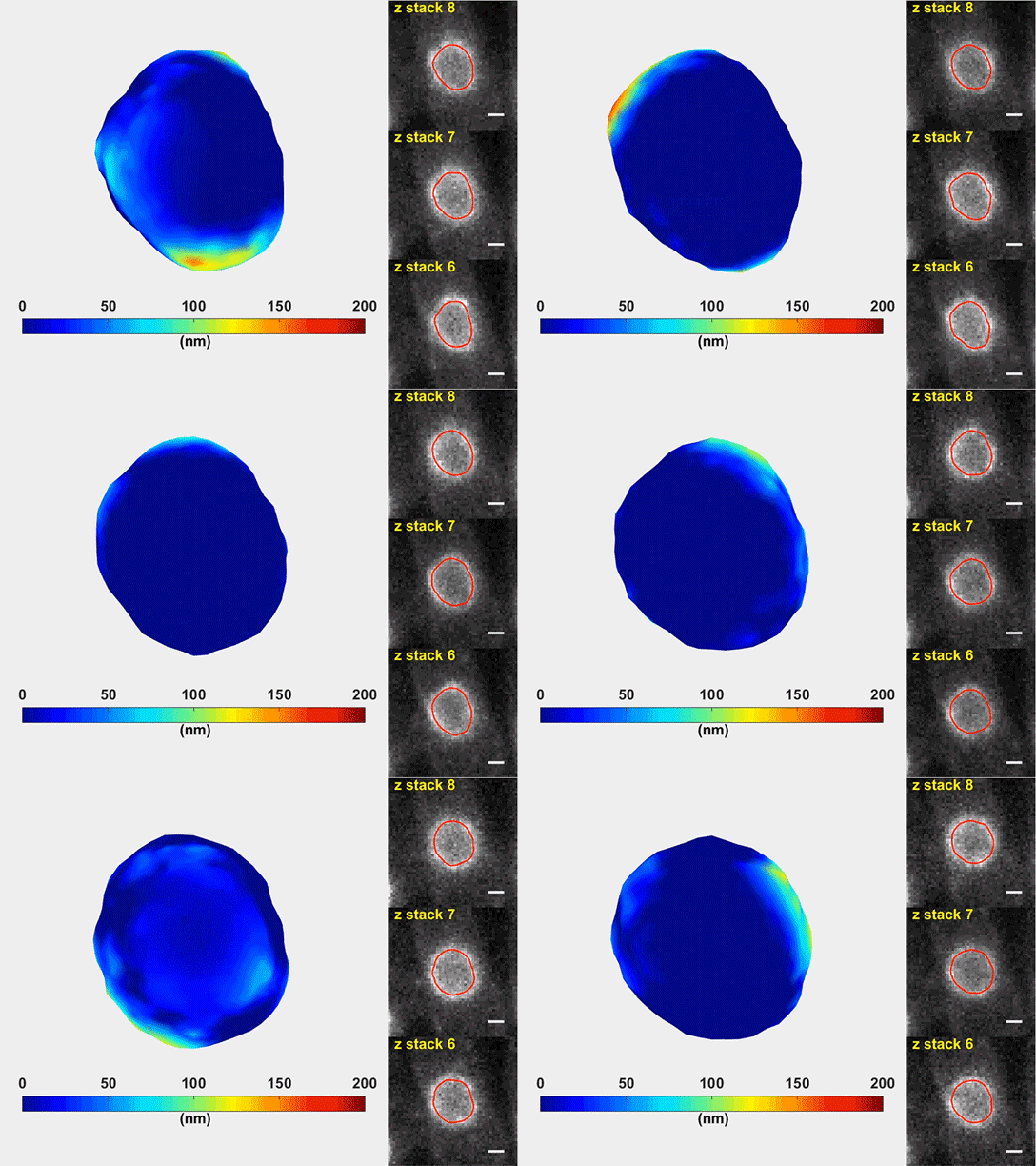
    Now Yale researchers show how mechanical forces play an integral part in cell function. Credit: Yale University

    New research from Yale University reveals how mechanical forces play an integral part in cell function.

    Nuclear membranes protect genes — life’s most precious cargo — but little is known about why they function in different tissue types. For instance, nuclei in brain cells tend to be soft and pliable while those in bone cells are stiff and rigid. Now Yale researchers show how mechanical forces play an integral part in cell function for good and bad.

    Using “optical tweezers” to pull on nuclei, the Yale team showed that if chromatin — the material that makes chromosomes — is detached or untethered from the nuclear membrane, then the nucleus undergoes unusually large changes in shape as seen in the accompanying movie. (Nuclear deformations are highlighted in yellow and red).

    Intriguingly, say the researchers, these cells do not revert back to a spherical shape as happens normally in cells in which chromatin is attached to the membrane. Regulation of nuclear shape is crucial for cells to operate in different environments, the authors say.

    “If you push on a single rubber ball, it will simply roll away in response — similar to what happens to nuclear shape when chromatin can move freely. But if you pack rubber balls together, then they have nowhere to move — as when chromatin is tethered — they push back against the force instead,” said Yale’s Megan King, a lead author of the study which appears in the June 15 issue of Nature Communications.

    Yale’s Simon Mochrie is co-author of the study.

    How nuclear membranes change shape is of fundamental biological importance in determining the eventual fate of cells and when it goes awry has been implicated in diseases such as muscular dystrophy.

    Reference: “The tethering of chromatin to the nuclear envelope supports nuclear mechanics” by Sarah M. Schreiner, Peter K. Koo, Yao Zhao, Simon G. J. Mochrie and Megan C. King, 15 June 2015, Nature Communications.
    DOI: 10.1038/ncomms8159


    Never miss a breakthrough: Join the SciTechDaily newsletter.
    Follow us on Google and Google News.

    Cell Biology Yale University
    Share. Facebook Twitter Pinterest LinkedIn Email Reddit

    Related Articles

    Researchers Identify Molecular Factors that Push the Domino of Life into Motion

    Researchers Solve Biological Mystery about the Common Genesis of Many Serious Diseases

    Cancer Scientists Prove Long-Standing Theory on How Cancer Spreads

    Combination of Immune Stimulating Antibodies Shows Promising Results Against Advanced Melanoma

    Scientists Peer Into a Cell in Real Time

    Researchers Uncover Molecular Pathway to Grow New Arteries

    A Closer Look at the Antifreeze Protein That Allows Siberian Beetles to Survive

    Understanding How Cells Package Fat

    Optogenetics Regulates Metabolic Activity in the Membranes of Cells

    Leave A Reply Cancel Reply

    • Facebook
    • Twitter
    • Pinterest
    • YouTube

    Don't Miss a Discovery

    Subscribe for the Latest in Science & Tech!

    Trending News

    Massive Study Warns Marijuana Use in Teens Is Linked to Serious Mental Illness

    Scientists Discover a Completely Unexpected Way T Cells Kill Cancer

    Scientists Just Found the Solar System’s Original “Planet Factory”

    Study Warns Widely Used Food Preservatives Linked to High Blood Pressure and Heart Disease

    New Treatment Could Reverse Osteoarthritis Within Weeks

    Physicists Have Measured “Negative Time” in Bizarre Quantum Experiment

    The Deadly Tapeworm Spreading Across America Has Reached the Pacific Northwest

    Could Low Vitamin D Be Making Your Pain Worse?

    Follow SciTechDaily
    • Facebook
    • Twitter
    • YouTube
    • Pinterest
    • Newsletter
    • RSS
    SciTech News
    • Biology News
    • Chemistry News
    • Earth News
    • Health News
    • Physics News
    • Science News
    • Space News
    • Technology News
    Recent Posts
    • Stanford’s Revolutionary New Microscope Reveals Living Cells in Stunning Detail
    • Scientists Discover a Sea Slug Smaller Than a Sesame Seed in Taiwan
    • Wasp Colonies Explode Into Violence After Losing Their Queen
    • Antarctica Suddenly Became Far More Sensitive to Climate Change 1 Million Years Ago
    • A Hidden Arctic Ocean Crisis Is Unfolding Beneath the Melting Ice
    Copyright © 1998 - 2026 SciTechDaily. All Rights Reserved.
    • Science News
    • About
    • Contact
    • Editorial Board
    • Privacy Policy
    • Terms of Use

    Type above and press Enter to search. Press Esc to cancel.