
Close Menu
    Facebook X (Twitter) Instagram
    SciTechDaily
    • Biology
    • Chemistry
    • Earth
    • Health
    • Physics
    • Science
    • Space
    • Technology
    Facebook X (Twitter) Pinterest YouTube RSS
    SciTechDaily
    Home»Science»Rutgers Study: Nuclear Winter Would Threaten Nearly Everyone on Earth
    Science

    Rutgers Study: Nuclear Winter Would Threaten Nearly Everyone on Earth

    By Todd Bates, Rutgers UniversityAugust 28, 2019No Comments3 Mins Read
    Facebook Twitter Pinterest Telegram LinkedIn WhatsApp Email Reddit
    Share
    Facebook Twitter LinkedIn Pinterest Telegram Email Reddit

    Nuclear Winter

    Second study of its kind confirms extreme impacts from US vs. Russia nuclear war.

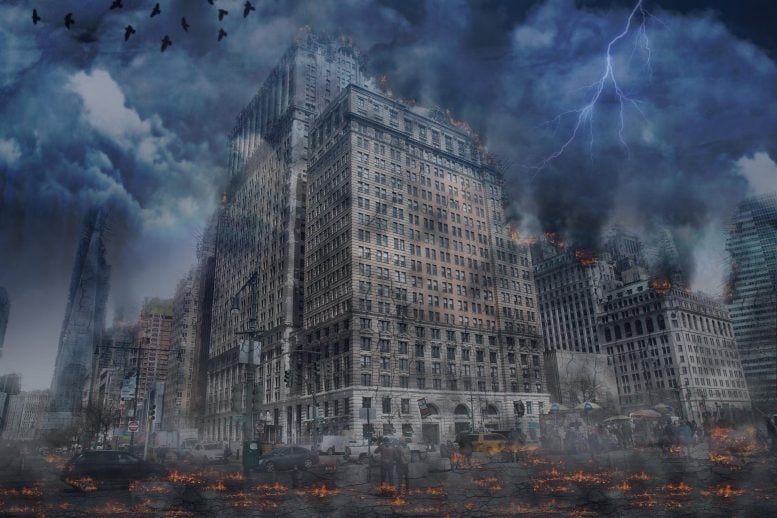
    If the United States and Russia waged an all-out nuclear war, much of the land in the Northern Hemisphere would be below freezing in the summertime, with the growing season slashed by nearly 90 percent in some areas, according to a Rutgers-led study.

    Indeed, death by famine would threaten nearly all of the Earth’s 7.7 billion people, said co-author Alan Robock, a Distinguished Professor in the Department of Environmental Sciences at Rutgers University–New Brunswick.

    The study in the Journal of Geophysical Research–Atmospheres provides more evidence to support The Treaty on the Prohibition of Nuclear Weapons passed by the United Nations two years ago, Robock said. Twenty-five nations have ratified the treaty so far, not including the United States, and it would take effect when the number hits 50.

    Lead author Joshua Coupe, a Rutgers doctoral student, and other scientists used a modern climate model to simulate the climatic effects of an all-out nuclear war between the United States and Russia. Such a war could send 150 million tons of black smoke from fires in cities and industrial areas into the lower and upper atmosphere, where it could linger for months to years and block sunlight. The scientists used a new climate model from the National Center for Atmospheric Research with higher resolution and improved simulations compared with a NASA model used by a Robock-led team 12 years ago.

    The new model represents the Earth at many more locations and includes simulations of the growth of the smoke particles and ozone destruction from the heating of the atmosphere. Still, the climate response to a nuclear war from the new model was nearly identical to that from the NASA model.

    “This means that we have much more confidence in the climate response to a large-scale nuclear war,” Coupe said. “There really would be a nuclear winter with catastrophic consequences.”

    In both the new and old models, a nuclear winter occurs as soot (black carbon) in the upper atmosphere blocks sunlight and causes global average surface temperatures to plummet by more than 15 degrees Fahrenheit.

    Because a major nuclear war could erupt by accident or as a result of hacking, computer failure or an unstable world leader, the only safe action that the world can take is to eliminate nuclear weapons, said Robock, who works in the School of Environmental and Biological Sciences.

    Scientists at the National Center for Atmospheric Research and University of Colorado, Boulder, contributed to the study.

    Reference: “Nuclear Winter Responses to Nuclear War Between the United States and Russia in the Whole Atmosphere Community Climate Model Version 4 and the Goddard Institute for Space Studies ModelE” by Joshua Coupe, Charles G. Bardeen, Alan Robock and Owen B. Toon, 23 July 2019, Journal of Geophysical Research–Atmospheres.
    DOI: https://doi.org/10.1029/2019JD030509

    Never miss a breakthrough: Join the SciTechDaily newsletter.
    Follow us on Google and Google News.

    National Center for Atmospheric Research Popular Rutgers University
    Share. Facebook Twitter Pinterest LinkedIn Email Reddit

    Related Articles

    Earth’s Water Mystery Deepens With New Meteorite Evidence

    Proof of Hominin Coexistence Discovered: 1.5-Million-Year-Old Footprints Rewrite Human Evolution

    Startling Discovery: Scientists Find Microplastics in Infant Organs at Birth

    Scientists Identify “Pioneer Peptide” That May Have Sparked Life on Earth

    Mysterious Extra-Galactic Discovery: 36 Dwarf Galaxies Had Simultaneous “Baby Boom” of New Stars

    India-Pakistan Nuclear War Could Kill 125 Million, Threaten Global Starvation

    Lava Fingerprinting Reveals Differences Between Hawaiian Volcanoes

    Lightning Foundry: World’s Largest Tesla Coils To Research Lightning

    New Spray Lights Up Cancer Cells

    Leave A Reply Cancel Reply

    • Facebook
    • Twitter
    • Pinterest
    • YouTube

    Don't Miss a Discovery

    Subscribe for the Latest in Science & Tech!

    Trending News

    Scientists Uncover Potential Brain Risks of Popular Fish Oil Supplements

    Scientists Discover a Surprising Way To Make Bread Healthier and More Nutritious

    After 60 Years, Scientists Uncover Unexpected Brain Effects of Popular Diabetes Drug Metformin

    New Research Uncovers Hidden Side Effects of Popular Weight-Loss Drugs

    Scientists Rethink Extreme Warming After Surprising Ocean Discovery

    Landmark Study Links Never Marrying to Significantly Higher Cancer Risk

    Researchers Discover Unknown Beetle Species Just Steps From Their Lab

    Largest-Ever Study Finds Medicinal Cannabis Ineffective for Anxiety, Depression, PTSD

    Follow SciTechDaily
    • Facebook
    • Twitter
    • YouTube
    • Pinterest
    • Newsletter
    • RSS
    SciTech News
    • Biology News
    • Chemistry News
    • Earth News
    • Health News
    • Physics News
    • Science News
    • Space News
    • Technology News
    Recent Posts
    • Early Warning Signals of Esophageal Cancer May Be Hiding in Plain Sight
    • Researchers Have Discovered a THC-Free Cannabis Compound That May Replace Opioids
    • Common Blood Pressure Drug Shows Surprising Power Against Deadly Antibiotic-Resistant Superbug
    • Students Build Dark Matter Detector and Set New Experimental Limits
    • Scientists Discover Caffeine Can Repair Key Memory Circuits After Sleep Loss
    Copyright © 1998 - 2026 SciTechDaily. All Rights Reserved.
    • Science News
    • About
    • Contact
    • Editorial Board
    • Privacy Policy
    • Terms of Use

    Type above and press Enter to search. Press Esc to cancel.