
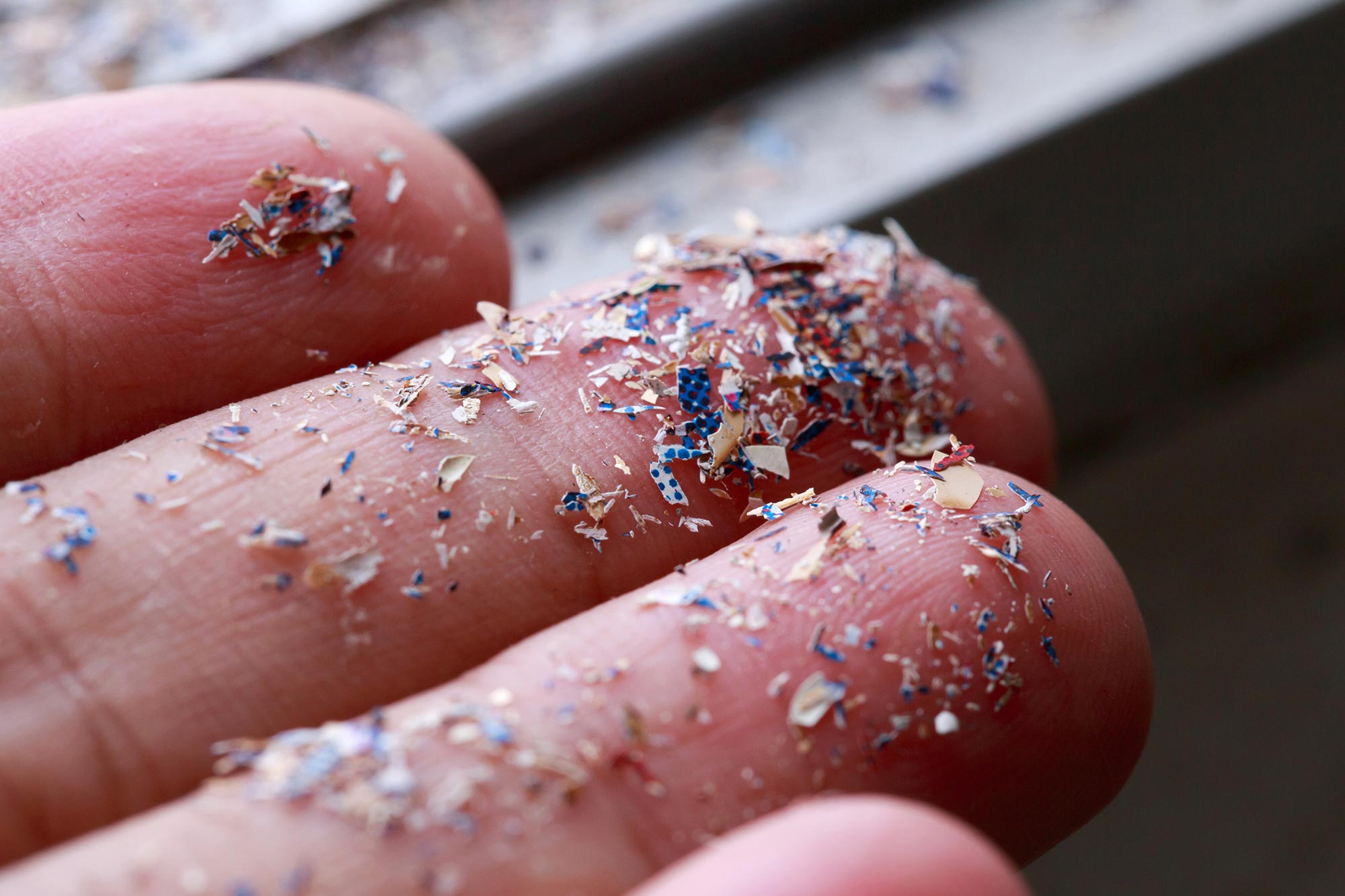
A Rutgers Health study has discovered aerosolized plastics in neonatal tissue following in utero exposure.
Plastic pollution, including tiny particles smaller than a grain of sand, has become ubiquitous, affecting even newborn rodents, according to a Rutgers Health study published in the journal Science of the Total Environment.
Researchers have long understood that micro- and nanoplastic particles (MNPs), which enter the environment through oxidation and natural degradation of consumer products, are easily deposited in the human body through inhalation, absorption, and diet.
Experts also understand that these pollutants can cross the placental barrier and deposit in fetal tissues.
What’s been unclear is whether these particles remained in tissue long after birth. The Rutgers Health researchers found that they do, at least in rats. Their data that could have implications for human health.
“Nobody wants plastic in their liver,” said Phoebe A. Stapleton, an associate professor of pharmacology and toxicology at the Rutgers Ernest Mario School of Pharmacy, and the study’s senior author. “Now that we know it’s there – as well as in other organs – the next step is to understand why and what that means.”
Research Findings in Rodents
To assess the persistence of micro- and nanoplastic particles in neonatal tissue following maternal exposure, Stapleton and colleagues exposed six rats to aerosolized food-grade plastic powder for 10 days during pregnancy.
Rodents are good test subjects for this type of study, Stapleton said, because humans and rodents both possess a hemochorial placenta, meaning that maternal and fetal blood don’t come into direct contact during circulation.
Two weeks after birth, two newborn rats – one male and one female – were tested for micro- and nanoplastic exposure. In both cases, the same type of plastic that the mothers inhaled during pregnancy were found in the offspring’s lung, liver, kidney, heart and brain tissue. No plastics were found in a control group.
Stapleton said the findings are one more piece of evidence illustrating the potential dangers of micro- and nanoplastics in the environment.
“These results raise concerns for the toxicological impacts associated with MNPs exposure, maternal-fetal health, and systemic MNPs particle deposition,” the researchers wrote.
Micro- and nanoplastics are a ubiquitous pollutant, and have been detected in food, farmland, seawater, and snow. Plastics have even been found in the world’s deepest oceans and highest mountains.
These invisible pollutants are potentially hazardous to human health. An increasing body of evidence suggests a strong correlation between micro- and nanoplastic particles and cancer, inflammation, impaired immune function, tissue degeneration, and cardiovascular problems.
Call for Further Research and Policy Action
Stapleton said she hopes her findings help create a sense of urgency among policymakers to make more funding available for research.
“Without answers, we can’t have policy change,” she said.
Eventually, the persistence of these materials in human tissue could lead to greater regulation, Stapleton said. While plastics have undoubtedly improved consumer products, too little is known about their long-term health impacts. As researchers fill knowledge gaps, regulators will be better equipped to protect public health, she said.
“I don’t think we’ll ever get rid of plastics altogether,” she said. “They’re too important for modern life. But I do think we might get to a point where we’ll have some policies to indicate which ones are less toxic than others.”
Reference: “Identification of micro- and nanoplastic particles in postnatal sprague-dawley rat offspring after maternal inhalation exposure throughout gestation” by Gina M. Moreno, Tanisha Brunson-Malone, Samantha Adams, Calla Nguyen, Talia N. Seymore, Chelsea M. Cary, Marianne Polunas, Michael J. Goedken and Phoebe A. Stapleton, 6 August 2024, Science of The Total Environment.
DOI: 10.1016/j.scitotenv.2024.175350
The research was funded in part by a grant from the Herbert W. Hoover Foundation.
Never miss a breakthrough: Join the SciTechDaily newsletter.
Follow us on Google and Google News.
4 Comments
And yet, Congress sits on their thumbs concerned about how to save their election instead of save our people.
What is in the stratospheric aerosol injections they use to supposedly “cool the planet”?
Keep voting Right Wingers and Neoliberals and this will become our Fermi Paradox
Additives to consumer plastics have for decades caused plastic trash to degrade rapidly in sunlight. In retrospect, was this anti-pollution policy misguided? In U.S., “sanitary landfills” bury plastics under layers of clay and soil. Some suggest advances in photo-electric chemistry can make “mining” these accumulations of debris for both valuable rare-earth elements and green hydrogen (from batteries/electronics and plastics) economically profitable.