
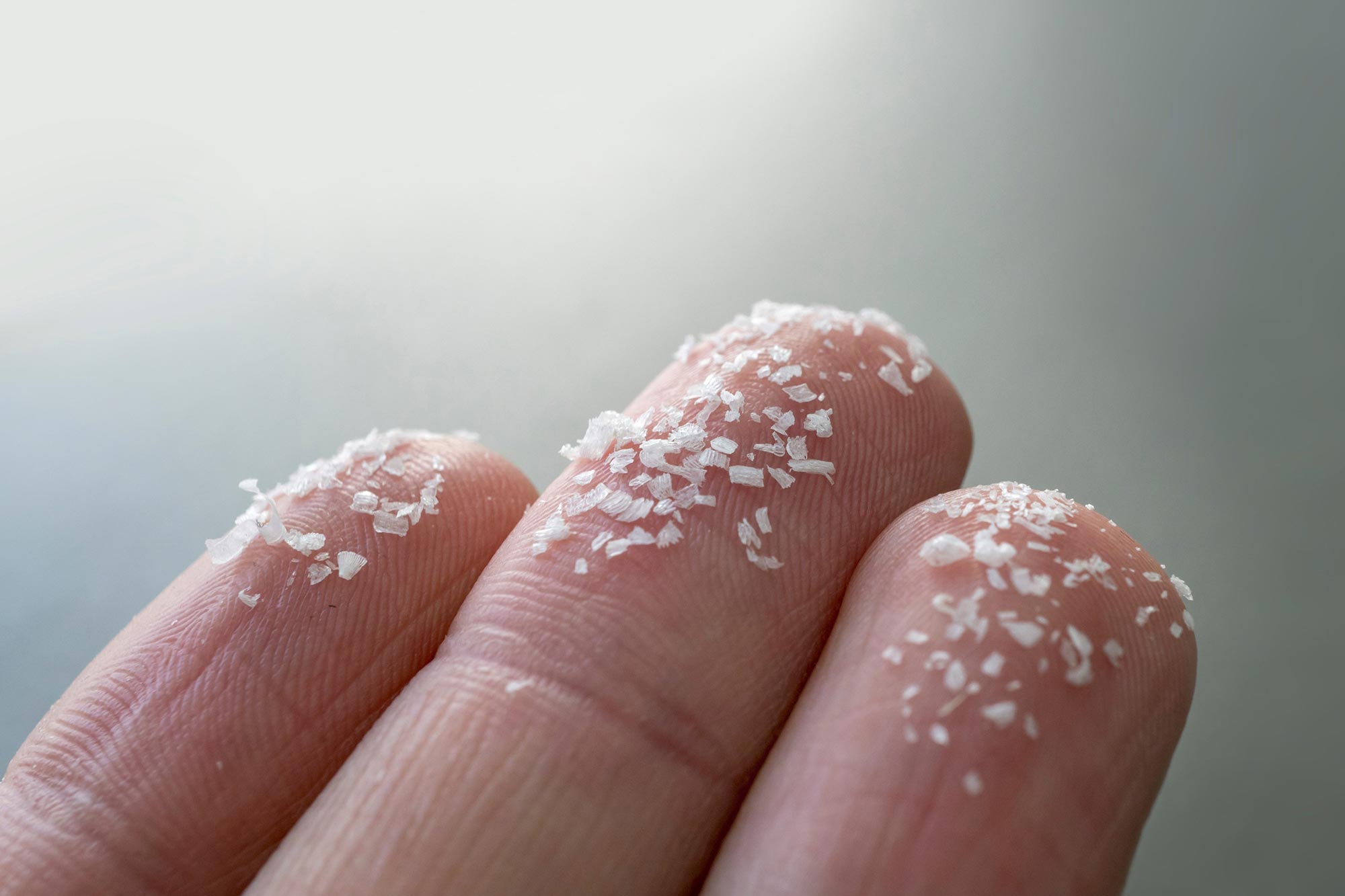
A review of 3,000 studies indicates that these microscopic plastic particles in the air could be contributing to male and female infertility.
Tires and degrading garbage release tiny plastic particles into the air, contributing to air pollution that researchers at UC San Francisco believe may be linked to respiratory issues and other health problems.
A comprehensive review of approximately 3,000 studies highlights the potential dangers of these particles. They have been associated with serious health concerns such as male and female infertility, colon cancer, and impaired lung function. Additionally, these particles may trigger chronic pulmonary inflammation, which could elevate the risk of lung cancer.
“These microplastics are basically particulate matter air pollution, and we know this type of air pollution is harmful,” said Tracey J. Woodruff, PhD, MPH, a professor of obstetrics, gynecology, and reproductive sciences at UCSF.
Woodruff directs the Program on Reproductive Health & the Environment (PRHE) and is the senior author of the study, which was recently published in the journal Environmental Science & Technology.
Small particles, big problem
Microplastics are less than 5 millimeters – smaller than a grain of rice – and they are ubiquitous in the environment. Each year, companies around the world produce nearly 460 million metric tons of plastic. That is projected to reach 1.1 billion by 2050.
A major source of plastic in the air is driving. Friction wears down tires along with the road surface, sending plastic fragments into the air.
The paper is the first systematic review of microplastics using gold-standard methods approved by the National Academy of Sciences.
Most of the studies in the review were based on animals. But the researchers said the conclusions likely also apply to humans since they share many of the same exposures.
The study expands on a report the researchers worked on last year with the California State Policy Evidence Consortium (CalSPEC). The Consortium includes experts across the UC system and provides evidence for policymakers in the California State Legislature.
“We urge regulatory agencies and policy leaders to consider the growing evidence of health harms from microplastics, including colon and lung cancer,” said Nicholas Chartres, PhD.
Chartres, the study’s first author, led the science and policy team at PRHE and is now at the University of Sydney. “We hope state leaders will take immediate action to prevent further exposures.”
Reference: “Effects of Microplastic Exposure on Human Digestive, Reproductive, and Respiratory Health: A Rapid Systematic Review” by Nicholas Chartres, Courtney B. Cooper, Garret Bland, Katherine E. Pelch, Sheiphali A. Gandhi, Abena BakenRa and Tracey J. Woodruff, 18 December 2024, Environmental Science & Technology.
DOI: 10.1021/acs.est.3c09524
The CalSPEC pilot was funded through the University of California Office of the President Major Projects and Initiatives Fund (UCOP proposal number 202110-121-AA) and a grant from the JPB Foundation (G-2022-3608).
Never miss a breakthrough: Join the SciTechDaily newsletter.
Follow us on Google and Google News.
14 Comments
That’s great; however, the far right billionaire ruling class in the US will see this as an “attack” on the plastics industry and their suppliers, the oil industry, and will do everything they can to protect them, including spreading disinformation. And with science and medicine-denying JFK Jr. as the head of HHS, human health, safety, and the environment will regress to the Medieval Era in favor of extreme wealth.
A defeatist and bigot all in one package.
Congratulations.
People like you are part of the problem.
Stop being part of the problem.
so people that point out the exact problem… are defeatist..? people that point out the obvious vs lets say… you, who is simply a whiner… that offers no solutions, offers no real insight into the issue… except the cliche you are part of the problem. well done.
Good point
Arthodyd, pointing out the usual response of right-wing corporate Americas is not the problem. But I appreciate your passion, we do need to clear out corporate owned politicians and elect average Americans that care about fixing things like this. And to do that, we need public funded elections (limited amounts) and no more unlimited dark money injected in our politics.
Pull your head out of the sand.
I agree. It’s so discouraging, especially for young people who are being misinformed by social media!
Amazing that anyone or institution can afford or dares to do this research. The fossil fuel extraction corporations have already taken control of any government regulators or regulations. Those same corporations perpetrate the myth of plastic recycling.
There’s an unfathomable amount of riches involved here and most voters don’t have a grip on any deep level of understanding.
The facts will not determine the outcome.
But like every other unknown we know nothing except it does not degrade further. Before we attack we need to identify whether it truly is an evil.
I agree. It’s so discouraging, especially for young people who are being misinformed by social media!
War in ukrain well it over plastcis sly
I think this is a real concern but we need more information where these microplastics are found. Are they in plastic bottles that we drink water and soft drinks?
Yes dude. Yess
I have noticed that today’s scientists seem incapable of making a definitive statement, as they did with asbestos, like “There is evidence this material causes cancer.” Instead, we see a lot of hedging like “Could be” and “may be”. Also, there are many types of particles in the air, so some kind of comparison or contextual information would help. Are plastic particles more dangerous, as dangerous or less dangerous, than vehicle exhaust particles?
Perhaps some explicit information on which plastics will cause illness would help. There are many types of plastic after all. Silicon is used for plastic surgery, so is that causing illnesses?