
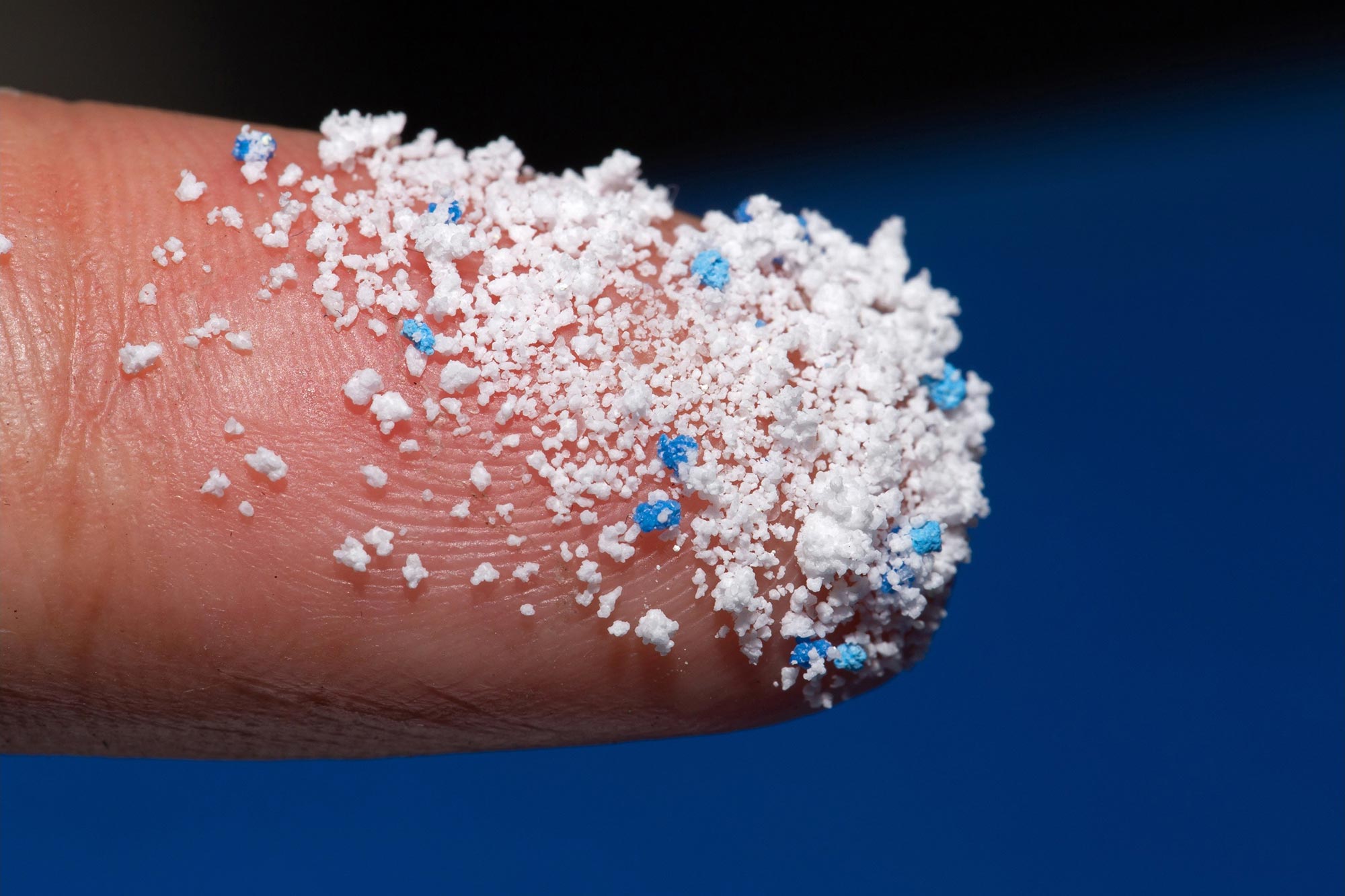
Starch-based biodegradable plastics may cause organ damage and metabolic issues, raising concerns about their safety despite being considered eco-friendly.
Plastic products gradually break down through wear and tear, releasing tiny, often microscopic, plastic particles that may pose health risks if inhaled or ingested. To address this, researchers have developed biodegradable plastics made from plant starch rather than petroleum.
However, a preliminary study published in ACS’ Journal of Agricultural and Food Chemistry found that animals exposed to particles from these plant-based plastics experienced health issues, including liver damage and disruptions to their gut microbiome.
“Biodegradable starch-based plastics may not be as safe and health-promoting as originally assumed,” says Yongfeng Deng, the corresponding author of the study.
Microplastics in the Body: A Growing Concern
Microplastics (plastic pieces less than 5 millimeters wide) are entering human bodies through contaminated water supplies, foods and drinks — and even IV infusions. Scientists have linked plastic particles in the bloodstream and tissues to various health risks. For example, a study found that people with inflammatory bowel disease have more microplastics in their feces. Biodegradable plastics have been presented as a safer, more environmentally friendly alternative to traditional petroleum-based plastics.
One of the most common types comes from starch, a carbohydrate found in potatoes, rice, and wheat. However, there is a lack of information on how starch-based biodegradable plastics affect the body. A team of researchers led by Deng tackled this issue by exploring these effects in animal trials.
The researchers compared three groups of five mice: one group consuming normal chow and two groups consuming food infused with starch-based microplastics. The doses (low and high) were calculated and scaled from what an average human is expected to consume daily. They fed the mice for 3 months and then assessed the animals’ organ tissues, metabolic functions, and gut microbiota diversity.
Health Impacts Observed in Mice
Mice exposed to the starch-based plastic particles had:
- Multiple damaged organs, including the liver and ovaries, with more pronounced damage in the high-dose group. However, mice eating normal chow showed normal organ tissue biopsies.
- Altered glucose management, including significant abnormality in triglycerides (a type of fat) and disruption in molecular biomarkers associated with glucose and lipid metabolism, compared to mice fed normal chow.
- Dysregulated genetic pathways and specific gut microbiota imbalances, which the researchers suggest could alter microplastic-consuming animals’ circadian rhythms.
“Prolonged low-dose exposure to starch-based microplastics can lead to a broad spectrum of health impacts, particularly perturbing circadian rhythms and disrupting glucose and lipid metabolism,” says Deng. However, the researchers acknowledge that because this is one of the first studies examining the impacts of consuming starch-based microplastics, further research is needed to understand how these biodegradable particles break down in the body.
Reference: “Long-Term Exposure to Environmentally Realistic Doses of Starch-Based Microplastics Suggests Widespread Health Effects” by Jing Liu, Peng Xia, Yi Qu, Xue Zhang, Ruqin Shen, Pan Yang, Hongli Tan, Hexia Chen and Yongfeng Deng, 9 April 2025, Journal of Agricultural and Food Chemistry.
DOI: 10.1021/acs.jafc.4c10855
The authors acknowledge funding from the Natural Science Foundation of China, the Jiangsu Province Young Science and Technology Talent Support Program, the Joint Fund of Departments and Schools, the Start-up Research Fund, and the Zhishan Young Scholars Fund of Southeast University by the Fundamental Research Funds for the Central Universities.
Never miss a breakthrough: Join the SciTechDaily newsletter.
Follow us on Google and Google News.
20 Comments
everyone knows plastics are bad, but no one cares what it does to the body or environment, even the flag wavers.
the planet is dying and YOU don’t give a f***
what are YOU going to do? nada as usual.
The planet will only die when the sun dies.
Humanity is dying and it’s because of people like you that don’t care and expect others to do something about it, you are mentally hillarious.
If you try to change people you have to start with the government that country because of the rule they put down such I’m America you can’t say nice to anyone you may get arrested for sexual harassment
I share your sentiment, to an extent. However I think we should leave people with options instead of just shame if we want anything to change.
Let’s talk about what can be done.
First and foremost don’t litter (anything, and maybe even pick up litter you do see) and especially make sure any plastics you do use make it in to the recycling stream. Only 10% of plastic waste makes the recycling stream so that’s a huge area to make a difference. See what your local utility takes in terms of plastics and look in to paid options like Ridwell ( sea.ridwell.com/GREG28 ) that will accept additional plastics like thin film.
Next, avoid buying disposable products. It might not be possible to avoid this 100% but even 1% is better than 0%. Pay attention to the packaging on products you buy and aim for the products with less disposable plastic packaging. Manufacturers do what is in their best bottom line dollar interest. Avoiding disposable plastic packaging can cost them slightly more money so they will always gravitate toward that unless consumers start buying other people’s products because of it. Pay attention to what carry out containers are used when you buy restaurant food. Shift your purchasing toward those who use more compostable and less plastic and styrofam. Even better is making food at home and using reusable/washable containers if you need to take the food somewhere (like a work lunch).
Those options just scratch the surface of what one can do, but its a start. Remember, only you can reduce plastic pollution.
My son and I swapped out all the plastic in the kitchen for glass and stainless steel. We do what we can to reduce the amount. The sad thing is that you have to have money to spend in order to incorporate changes like these. Huge amounts of people are living paycheck to paycheck, homeless and on the streets or in shelters or hotels. When people don’t have housing they are hardly worried about these types of things. So it’s going to be in the community no matter what and continuing to pollute air and water. There’s just not a lot of easy answers here.
Clutch your pearls a little tighter. Maybe it’ll make a difference.
As usual, the only thing I see is really bad science foisted on people who can’t read research reports. The other side of this Janus report was the list of conditions the researchers were expected to prove.
This little blurb is easy. No mechanism is even hinted at as to what causes damage. They allow the reader to substitute their own reality. No mention of biochemistry, particle size, mechanism of action, specificity, or, really, any detail at all.
And the kicker was, either the researchers or the article writer – at this point it makes no difference – reversed the cause and effect of a disease.
I can’t tell you what I think of people who sell their souls to fake results, or the people who think they’re saving the planet by believing tripe cranked out in papermills, because it’s unprintable.
Glad you managed a sub to the ACS journals? Generally not ‘mills,’ really what can you have done here while subscribing to spite yourself?
Right. Research and funding by the communist Chinese government agencies. Lets see if the “study” can be independently duplicated by some entity other than the Chinese government, the folks who gave us corona virus 1 and 2.
Right. Research and funding by the communist Chinese government agencies. Lets see if the “study” can be independently duplicated by some entity other than the Chinese government, the folks who gave us corona virus 1 and 2.
Brought to you by…..unsurprisingly
Right. Research and funding by the communist Chinese government agencies. Lets see if the “study” can be independently duplicated by some entity other than the Chinese government, the folks who gave us corona virus 1 and 2.
Plastic has become universal and although people such as Leo Blaackland father of the industry blithely remarked ‘micro plastics and resins are soluble in water ,if they’re not opaque ,they are safe ‘ Now after 90 years we suffer rain showers pissing plastic particles we’ve finally woken up. However the plastic industry is bigger and now unreversable. e waste is set to inundated us as AI takes over human brains. This should be science fiction, but it isn’t.
Does bamboo count as a starch based plastic? Ive been giving my dog “chew bones” made from pressed bamboo instead of hard plastic bc its supposed to be OK if he injests the small shavings that wear it down.
If the only ingredient is bamboo, then it is not a bioplastic. But as with everything nowadays, best to look it up and be certain. Google AI is an excellent place to start looking for info, it complies current data, but even with that, always good to doublecheck and verify the info. I checked on the bamboo “bones” and while they are not listed as a source of dangerous chemicals, they can splinter causing tooth, mouth and intestinal damage.
Veterinarians recommend these alternatives:
Carrots – low calorie and super safe
Dried chicken or fish – still crunchy and can be scattered around the garden for enrichment
Greenies or Oravet – will keep your dog’s breath fresh
Pigs ears – give sparingly as they can be too rich for some dogs
Frozen peanut butter-filled Kongs – will keep them entertained for hours
Looking forward to differently formulated feedstock then. OFC I have dog toys made of bamboo filler in pva (gotta order some Sundays to fall through its holes.) I imagine they didn’t just have PVA to contend with, but it’s fair to get the test cases with crickets and molds ramped up ahead of more mouse sacrifice.
No mention of what is exactly meant by starch based plastics. Is this the starch filled polyethylene or polylactic acid, PLA? Or something entirely different? Big difference
Crap
I’m curious whether they did a study comparing to ingestion of traditional petroleum-based microplastics… I feel like that’s an important factor that at least this article has overlooked. If regular microplastics are equally (or more) disruptive in all the same areas, then it’s no worse than a net zero effect, except that the overall environmental impact is reduced because ultimately the starch-based ones *will* decompose.
The article states “pieces smaller than 5 millimeters wide” I just wanted to let you know this is a typo. 5 millimeters is not considered a cut off for microplastic, either it’s supposed to say 0.5 millimeters, or more likely it’s supposed to say 5 nanometers.
No, it isn’t a typo. The EPA defines microplastics as ranging in size from 5 millimeters to 1 nanometer.
https://www.epa.gov/water-research/microplastics-research