
Rising levels of micro- and nanoplastics are potentially increasing the risk of serious health conditions like cancer and diabetes, prompting calls for comprehensive global research into their effects and management.
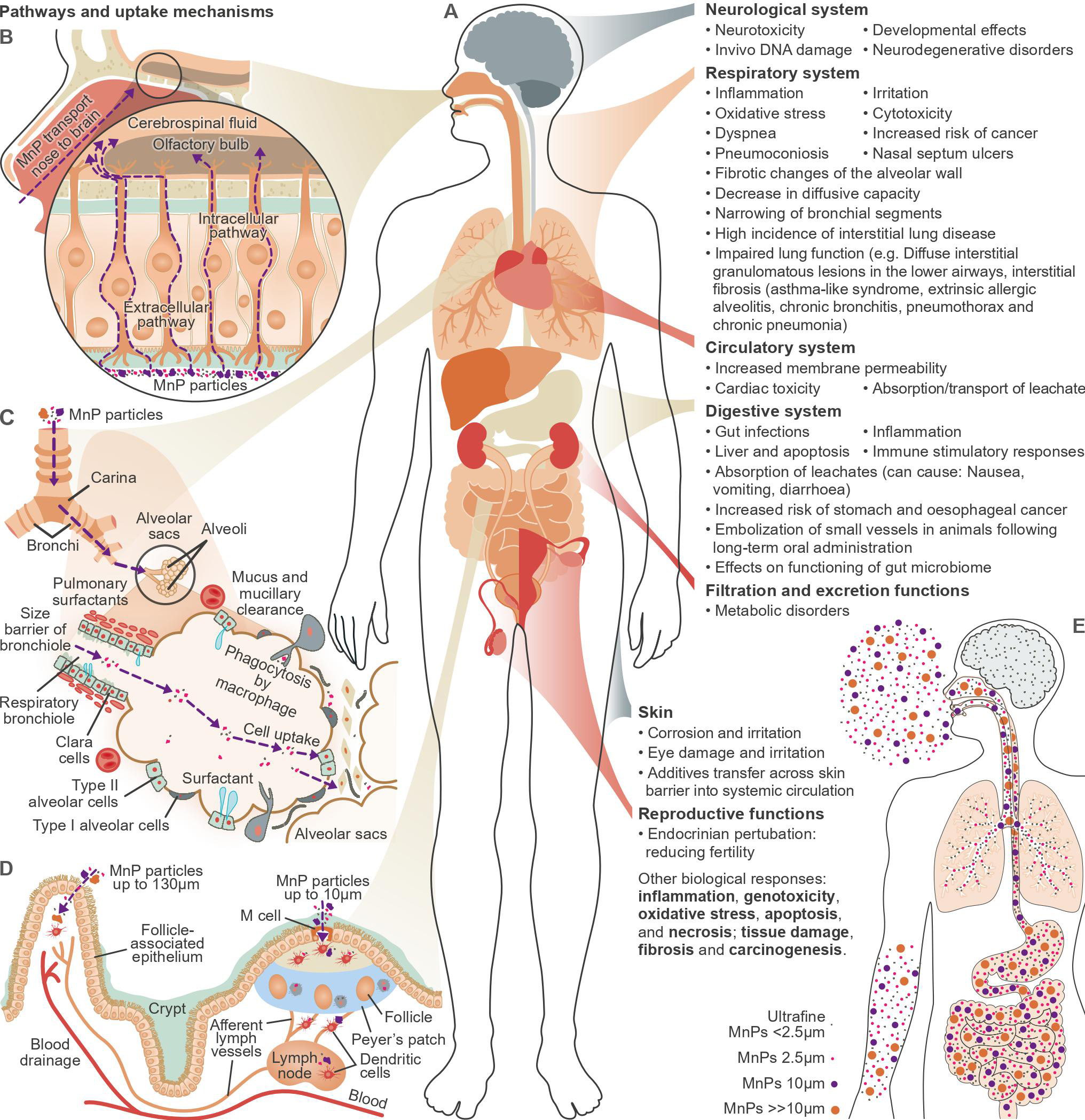
A new study reveals that rising global levels of micro- and nanoplastics (MnPs) being absorbed into the human body may increase the risk of cancer, diabetes, cardiovascular disease, and chronic lung disease.
Non-communicable diseases (NCDs) like these are associated with inflammation in the body’s organs. The presence of tiny particles may enhance the absorption of MnPs and their leachates in the digestive and respiratory systems, potentially increasing the risk and severity of NCDs over time.
And MnP concentrations in infant fecal matter are significantly higher than in adults – possibly because plastic is commonly used in infant food preparation, presentation, and storage. Young children’s behaviour such as putting objects in their mouth may also account for this.
Global Research Call to Action
Publishing their findings in Cell Reports Medicine, an international group of researchers is now calling for a global integrated One Health approach to human health and environmental research that will reveal the environmental mechanisms that lie behind the rise in human MnP exposure and the particles’ links with NCDs.
Lead author Professor Stefan Krause, from the University of Birmingham, commented: “Plastic pollution has increased globally – making it critical that we understand the overall health risks associated with MnP exposure.
“We must tackle this pollution at its source to reduce further emissions, as the global dispersal of MnPs that has already happened will remain a cause of concern for centuries to come. For this, we need a systematic investigation into the environmental drivers of human MnP exposure and their impacts on the prevalence and severity of the main NCD groups of cancer, diabetes, cardiovascular disease, and chronic lung disease.”
Relationship Between MnPs and NCDs
The researchers highlight that the relationship between MnPs and NCDs resembles those of other particles, including natural sources such as pollen or human-made pollutants like diesel exhaust, and MnPs, and engineered nanomaterials, all acting in a similar biological manner. The body treats these as foreign entities triggering the same protective mechanisms – presenting a risk of bodily defenses becoming overwhelmed and boosting the frequency and severity of NCDs.
The incidence of NCDs is increasing across the world with the four main types collectively responsible for 71% of all global deaths annually and creating a predicted economic impact of more than $30 trillion over the next two decades.
Co-author Semira Manaseki-Holland, from the University of Birmingham, commented: “We must better understand how MnPs and NCDs interact, if we are to progress global prevention and treatment efforts toward the UN Sustainable Development Goal on reducing premature mortality from NCDs and other conditions where inflammation are concerned through by 2030.
“This need is critical in low- and low-middle-income countries (LMICs) where NCD prevalence is rising, and plastic pollution levels and exposures are high. Whether we encounter them indoors or outdoors, MnPs are likely adding to global health risks.”
MnPs Ubiquity and Human Exposure
Global pollution trends show that micro- (smaller than 5 mm) and nanoplastic (smaller than 1 µm) particles are now found everywhere. MnPs have been detected in lungs, blood, breast milk, placenta, and stool samples confirming that the particles enter the human body from the environment.
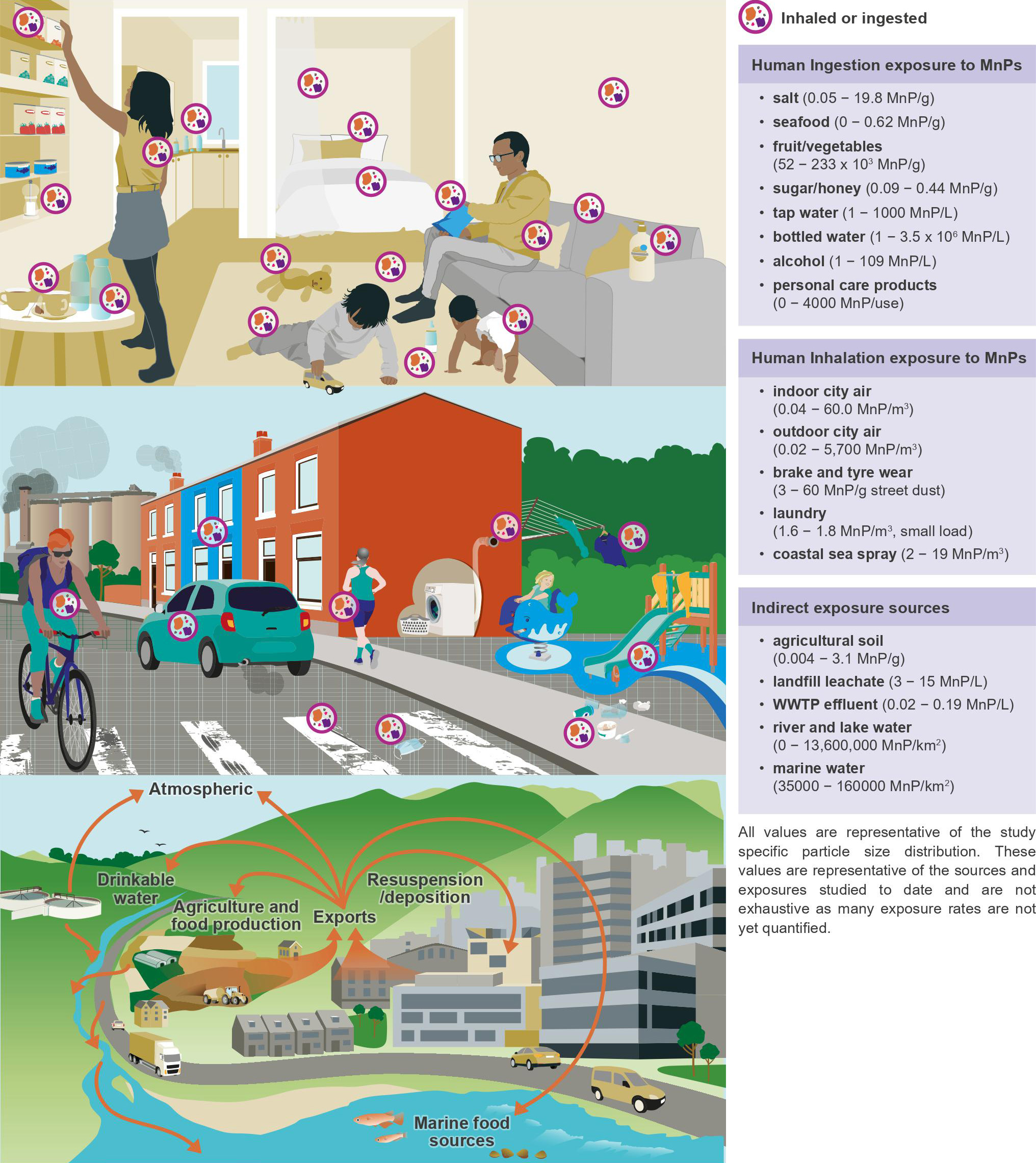
Humans are exposed to MnPs in outdoor and indoor environments through food stuffs, drinks consumption, air, and many other sources including cosmetics and human care products.
MnPs have been found in fish, salt, beer, and plastic bottled drinks or air, where they are released from synthetic clothing materials, plastic fabric bedding during sleep, plastic carpet, or furniture. Other sources can include fertilizer, soil, irrigation, and uptake into food crops or produce.
Human exposure to MnPs varies significantly depending on location and exposure mechanism, with evidence of MnP pollution hotspots in indoor air containing up to 50 times the number of particles encountered outdoors.
Co-author Professor Iseult Lynch, from the University of Birmingham, commented: “We must understand the human health risks associated with MnPs and to do this, we will need to understand the environmental controls of individual exposures. This will require environmental and medical scientists to work very closely together.”
Reference: “The potential of micro- and nanoplastics to exacerbate the health impacts and global burden of non-communicable diseases” by Stefan Krause, Valerie Ouellet, Deonie Allen, Steven Allen, Kerry Moss, Holly A. Nel, Semira Manaseki-Holland and Iseult Lynch, 22 May 2024, Cell Reports Medicine.
DOI: 10.1016/j.xcrm.2024.101581
Never miss a breakthrough: Join the SciTechDaily newsletter.
Follow us on Google and Google News.
2 Comments
The Romans, brilliant engineers vicious warriors are accused of self-elimination because they didn’t understand the chemistry of lead and it’s neurological threat.
We are so very much more knowledgeable and clever.
We have set an ambush for ourselves.
As soon as researchers become advocates I stop taking their advice seriously. Stick to the research and leave the decisions to others.