
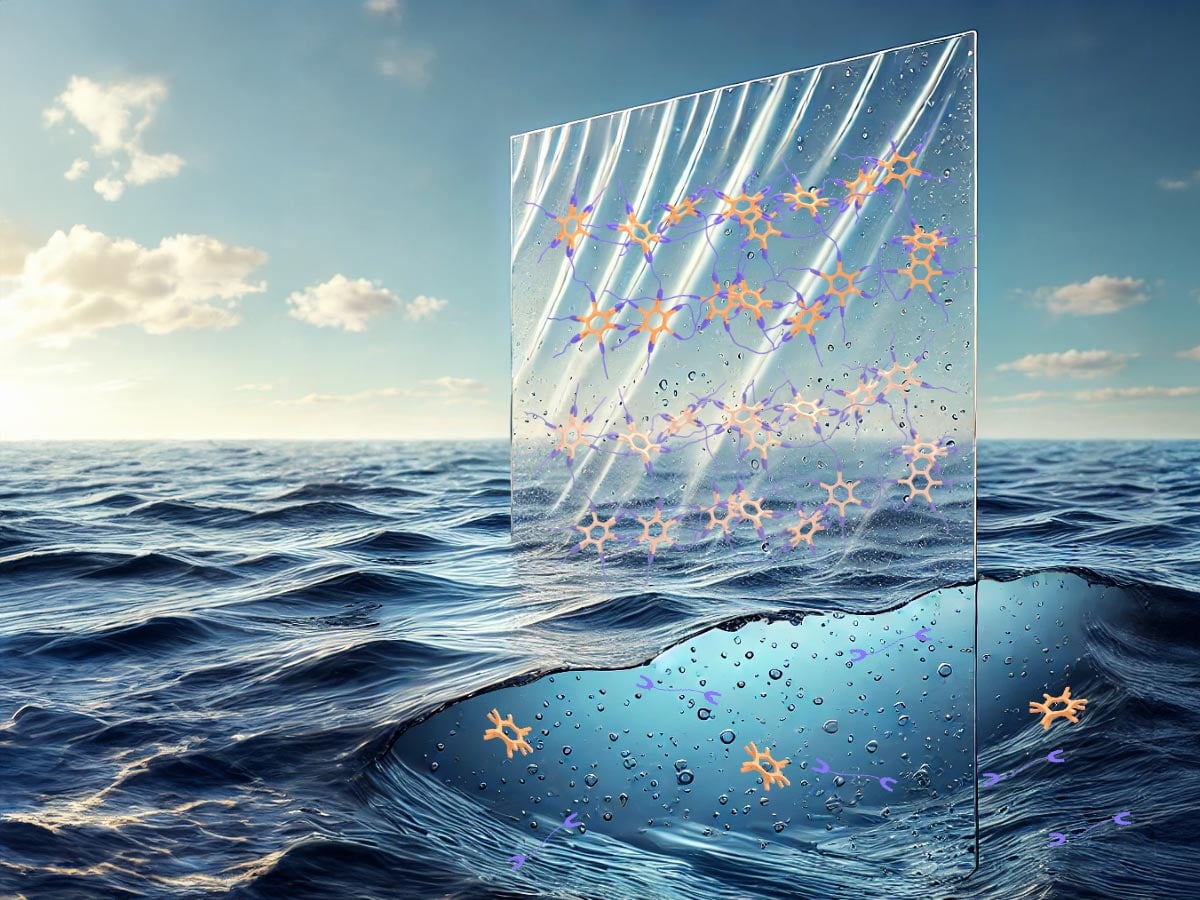
A new durable, biodegradable plastic breaks down in seawater, offering a potential solution to microplastic pollution.
This material, based on supramolecular structures, can be tailored for different uses and is fully recyclable, enhancing its environmental benefits.
New Sustainable Plastic
Researchers led by Takuzo Aida at the RIKEN Center for Emergent Matter Science (CEMS) have created a groundbreaking plastic that combines durability with eco-friendliness. This innovative material is not only as strong as conventional plastics but is also biodegradable, with a unique ability to break down in seawater. By addressing a critical environmental issue, this plastic holds the potential to significantly reduce microplastic pollution, which accumulates in oceans, soils, and eventually enters the food chain. The team’s findings were published today (November 22) in the journal Science.
Efforts to develop sustainable alternatives to traditional plastics, which are non-biodegradable and environmentally harmful, have been ongoing for years. While some biodegradable and recyclable options already exist, a major challenge persists: many of these materials, such as PLA, fail to degrade in ocean environments because they are water-insoluble. This limitation allows microplastics—tiny fragments smaller than 5 mm—to persist in marine ecosystems, harming aquatic life and making their way into the food chain, including into humans.
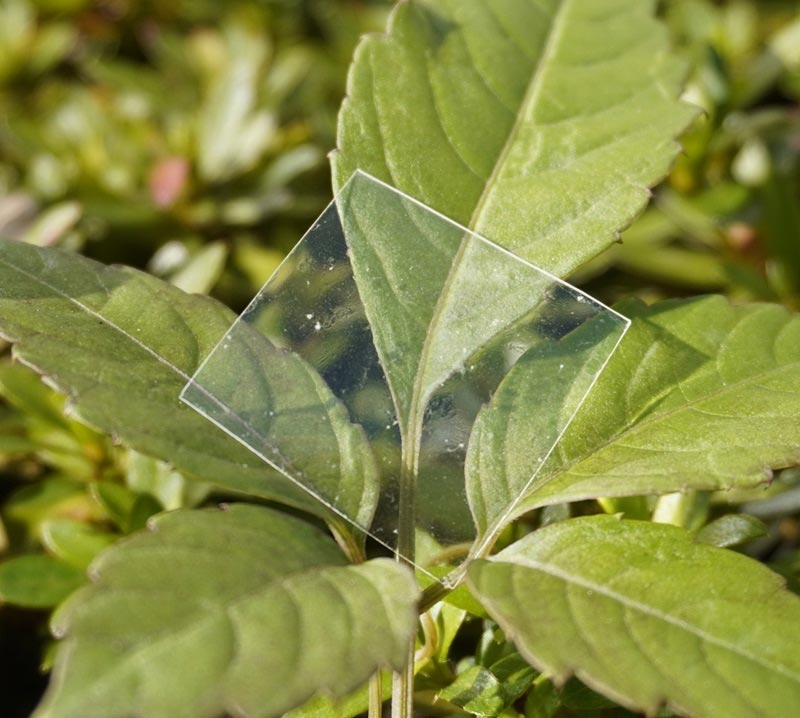
Innovative
In their new study, Aida and his team focused on solving this problem with supramolecular plastics—polymers with structures held together by reversible interactions. The new plastics were made by combining two ionic monomers that form cross-linked salt bridges, which provide strength and flexibility. In the initial tests, one of the monomers was a common food additive called sodium hexametaphosphate and the other was any of several guanidinium ion-based monomers. Both monomers can be metabolized by bacteria, ensuring biodegradability once the plastic is dissolved into its components.
“While the reversible nature of the bonds in supramolecular plastics has been thought to make them weak and unstable,” says Aida, “our new materials are just the opposite.” In the new material, the salt bridge structure is irreversible unless exposed to electrolytes like those found in seawater. The key discovery was how to create these selectively irreversible cross-links.

Creation Process and Properties
As with oil with water, after mixing the two monomers together in water, the researchers observed two separated liquids. One was thick and viscous and contained the important structural cross-linked salt bridges, while the other was watery and contained salt ions. For example, when sodium hexametaphosphate and alkyl diguanidinium sulfate were used, sodium sulfate salt was expelled into the watery layer. The final plastic, alkyl SP₂, was made by drying what remained in the thick viscous liquid layer.
The “desalting” turned out to be the critical step; without it, the resulting dried material was a brittle crystal, unfit for use. Resalting the plastic by placing it in salt water caused the interactions to reverse and the plastic’s structure destabilized in a matter of hours. Thus, having created a strong and durable plastic that can still be dissolved under certain conditions, the researchers next tested the plastic’s quality.
Applications and Environmental Impact
The new plastics are non-toxic and non-flammable—meaning no CO2 emissions—and can be reshaped at temperatures above 120°C like other thermoplastics. By testing different types of guanidinium sulfates, the team was able to generate plastics that had varying hardnesses and tensile strengths, all comparable to or better than conventional plastics. This means that the new type of plastic can be customized for need; hard scratch resistant plastics, rubber silicone-like plastics, strong weight-bearing plastics, or low tensile flexible plastics are all possible. The researchers also created ocean-degradable plastics using polysaccharides that form cross-linked salt bridges with guanidinium monomers. Plastics like these can be used in 3D printing as well as medical or health-related applications.
Lastly, the researchers investigated the new plastic’s recyclability and biodegradability. After dissolving the initial new plastic in salt water, they were able to recover 91% of the hexametaphosphate and 82% of the guanidinium as powders, indicating that recycling is easy and efficient. In soil, sheets of the new plastic degraded completely over the course of 10 days, supplying the soil with phosphorous and nitrogen similar to a fertilizer.
“With this new material, we have created a new family of plastics that are strong, stable, recyclable, can serve multiple functions, and importantly, do not generate microplastics,” says Aida.
Reference: “Mechanically strong yet metabolizable supramolecular plastics by desalting upon phase separation” by Yiren Cheng, Eiji Hirano, Hao Wang, Motonobu Kuwayama, E. W. Meijer, Hubiao Huang and Takuzo Aida, 21 November 2024, Science.
DOI: 10.1126/science.ado1782
Never miss a breakthrough: Join the SciTechDaily newsletter.
Follow us on Google and Google News.
13 Comments
In the title it’s an emphatic “goodbye”. In the article itself it’s “potentially”, “maybe”, “we’ll see”.
Can’t wait to never hear about it again, just like the previous 2564 times biodegradable alternatives for plastic were found
Was thinking the same thing
Do the molecules break down to the fundamental atomic element level? If not aren’t they still in the food chain?
Wow great work guy’s. Good story too. If opec shows up with a check, just take it!
We use plastics so much because they don’t break down readily. How would you like your car bumper to dissolve overnight because it was exposed to sunlight and rain? Or your plastic grocery bag to fall apart as you’re carrying it to your door?
This stuff is delusional — to expect an article to be strong and functional while we need to use it, then somehow disappear without a trace when we’re done using it.
It specifically states in the article, ‘In the new material, the salt bridge structure is irreversible unless exposed to electrolytes like those found in seawater.’
So normal rain water won’t “cause car bumpers to dissolve overnight” or “shopping bags to fall apart” unless you drive your car through the surf or swim home with your shopping bag across a coastal bay.
You think the ocean is the only thing that contains salt paul? How daft.
There will be some limitations in it’s practical use, of course. But my best guess is, that amount of electrolytes in rain water is too small, that it will not dissolve it. Also, even in sea water it takes at least few days until it happen.
The applications for these new tech materials are for single use plastics not all plastics you dude.
I agree.
Can this be used as a replacement for sachets and packets?
Micro plastics? What’s the problem? They will provide future geologists with an excellent, very prrecise marker horizon, just as did the Dinosaur invention of the iridium bomb, which wiped out most life on the planet………….
Nice idea! But how about the algal bloom or red tide issues? It’s a phosphate compound…