
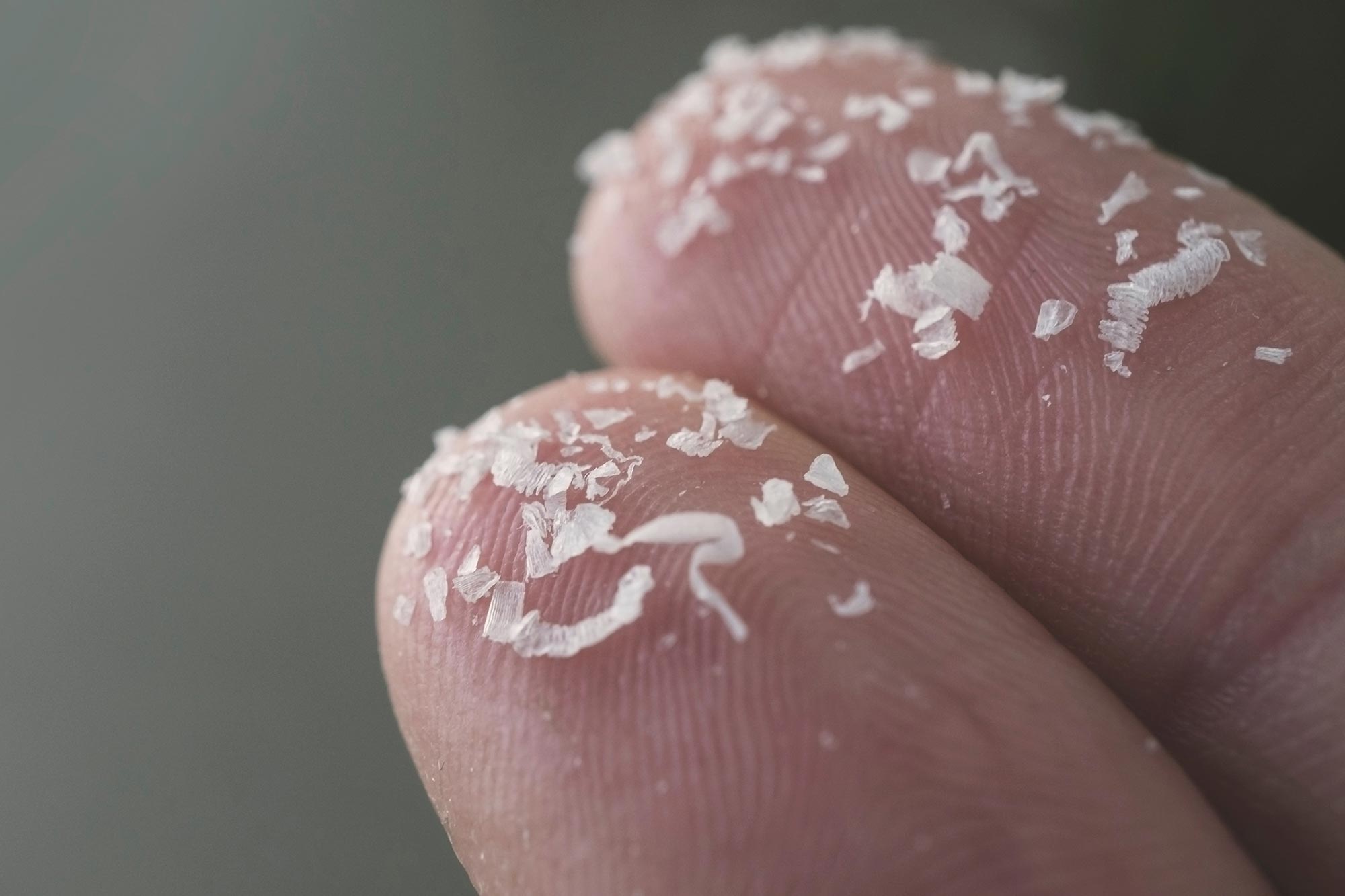
University of New Mexico researchers found microplastics in human and canine testicular tissues, raising concerns about reproductive health. The study discovered 12 types of microplastics, with higher levels in humans and correlations between PVC and lower sperm counts in dogs.
Scientists at the University of New Mexico have detected significant concentrations of microplastics in the testicular tissue of both humans and dogs, adding to growing concern about their possible effect on human reproductive health.
Researchers reported finding 12 types of microplastics in 47 canine and 23 human testes in a new paper published in the journal Toxicological Sciences. The research team was led by Xiaozhong “John” Yu, MD, PhD, MPH, a professor in the UNM College of Nursing.
“Our study revealed the presence of microplastics in all human and canine testes.”
Xiaozhong “John” Yu, MD, PhD, MPH, UNM College of Nursing
“Our study revealed the presence of microplastics in all human and canine testes,” Yu said. The team was also able to quantify the amount of microplastics in the tissue samples using a novel analytical method that revealed correlations between certain types of plastic and reduced sperm count in the canine samples.
Yu, who studies the impact of various environmental factors on the human reproductive system, said heavy metals, pesticides, and endocrine-disrupting chemicals have all been implicated in a global decline in sperm count and quality in recent years. A conversation with his colleague Matthew Campen, PhD, a professor in the UNM College of Pharmacy who has documented the presence of microplastics in human placentas, led him to wonder whether something else might be at work.
“He said, ‘Have you considered why there is this decline (in reproductive potential) more recently? There must be something new,’” Yu said. That led Yu to design a study using the same experimental method Campen’s lab had used in the placenta research.
Research Process and Results
His team obtained anonymized human tissue from the New Mexico Office of the Medical Investigator, which collects tissue during autopsies and stores it for seven years before disposing of it. The canine tissue came from City of Albuquerque animal shelters and private veterinary clinics that perform spay-neutering operations.
The team chemically treated the samples to dissolve the fat and proteins and spun each sample in an ultracentrifuge, leaving a nugget of plastic at the bottom of a tube. Then, heated the plastic pellet in a metal cup to 600 degrees Celsius. They used a mass spectrometer to analyze gas emissions as different types of plastic burned at specific temperatures.
In dogs, the average concentration of microplastics in testicular tissue was 122.63 micrograms per gram of tissue (a microgram is a millionth of a gram). In human tissue the average concentration was 329.44 micrograms per gram – nearly three times higher than in dogs and significantly higher than the average concentration Campen found in placental tissue.
“At the beginning, I doubted whether microplastics could penetrate the reproductive system,” Yu said. “When I first received the results for dogs I was surprised. I was even more surprised when I received the results for humans.”
Implications and Future Research
The researchers found the most prevalent polymer in both human and canine tissue was polyethylene (PE), which is used to make plastic bags and bottles. In dogs that was followed by PVC, which is used in industrial, municipal, and household plumbing and in many other applications.
The team was able to count the sperm in the canine samples (but not in the human ones, which had been chemically preserved) and found that higher levels of PVC in the tissue correlated with a lower sperm count, Yu said. There was no correlation with tissue concentration of PE, however.
“The plastic makes a difference – what type of plastic might be correlated with potential function,” he said. “PVC can release a lot of chemicals that interfere with spermatogenesis and it contains chemicals that cause endocrine disruption.”
The study compared human and canine tissue for a couple of reasons, one being that dogs live alongside people and share their environment. They also share some biological characteristics.
“Compared to rats and other animals, dogs are closer to humans,” he said. “Physically, their spermatogenesis is closer to humans and the concentration has more similarity to humans.” Canine sperm counts also seem to be dropping, he added. “We believe dogs and humans share common environmental factors that contribute to their decline.”
Environmental Impact and Concerns
Microplastics result when plastic is exposed to ultraviolet radiation in sunlight and degrades in landfills. It can be blown about by the wind or carried into nearby waterways, and some bits are so small they are measured in nanometers (a billionth of a meter). They’re now ubiquitous in the environment – even as global use of plastics continues to grow. Yu noted that the average age of the men in the OMI autopsy samples was 35, meaning their plastics exposure began decades ago, when there was less plastic in circulation. “The impact on the younger generation might be more concerning,” now that there is more plastic than ever in the environment, he said.
Moving Forward
The findings point the way for additional research to understand how microplastics might affect sperm production in the testes, he said. “We have a lot of unknowns. We need to really look at what the potential long-term effect. Are microplastics one of the factors contributing to this decline?”
In disseminating his findings, Yu doesn’t want anyone to panic. “We don’t want to scare people,” he said. “We want to scientifically provide the data and make people aware there are a lot of microplastics. We can make our own choices to better avoid exposures, change our lifestyle and change our behavior.”
Reference: “Microplastic presence in dog and human testis and its potential association with sperm count and weights of testis and epididymis” by Chelin Jamie Hu, Marcus A Garcia, Alexander Nihart, Rui Liu, Lei Yin, Natalie Adolphi, Daniel F Gallego, Huining Kang, Matthew J Campen and Xiaozhong Yu, 15 May 2024, Toxicological Sciences.
DOI: 10.1093/toxsci/kfae060
Never miss a breakthrough: Join the SciTechDaily newsletter.
Follow us on Google and Google News.
3 Comments
game over
I will no.longer eat or drink from plastic containers.
Depopulation may be a bit of a taboo, or derided as WEF’s wet dream, but unfortunately it’s necessary if those who remain are to have a fighting chance. The resources are dwindling and the clock is ticking.