
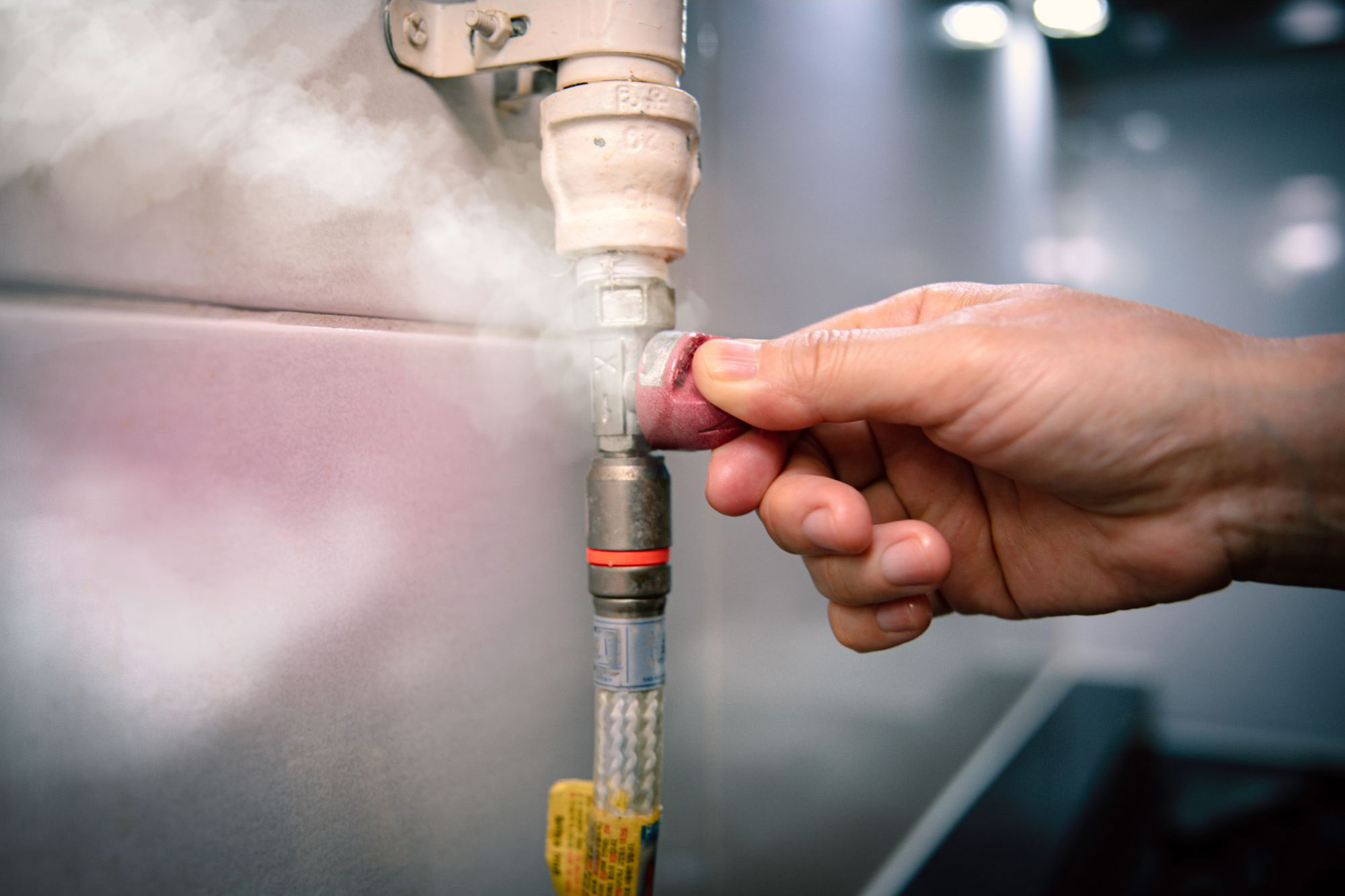
The results underscore the importance of implementing more rigorous standards for odorizing natural gas and detecting leaks.
New findings reveal that individuals with an average sense of smell may unknowingly be living with natural gas leaks. According to a peer-reviewed study in the scientific journal Environmental Research Letters, minor leaks can deteriorate indoor air quality by emitting various hazardous pollutants, such as benzene—a carcinogen detected in 97% of natural gas samples throughout North America.
“While these smaller leaks are not large enough to cause gas explosions, hard-to-smell leaks are common,” said lead author and PSE Healthy Energy Scientist Sebastian Rowland. “The fact that they are so small makes them hard to identify and fix, which can lead to a persistent indoor source of benzene and methane.”
Study Findings on Gas Composition and Odorants
The study is the first to assess whether gas leaks contain enough odorant to protect against elevated levels of benzene exposure, and provides the most comprehensive data to date on residential natural gas composition. Researchers from PSE Healthy Energy and Stanford University collected and analyzed 587 samples of natural gas from 481 residences in 17 North American cities.
Samples were tested for methane, hazardous air pollutants, and sulfur-based odorants and researchers modeled the amount of gas that could leak undetected by a resident with an average sense of smell. Their findings confirm that benzene and other hazardous air pollutants are present in nearly all natural gas supplied to households, buildings, and businesses throughout North America.
“Our nose is the first and only line of defense against household-level gas leaks,” said PSE Senior Scientist Drew Michanowicz. “Given the variation in odorant levels and the enormous disparity in the ability to smell across the general public, our findings really call into question the sole reliance on odor to protect people from gas leaks.”
Geographic Disparities in Benzene and Odorant Levels
On average, gas delivered to homes in Vancouver, Los Angeles, Calgary, and Denver had twice the benzene levels than the other cities, with benzene levels in Vancouver nearly fifty times greater than that of the lowest concentration city, Boston. Odorant levels in Houston gas were approximately five times higher than Toronto, whereas the neighboring cities of New York City and Washington, D.C., appeared to use different odorant products altogether, indicating a lack of standardization.
On average, measured natural gas odorant levels should alert most occupants to gas leaks that can lead to high benzene exposures; however, each household faces a different situation due to differences in personal smelling sensitivity, ventilation rates, gas composition, and barriers to fixing leaks after detection.
The research team suggests that regulators and consumers would benefit from greater transparency of natural gas composition, such as open access to natural gas composition data and regular sampling. Additionally, improving leak detection through stricter odorization standards or increased usage of leak-detecting devices, or reducing gas use altogether can improve indoor air quality and public health.
Reference: “Downstream natural gas composition across U.S. and Canada: implications for indoor methane leaks and hazardous air pollutant exposures” by Sebastian T Rowland, Eric D Lebel, Jackson S W Goldman, Jeremy K Domen, Kelsey R Bilsback, Angélica Ruiz, Jessie M Jaeger, Lee Ann L Hill, Yannai S Kashtan, Colin Finnegan, Metta Nicholson, Zutao Ouyang, Robert B Jackson, Seth B C Shonkoff and Drew R Michanowicz, 4 June 2024, Environmental Research Letters.
DOI: 10.1088/1748-9326/ad416c
Never miss a breakthrough: Join the SciTechDaily newsletter.
Follow us on Google and Google News.
5 Comments
Benzene is a fuel. It burns with the natural gas. I normally don’t give personal advice, but don’t worry about cancer during an explosion. Fuel leaks are bad, and testing odorant level effectiveness is important, but the headline is unnecessarily alarmist, and what you don’t know about alarmism might kill you after these commercials…
Amen
Paracelsus famously said, “All things are poison, and nothing is without poison; the dosage alone makes it so a thing is not a poison.” What the article doesn’t mention, perhaps because nobody knows, is what concentration of acute exposure to benzene, or length of chronic exposure of various concentrations, is actually a concern.
https://en.wikipedia.org/wiki/The_dose_makes_the_poison
https://en.wikipedia.org/wiki/Median_lethal_dose
Then there is also the disagreement between whether there is a threshold for all things, as claimed by Paracelsus, or whether the “Linear — No Threshold” model is a better predictor for causing cancer. It suggests that there is no safe exposure and all concentrations do damage, which is proportional to the concentration, that the body may not be able to repair. That is, living has risks.
There is so much that we don’t know, and yet those who claim to be experts are busily ringing alarm bells for things that may not be an actual risk.
I am certainly glad the researchers tested natural gas for methane levels. That stuff is so flammable. Oh, wait, natural gas is mostly methane and it is supposed to be flammable. One of the last sentences is telling: ..”reducing gas use altogether can improve indoor air quality and public health.” Uniformity of odorant and odorant addition would be an improvement.
“As per the Federal Pipeline Safety Regulations (49 CFR 192.625), all combustible gas transported via pipeline must meet a minimum odorization standard. This standard stipulates that distribution lines and some transmission lines ( as outlined in the regulations) must contain odorant at a concentration of 20% of the lower explosive limit. This ensures that a person with a ‘typical’ sense of smell can detect it, thereby enhancing safety.”
https://www.lincenergysystems.com/blog/natural-gas-odorization-requirements/